
The Language of Landscape
Air Date: March 19, 2010
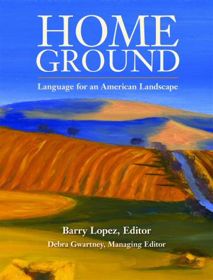
Living on Earth continues its series exploring features of the American landscape, based on the book Home Ground: Language for an American Landscape, edited by Barry Lopez and Debra Gwartney. In this installment, writer Donna Seaman explains the term "looking-glass prairie."
Transcript
YOUNG: It’s Living on Earth, I’m Jeff Young.
HOME GROUND THEME MUSIC: Daniel Lanois “O Marie” from Acadie (danielanois.com 2002)
YOUNG: Time to dip into “Home Ground”, a collection of phrases that describe the American landscape. This week, we look to the Great Plains. Donna Seaman reflects on the origin of the phrase “looking glass prairie.”
SEAMAN: Looking-glass prairie. Nineteenth-century settlers were astounded by the grandeur of prairies on the western plains, particularly those christened looking-glass prairies for their elegant curving shapes and their surprising reflectivity.
These gleaming prairie wetlands (circumnavigated by prairie schooners) – great shallow basins of sedges, reflecting sky and landscape and nurturing fish, waterfowl, and other animals – were initiated by glaciers retreating from the Central Lowlands, which stretch west from the Mississippi River across the Great Plains.
The term is generic, although it can be specific, as in the 1829 third volume of Travels in North America, where B. Hall writes of one prairie – and I quote – that was particularly beautiful of its kind, and named Looking Glass Prairie. Unquote.
Such prairies engender optical illusions and mystical revelations, and it’s worth noting that L. Frank Baum set his Oz books in the magical prairies of Kansas. But alas, most settlers considered looking-glass prairies useless impediments, and busily drained and plowed them.
YOUNG: Donna Seaman is a writer and editor based in Illinois. Her definition of “looking-glass prairie’ comes from the book “Home Ground: Language for an American Landscape,” edited by Barry Lopez and Debra Gwartney.
MUSIC: Andrew Bird: “Souverain” from Noble Beast (Wegawam 2008)