
Science Note/Bat Aerodynamics
Air Date: July 13, 2012
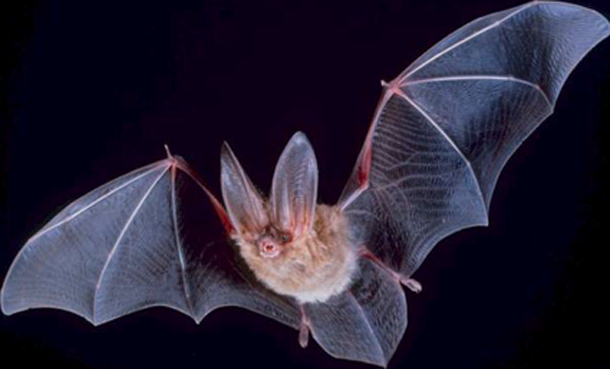
Bats fly through the air with the greatest of ease and new research shows that their flight is regulated by sensitive hairs on its wings. Stephanie McPherson reports.
Transcript
BAT NOISES
MCPHERSON: Bats flit across the night sky in a rapid ballet of twists and turns. Now, researchers believe the bats agility is due to the tiny hairs on their wings.
SCIENCE NOTE THEME MUSIC
MCPHERSON: The hairs on bats’ wings bend in the breeze and trigger super-sensitive cells that help them register the speed and direction of the wind.
Scientists from the University of Maryland measured electrical firings from the bats’ brains as they responded to the signals coming from the sensor cells. The brains were most active when they sensed the wind coming from behind – a situation that could lead to stalling.
The researchers wanted to know how the bats put those signals to use. The mammals flew through obstacle courses - first with their hairs intact, then again after the hairs were removed using a topical cream.
The bats moved easily through the course during the first round. But when their wings were hairless, the bats flew faster and took wider turns. Since the hairs weren’t there to trigger the sensor cells, scientists believe the bats sped up to avoid dropping from the sky – in the real world, they would’ve had trouble catching prey or avoiding predators.
Researchers are looking into how they can use this information to improve wind sensors on airplanes. Perhaps they can prevent stalling with a wing and a hair. That’s this week’s Note on Emerging Science, I’m Stephanie McPherson.