
Living on Earth: January 18th, 2013
Air Date: January 18, 2013
Diet and exercise are seen as the key factors that cause obesity, but new research suggests that certain chemicals called obesogens contribute to the global weight problem. Bruce Blumberg, professor of developmental and cell biology at the University of California at Irvine tells host Steve Curwood that the effects of an obesogenic chemical he studied seem to persist for several generations.
A Look Back at the Birth of the Clean Water Act
14 min read · 18 min listen

Forty years ago, when rivers caught fire and fish were washing up dead by the thousands Americans came together to demand “swimmable” “fishable” waterways for all. 1972 marks the creation of the Act that changed the way water pollution is managed in America. Host Ashley Ahearn talks with William Ruckelshaus, the first administrator of the Environmental Protection Agency who oversaw the initial implementation of the Clean Water Act.
A Troubling Climate Assessment
7 min read · 9 min listen
The US government has released its third National Climate Assessment for public comment. This comprehensive report finds humans unquestionably responsible for recent climate disruption, and warns that global temperatures could rise as much as ten degrees by 2100 if greenhouse gas emissions go unchecked. Host Steve Curwood talks about the climate report with Carol Browner, President Obama’s former director of the White House Office of Energy and Climate Change Policy.
BirdNote®
2 min read · 3 min listen

Though it's the middle of the northern winter, the large seabirds called Layson Albatrosses are busy raising chicks, as Michael Stein reports in BirdNote®.
Chemicals That Promote Obesity Down the Generations
7 min read · 9 min listen
Diet and exercise are seen as the key factors that cause obesity, but new research suggests that certain chemicals called obesogens contribute to the global weight problem. Bruce Blumberg, professor of developmental and cell biology at the University of California at Irvine tells host Steve Curwood that the effects of an obesogenic chemical he studied seem to persist for several generations.
Listener Letters
2 min read · 3 min listen
We dip into the Living on Earth mailbag to hear from our listeners.
New York Times to Close Its Environmental Desk
6 min read · 7 min listen
The New York Times has decided to shut down its environmental desk, though the paper says the change won’t reduce its coverage of the environment. Host Steve Curwood discusses the Times’s decision with Dan Fagin, who teaches at New York University and is former president of the Society of Environmental Journalists.
Overly Honest Science Methods
3 min read · 4 min listen
A new twitter hashtag is pulling back the curtain on some of the truths that drive decisions in scientific labs around the world. It’s called #overlyhonestmethods and scientists can’t seem to get enough. Living on Earth's Emmett FitzGerald reports.
Right Whales in the Wrong Place
8 min read · 11 min listen
A Right Whale mother and newborn calf have been spotted in Cape Cod Bay. Whale and Dolphin Conservation Biologist Regina Asmutis-Silvia tells host Steve Curwood that Right Whales should travel to the balmy waters of Florida and Georgia to give birth at this time of year.
Wired Wilderness
6 min read · 8 min listen
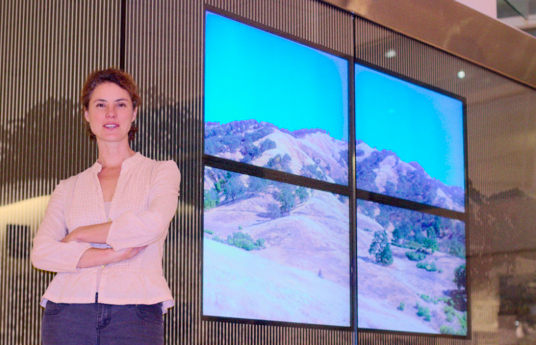
In a novel experiment, artists have set up cameras that beam images from a nature reserve to San Jose's airport. Adelaide Chen reports that over time, they hope to show climate change in action.
Working Woodlands for Carbon and Cash
5 min read · 7 min listen
Nearly three-quarters of Pennsylvania's woodlands are still in private hands. As Ann Murray reports, the Nature Conservancy has helped develop a program to persuade land-owners to preserve forests by rewarding them for the carbon the trees sequester.