
Science Note: A Plant With Oily Leaves
Air Date: March 01, 2013
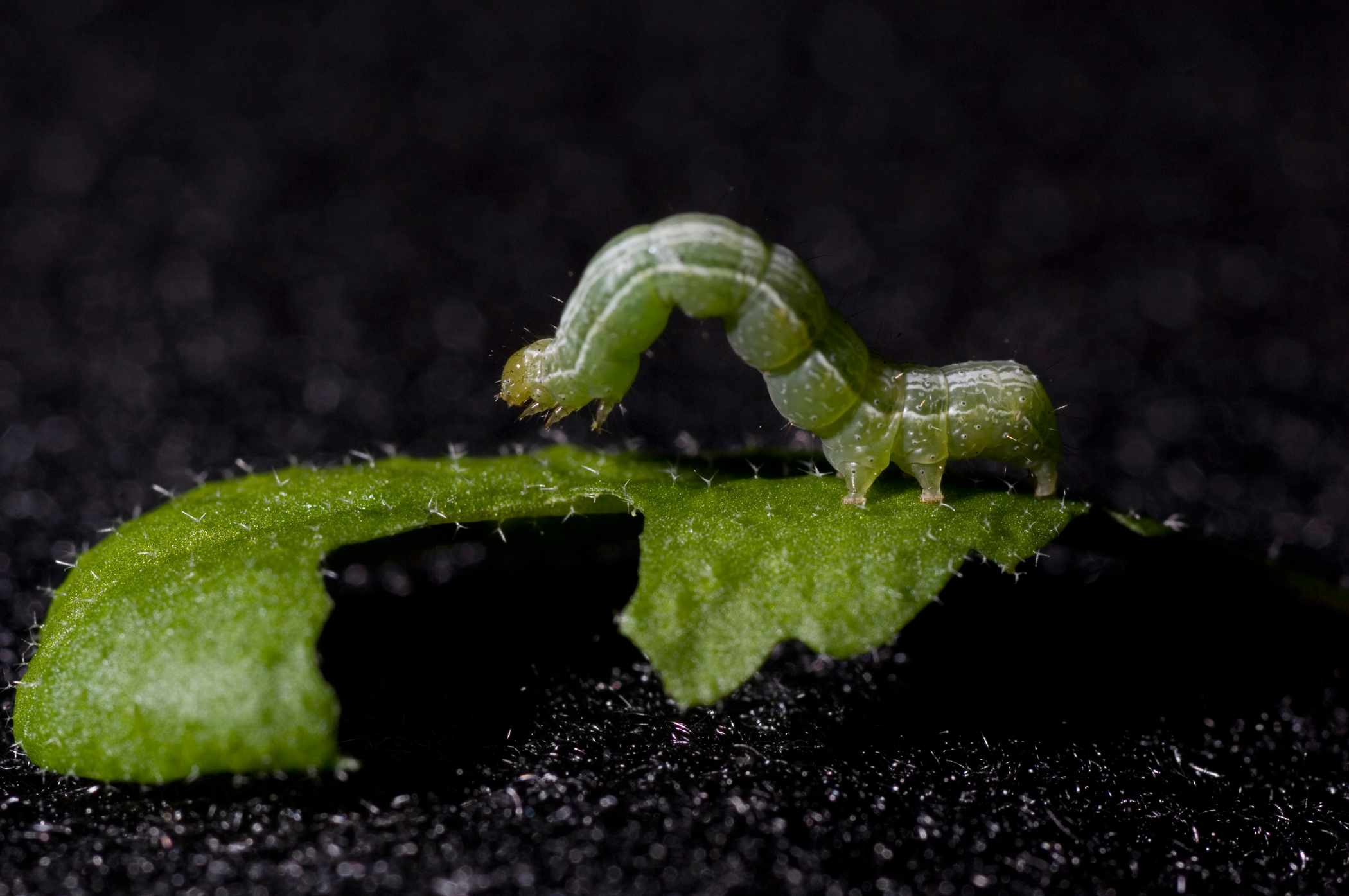
In a bid to increase biofuel extraction from plants, researchers at Michigan State University engineered a plant with high levels of oil in its leaves. Naomi Arenberg reports.
Transcript
CURWOOD: It's Living On Earth, I'm Steve Curwood. Just ahead - the smallest and most prolific life-forms on the planet, but first this note on emerging science from Naomi Arenberg.
ARENBERG: MmmMmmGood! That might be what some lucky caterpillars living in a Michigan State University laboratory are saying. These larvae were fed leaves engineered to contain significantly more oil than average leaves. The experiment was conducted by a research team at MSU. Their leafy goal is two-fold – first, to increase plant production of biofuels and, second, to create more nutritious feed for non-human animals.
Until now most biofuel research has worked on seeds, where oil naturally occurs, as food for the nascent plant. But the MSU team is experimenting with oil production and storage in leaves, hoping to double energy capacity by using more of the plant. The team inserted a gene from green algae into the leaf of thale cress, or Arabidopsis thaliana. That’s a small, flowering plant, widely used in genetic research because of its relatively short life cycle.
The next phase is where the caterpillars come in. To prove that the modified cress leaves were a good source of oil, the team fed them to the fuzzy, little crawlers, who gobbled them up and grew a bit more roly-poly than caterpillars in a control group.
The next experimental step will be to find a way to commercialize this development by boosting oil production in algae and grasses that can grow on land unsuitable for agriculture. So, when you next drive past a grassy field, you could be looking at a future source of fuel for your next fill-up. That’s this week’s note on emerging science. I’m Naomi Arenberg.
