
Bald Eagles on the Connecticut River
Air Date: March 22, 2013
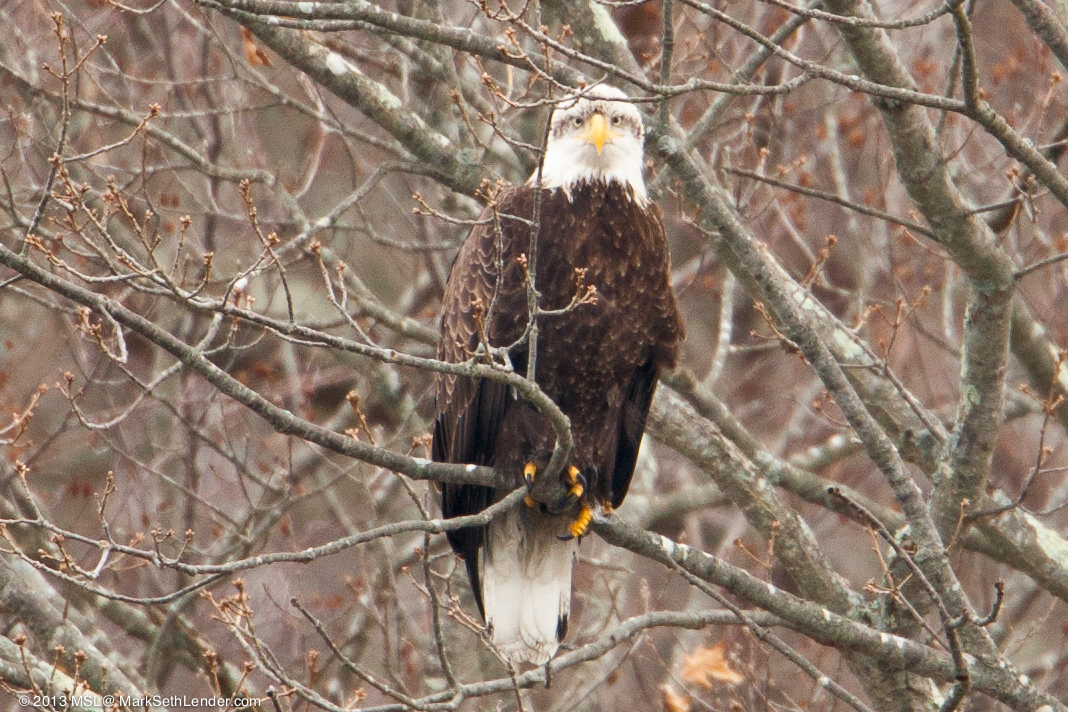
The Connecticut River is one place Bald Eagles gather to catch fish, but as writer Mark Seth Lender observed, they sometimes find other prey.
Transcript
CURWOOD: The American Bald Eagle prefers to eat fresh-caught fish. And in winter, when the upper reaches of the Connecticut River freeze over, the eagles move south in search of open water. To get a good view of these iconic birds requires a good boat, and a good captain, says writer Mark Seth Lender, who found both on the Connecticut River, aboard the Riverquest - and plenty of eagles as well.
LENDER: Under clouds like a lead yoke, sun rises over sea smoke, painting color on the sky. Up the river over ice floes, at the bloom of the dawn rose, bald eagles rub their eyes. In their cold perches on the dead branches of the riverside hemlocks, in the red raw hour as the day flowers they are hardly alive. Not a talon reaches. Not a wing stretches. Not a sparrow flies.
This was a rich place once, Connecticut River Salmon and Sturgeon, Shad and Menhaden racing against the tidal flow. In that time, up where the coves creep down and the River narrows, from salt to sweet, over falls and shallows salmon spawned and died, while the great Atlantic sturgeon used to glide sowing seed to the River for a century and more.
Silent giant oak and tall pine in galleries along the riverside held the banks upright. We felled them for our ships. Astride the great stream, we quarried the islands, carved them like carcasses to ballast those ships in granite blocks grey as tomb stones. We reaped the fish with mile wide nets (billowing shadows of the Shadow of Death) and when there was nothing but emptiness we ground the last of the herring down to feed, and to fertilizer for our corn rows.
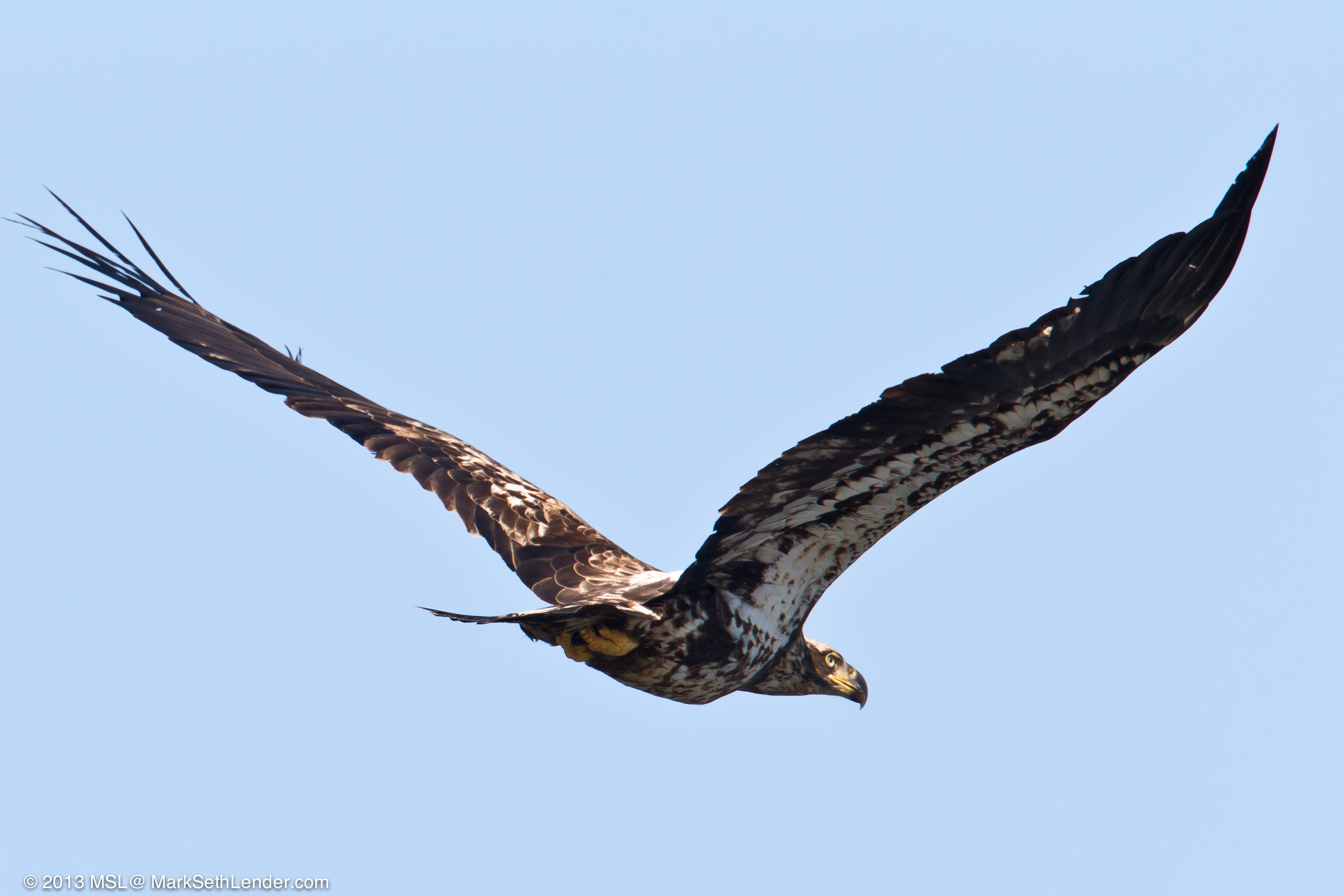
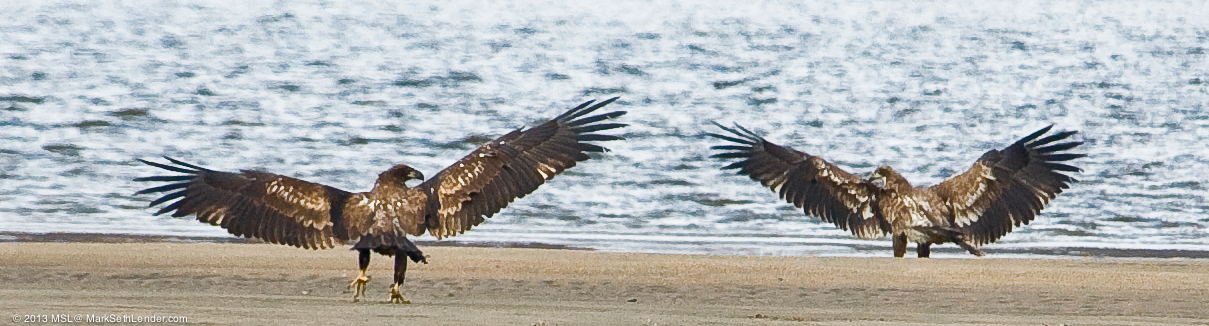
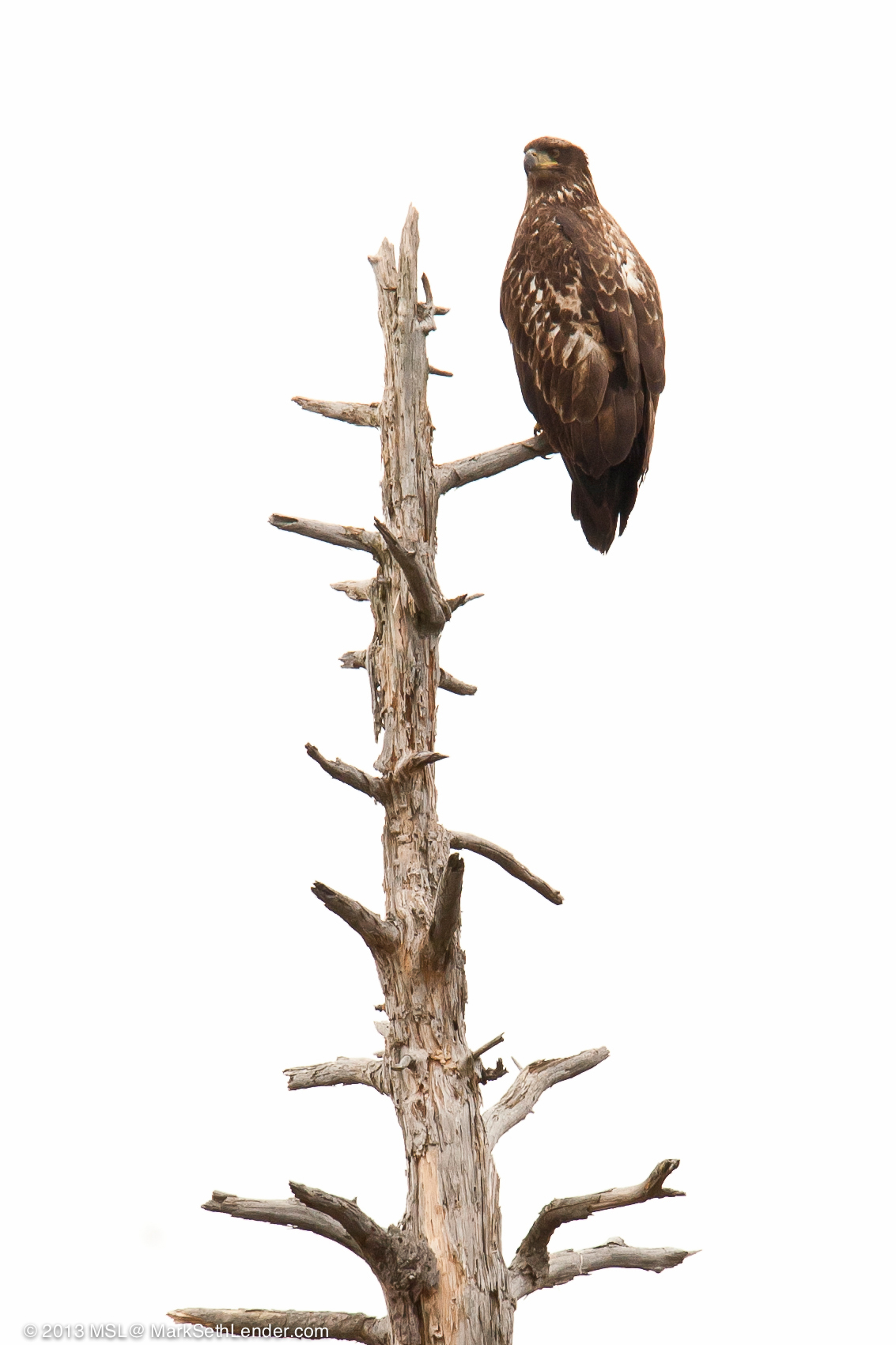
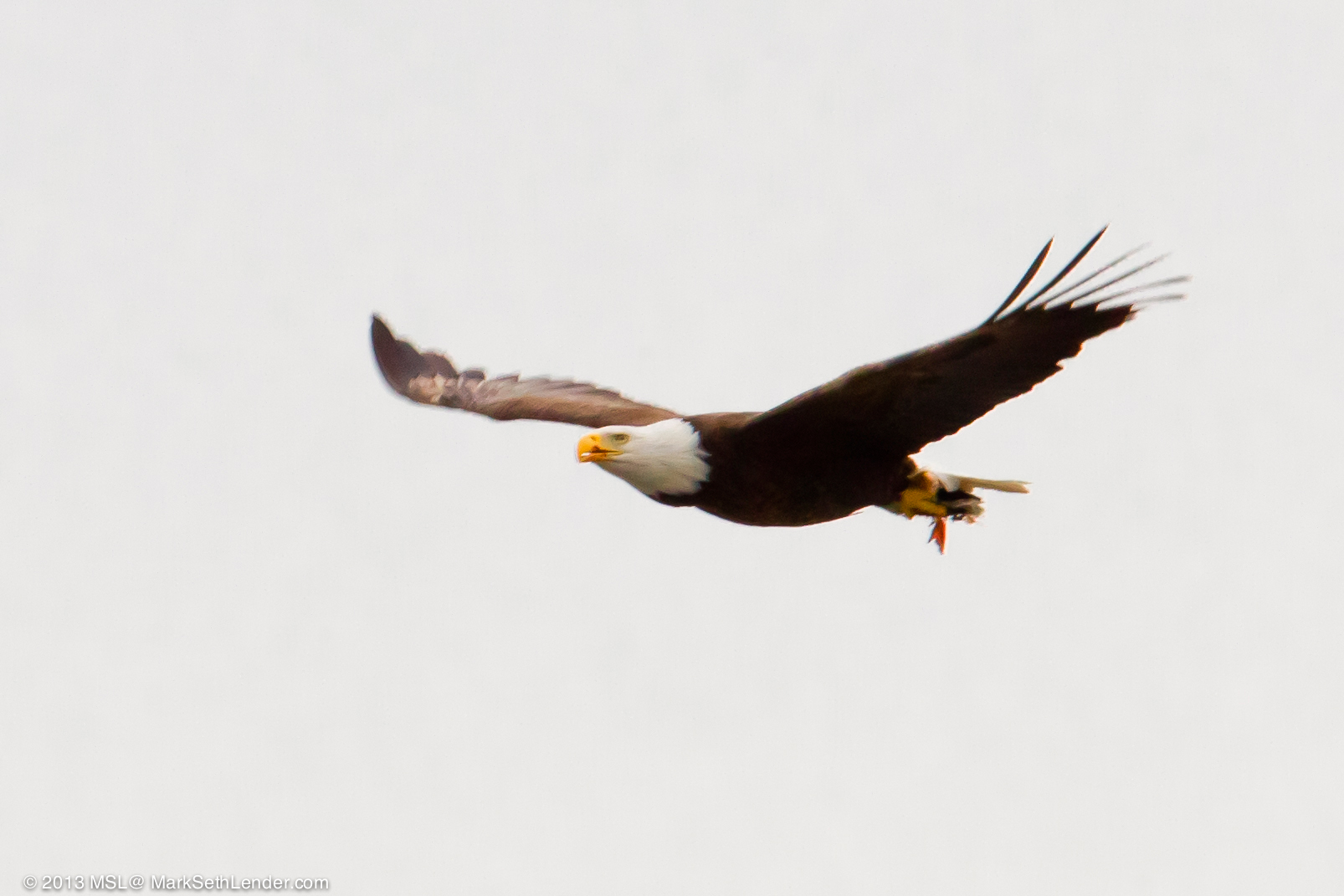
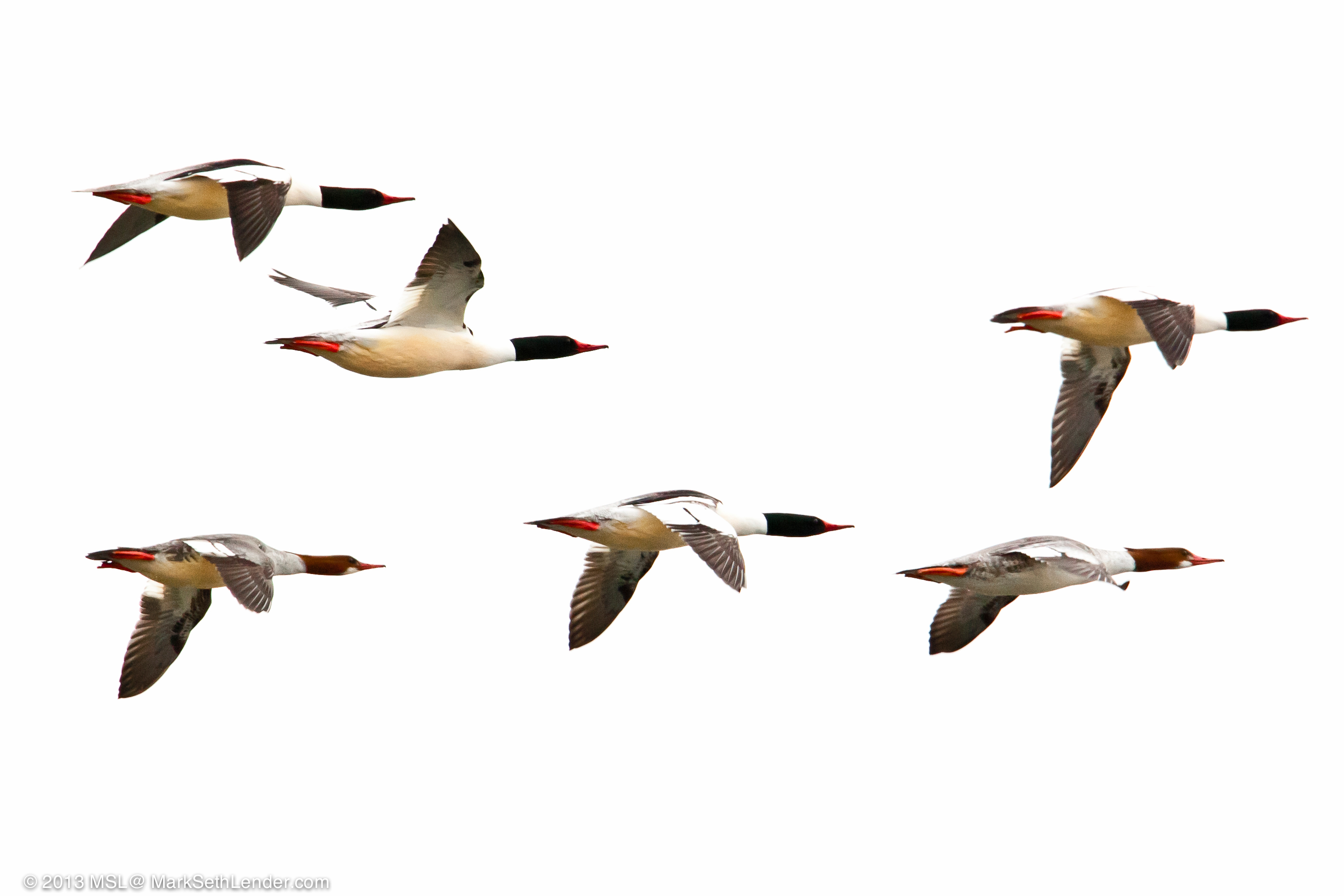
But the eagles know none of this. Care for none of this. Two fathom wide of wing spread between them, the Young Princes prance upon the sands of 8 Mile Bar. While above them, determined and speeding, the white head gleaming, her gunmetal talons long as a Bengal tiger’s claw, there she flies, Queen of the Air! And trailing behind her in her gnarled and yellow grip where the scales and the flailing tails of fishes belong is instead the webbed foot of a merganser, fresh killed. Red as murder.
CURWOOD: Mark Seth Lender is the author of Salt Marsh Dairy, A Year on the Connecticut Coast. For the photos he took of our national bird, head on over to our website, LOE.org.