Greenland Melt Music
Air Date: August 23, 2013

Greenland's 2012 summer ice melt was the largest on record. Ice specialist Marco Tedesco visits Greenland every year and, tired of trying to convey the science of the melting ice with graphs and statistics, he found someone who could turn his data into music. Living on Earth’s Emmett FitzGerald has the story.
Transcript
CURWOOD: Well, back in the spring, a team of scientists and artists at the City College of New York came up with a way to listen to glaciers as they melt, as part of a multimedia exhibit about Greenland’s melting ice sheet. To help people understand the science involved, they included photography, video, and a musical method of reflecting the reality of the melting ice. Living on Earth’s Emmett FitzGerald has the story.
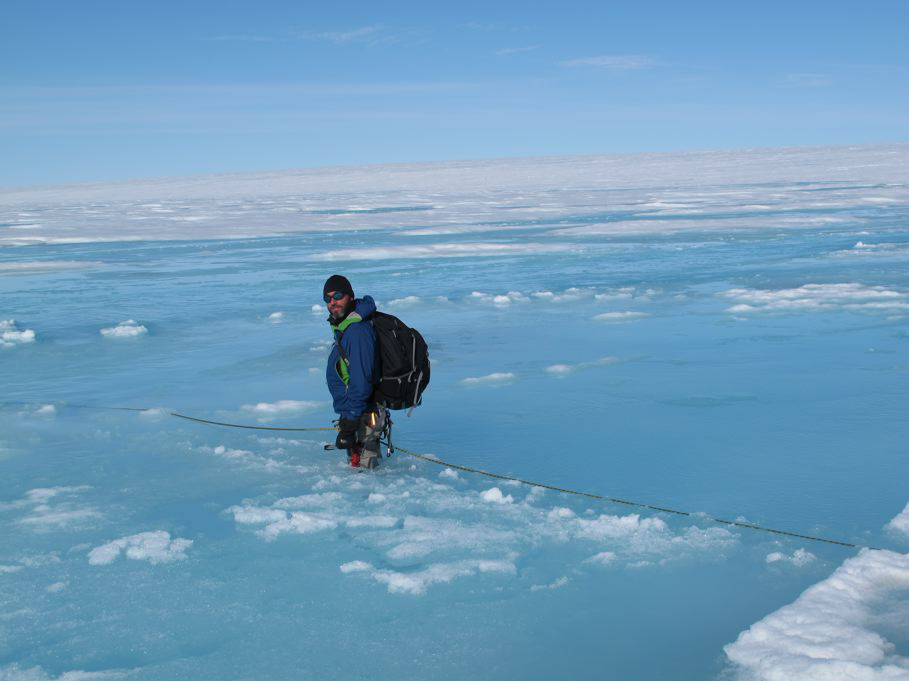
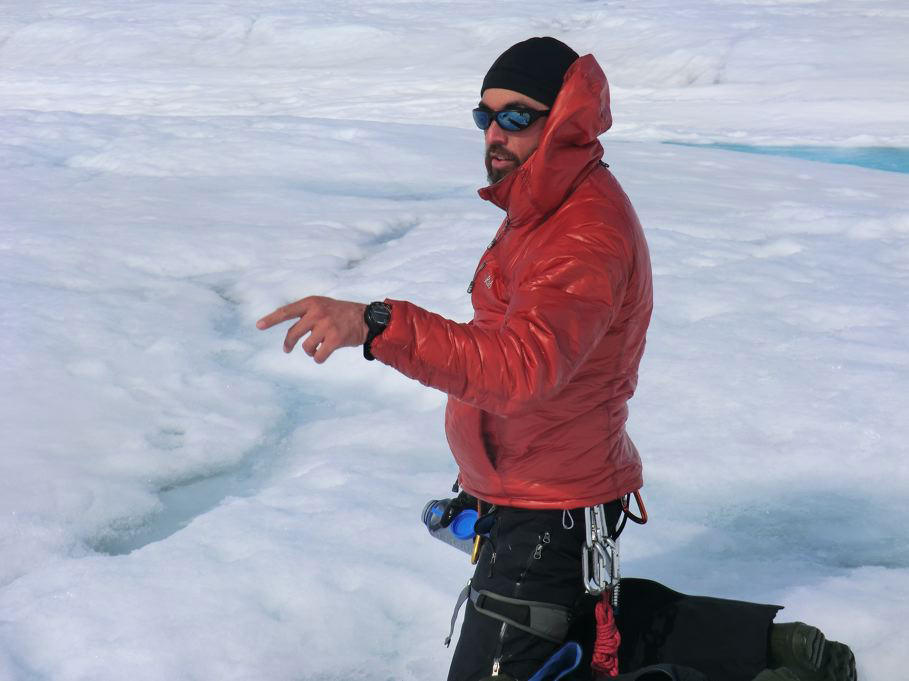
FITZGERALD: Every year, Marco Tedesco travels to Greenland to collect data on the annual melt of the ice sheet. He’s a snow and ice scientist, but he has another passion.
TEDESCO: All of us we know albedo in a very empirical way. If you walk in the sun and you’re wearing a black shirt, you’ll get much warmer sooner than your buddy wearing a white shirt.
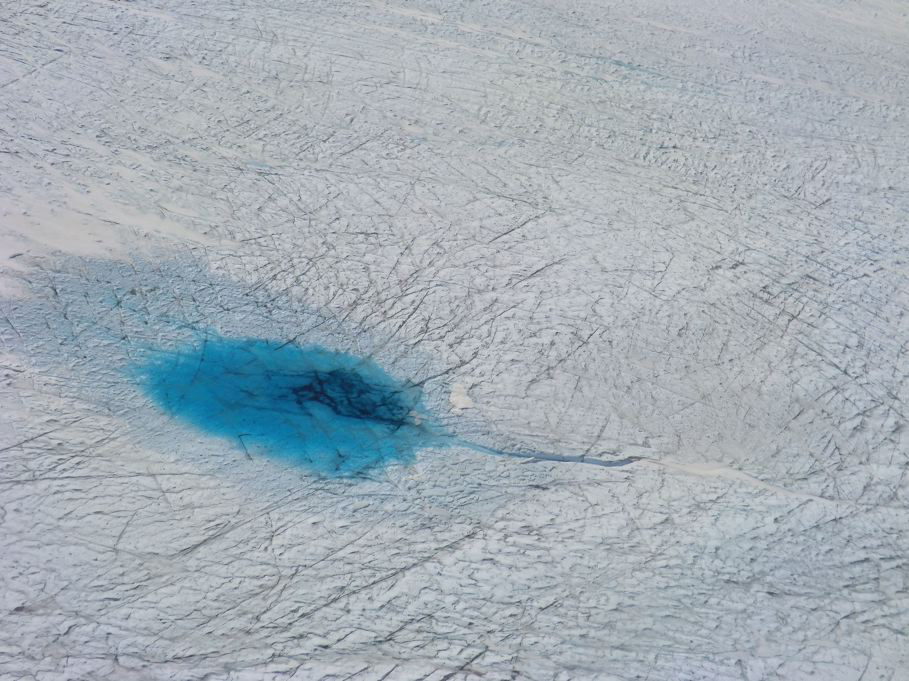
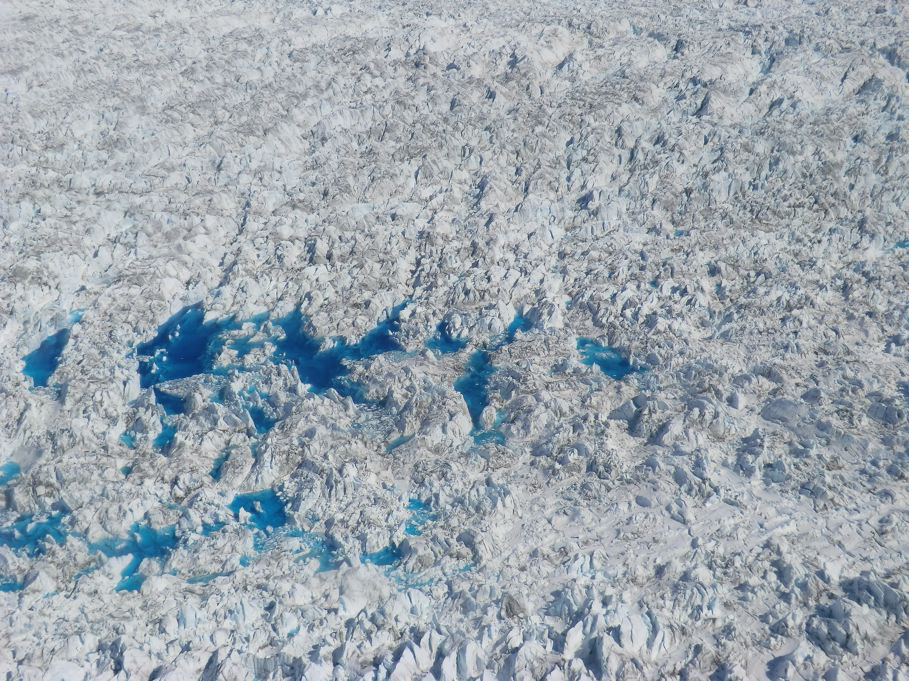
FITZGERALD: During summer in Greenland, the layer of fresh white snow on the surface begins to melt, exposing older, grayer snow, and eventually blue ice. As the island’s surface grows darker, it absorbs more solar radiation, increasing the overall melt.
PERL: The technique I used in sonification is called parameter mapping and it basically means representing some aspect of changes in the data with some changes in the sound.
MUSIC: ALBEDO CHOIR VS MELT RATE GEIGER COUNTER
PERL: Albedo, I decided to represent that by increasing the intensity of the lower frequencies of a male bass choir. So that as the albedo worsens, as the ice gets darker and is unable to reflect the sunlight the lower voices become more and more intense relative to the high voices in this droning chord.
MUSIC CONTINUES UNDER NARRATION
And the Geiger counter is a well known effect where these very annoying beeps and clicks get louder and more frequent and intense. I decided to use that effect to represent increasing amounts of the ice sheet melting over Greenland.
MUSIC CONTINUES
It’s a pretty serious problem that’s happening. And I thought more annoying would get the point home.
I think we must be getting into the 2000s now and you can hear the melting is increasing. It gets quite intense. 2012 is a mammoth year.
MUSIC PEAKS IN INTENSITY AND STOPS
FITZGERALD: There was record-breaking melt in 2012. Professor Tedesco says it really stands out…
TEDESCO: like a giant basketball player, walking around Times Square.
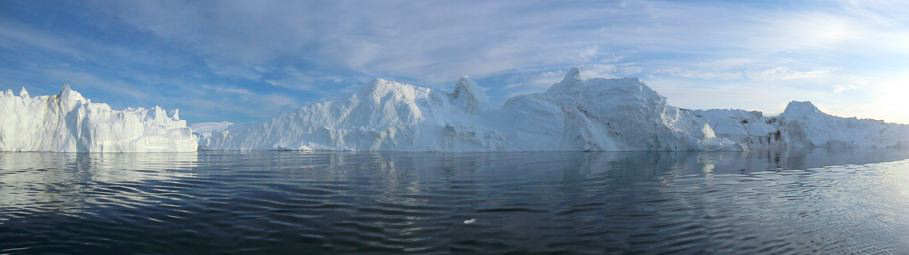
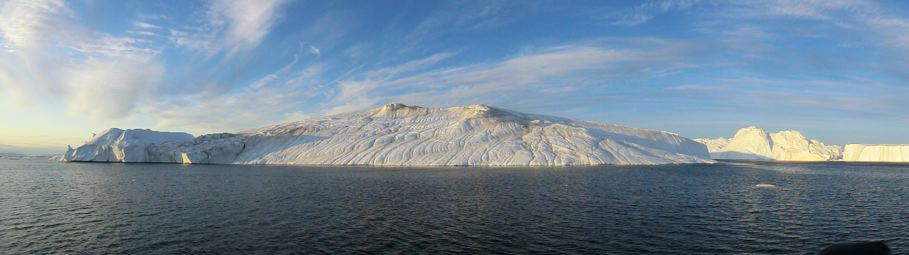
FITZGERALD: Almost the entire surface of Greenland experienced melting in summer 2012. The overall melting period lasted two months longer than average, and Greenland’s melt alone added a millimeter to the global sea level. To highlight the problem, Professor Perl composed a full summer melt score. It documents the extent of Greenland’s melt over time.
MUSIC: FULL SUMMER MELT SCORE, RUNS UNDER NARRATION
PERL: I had a lot of fun with this one. It was pretty challenging to do technically but I figured out a way to compose music so that I could have a continuous performance with a lot of notes that are happening simultaneously. It’s very busy and very frenetic. I took the data, which is the amount of melting, and I have it actually controlling how many of these notes can sound at any given moment.
MUSIC DIES DOWN TEMPORARILY
PERL: There was a spot with very minimal melting. That was the lowest amount of melting that happened in that time scale. So, essentially when the melting values are low it suppresses the playback of most of the notes. And then as the melting values rise in real time it allows more notes to be allowed basically through this gate, to be allowed to play.
MUSIC CONTINUES
PERL: The time scale we are hearing here is three seconds represent about a year’s worth of change. It’s not till the very end, which we are getting pretty close to, 2013, where you can pretty much hear the full musical score where all the notes are playing.
PERL: I’d actually done a prior version of this before I had the 2012 values, and the whole arrangement was kind of more intense, but as soon as I rescaled everything and added 2012, all the other years kind of paled in comparison.
MUSIC PEAKS AND STOPS
FITZGERALD: Jon Perl has worked in all sorts of musical styles - from experimental jazz, to rock and roll. But he says he’s never heard anything quite like his glacial melt music. That may be because he had an unusual collaborator - the data.
PERL: I mean I know that I didn’t compose this piece entirely, its kind of composing itself by having the melting values determine what notes are playing at any given time and what notes aren’t.
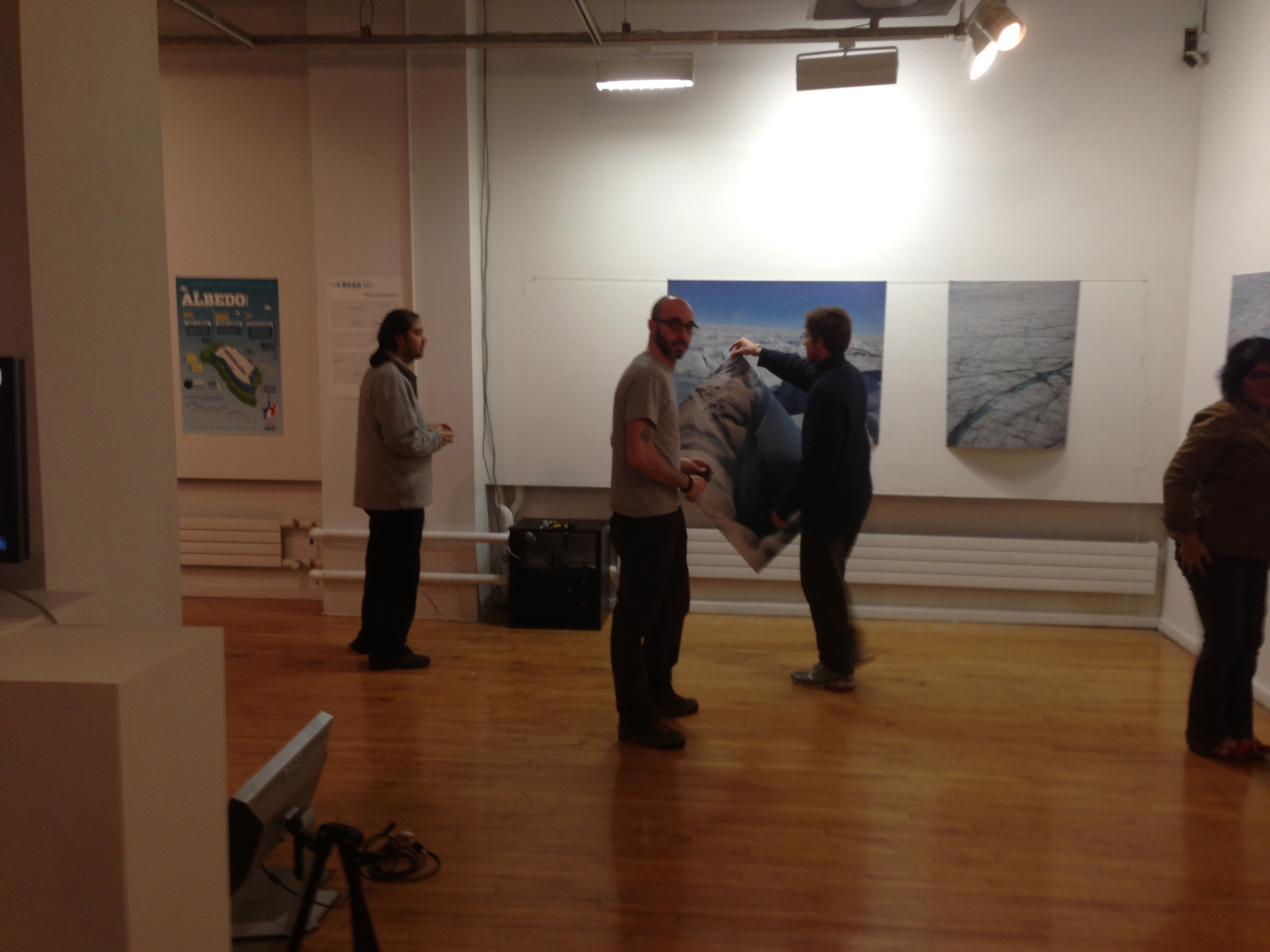
FITZGERALD: In the end, the two professors presented the sonifications as part of an exhibit they called PolarSeeds. For Professor Tedesco, it was an exciting change of venue for his research.
TEDESCO: Usually my work finalizes in papers, publications, or conferences. So to be able to put together my results in an exhibit was very satisfying for me.
FITZGERALD: He hopes the songs, photos, and videos will reach a broader audience than a scientific paper, and thinks that could be a good thing. Greenland’s melting ice sheet is fast becoming a serious global problem.
TEDESCO: It’s very important for us to understand that what happens in the Arctic, what happens in Greenland doesn’t stay really in Greenland.