
Science Note
Air Date: September 27, 2013
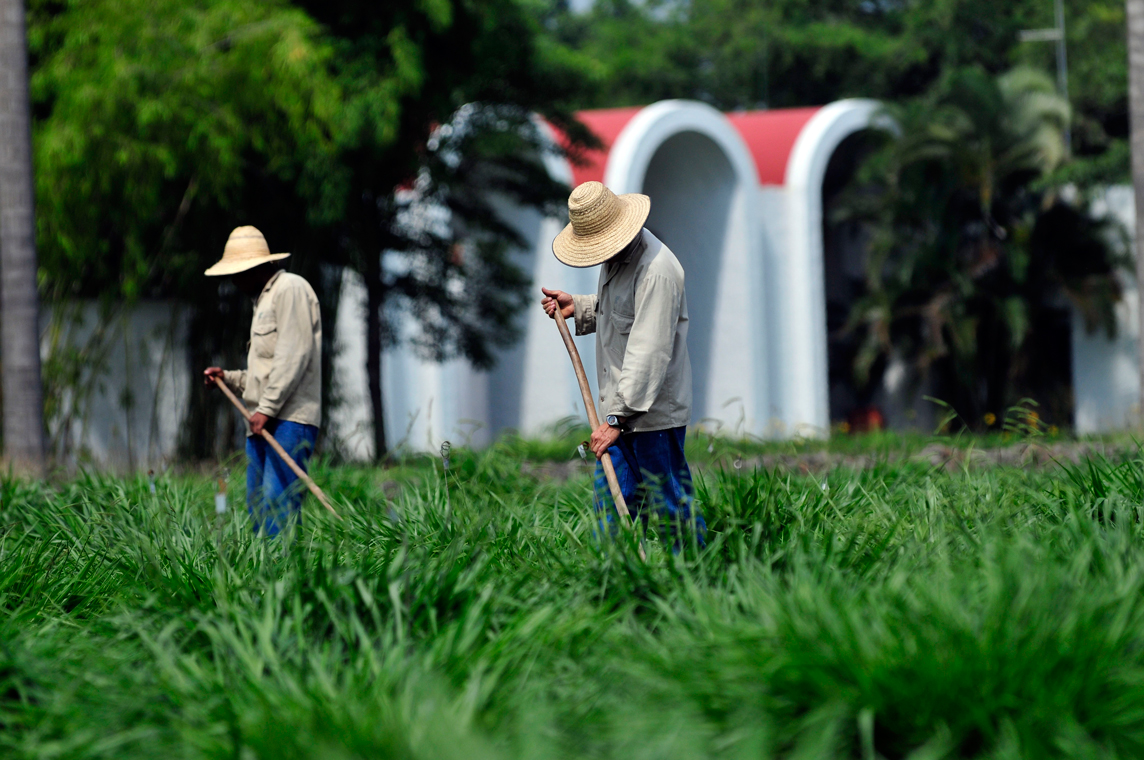
Researchers have discovered a natural hydrocarbon in the roots of a grass that could reduce greenhouse gas emissions in agriculture. Andrew Keys reports in this week’s Note on Emerging Science.
Transcript
CURWOOD: It’s Living on Earth, I’m Steve Curwood. In a minute, searching for elusive toads in Tucson, but first this note on emerging science from Andrew Keys.
KEYS: The grass potentially just got greener for agriculture.
Researchers have discovered a chemical in the roots of a tropical grass that may be key to reducing greenhouse gas emissions.
Farmers rely on nitrogen fertilizer to grow more robust crops. But plants actually make use of less than a third of the nitrogen in that fertilizer. Soil bacteria gobble up the rest, and convert it to nitrous oxide, a climate-altering gas, and nitrate, a compound that washes into waterways and can cause harmful algae blooms.
In the 1980s, researchers at the International Center for Tropical Agriculture in Colombia discovered a grass that grows well in low-nitrogen soils, even without fertilizer. It’s an African savannah grass called Brachiaria humidicola that’s commonly grown as feed for livestock. This year, the scientists got to the root of why this grass flourishes with little nitrogen. A chemical in Brachiaria’s roots inhibits soil bacteria from absorbing the lion’s share of available nitrogen. That means more for the plant, and less need for fertilizer.
Brachiaria is already a popular forage grass for livestock across the tropics. Now that they understand its potential to lower emissions and save money on fertilizer, researchers hope to harness the powers of this chemical to improve crop yields in staples like rice and corn.
That’s this week’s Note on Emerging Science. I’m Andrew Keys.