
BirdNote: Solving the Mystery of the Herring Gull’s Red Spot
Air Date: October 03, 2014
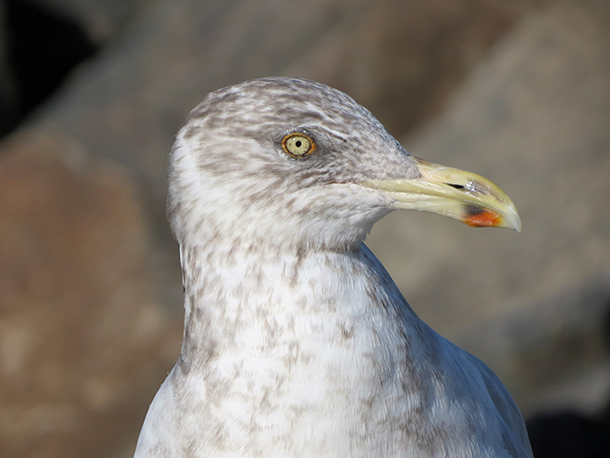
Mary McCann explains how a tiny red spot on the tip of a Herring Gull’s beak is a visual trigger for gull chicks and scientists — causing the young to feed, and setting off animal behavior experiments that led to a Nobel Prize.
Transcript
CURWOOD: It’s Living on Earth. I’m Steve Curwood.
MUSIC: BIRDNOTE® THEME
CURWOOD: The way animals behave is a constant source of fascination for some observers and an interest for scientists. And as Mary McCann explains in today’s BirdNote®, careful observation can help solve mysteries.
GULL CALLS
BIRDNOTE®/GULLS’ BEAKS
http://birdnote.org/show/little-red-spot-gulls-bill
The Little Red Spot on a Gull’s Bill
Bugling calls of Glaucous-winged Gulls
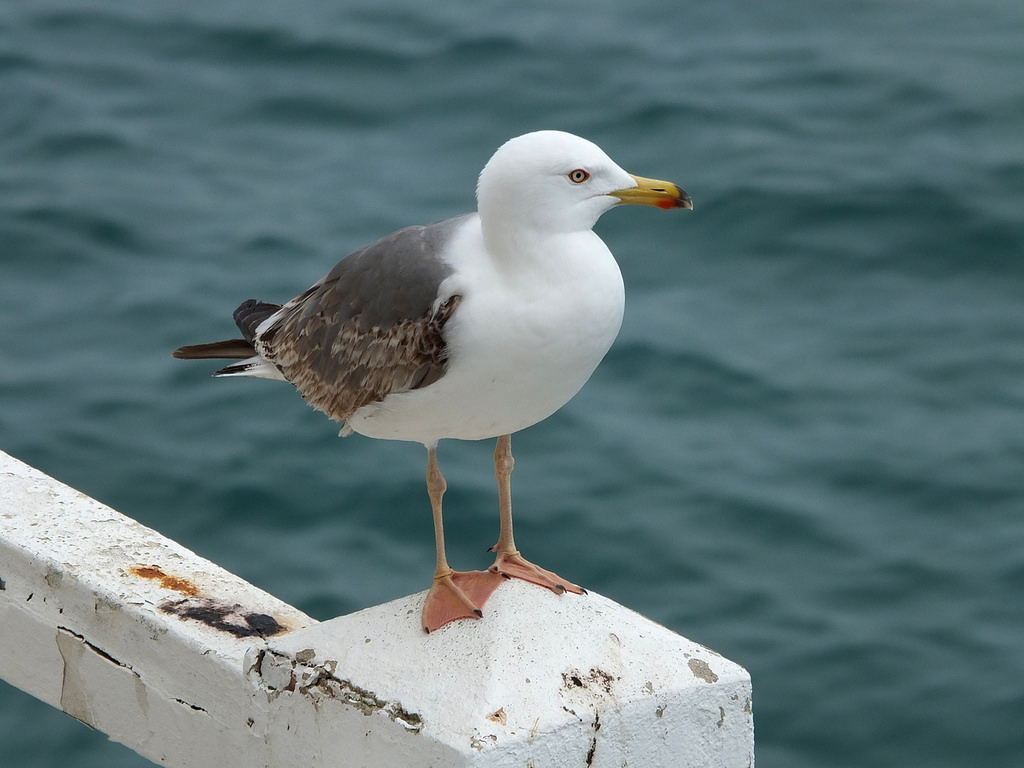
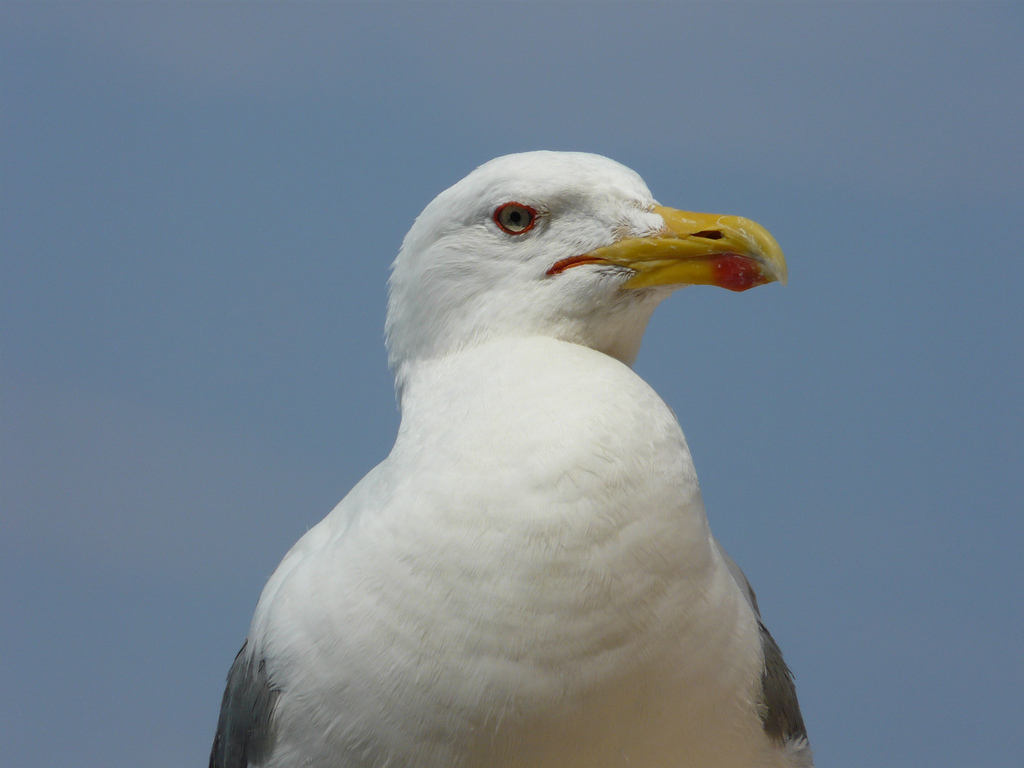
MCCANN: You may have noticed – on a trip to the shore or at a waterfront restaurant where gulls gather – that many gulls have a bright red spot near the tip of their otherwise yellow bills.
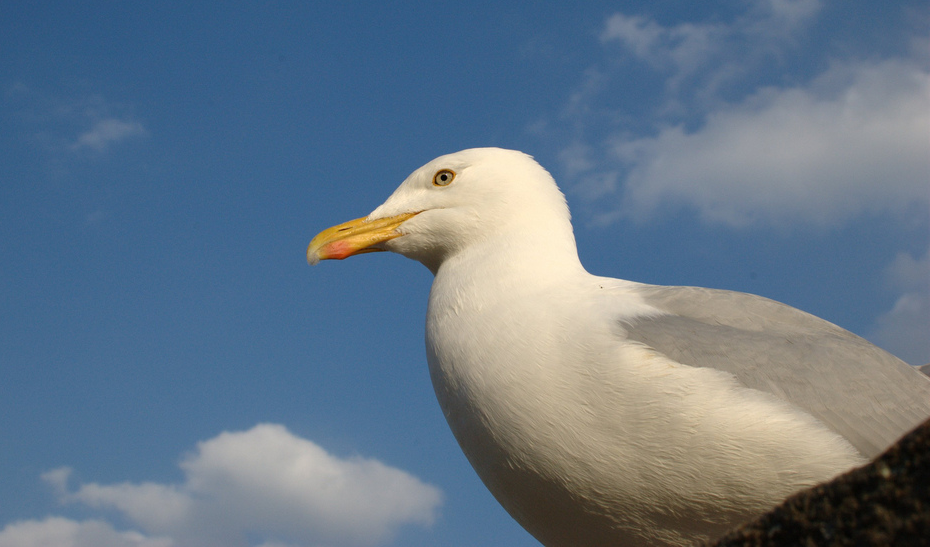
BUGLING CALLS OF GULLS
MCCANN: Behind that red spot lies a considerable tale – that’s t-a-l-e!
MCCANN: In the mid-20th Century, Dutch scientist Niko Tinbergen studied nesting Herring Gulls. He noticed that newly hatched gull chicks were fed by their parents only after they pecked at the adults’ bills
BEGGING CALLS OF YOUNG GULLS
MCCANN: Tinbergen devised experiments that varied the shape and coloration of the adult’s bill. It became clear that the red spot on the adult gull’s bill was a crucial visual cue in a chick’s demands to be fed, and thus its survival.
BEGGING CALLS OF YOUNG GULLS
MCCANN: Tinbergen also made the case that the chick’s attraction to the red spot on the bill was instinctive. This conclusion came at a time when there was furious debate among experts about whether such behavior was learned or innate.
MCCANN: Tinbergen’s gull research helped lay the groundwork for the science of animal behavior, and in 1973 earned him a Nobel Prize. And it all started with that little red spot.
BEGGING CALLS OF YOUNG GULLS
MCCANN: I’m Mary McCann.
###
Written by Bob Sundstrom
Bird audio provided by The Macaulay Library at the Cornell Lab of Ornithology, Ithaca, New York. Calls of Glaucous-winged Gulls recorded by A.A. Allen. Begging call of Glaucous-winged Gulls recorded by E.S. Booth. Herring Gulls recorded by Martha Fischer.
Producer: John Kessler
Executive Producer: Dominic Black
© 2014 Tune In to Nature.org October 2014 Narrator: Mary McCann
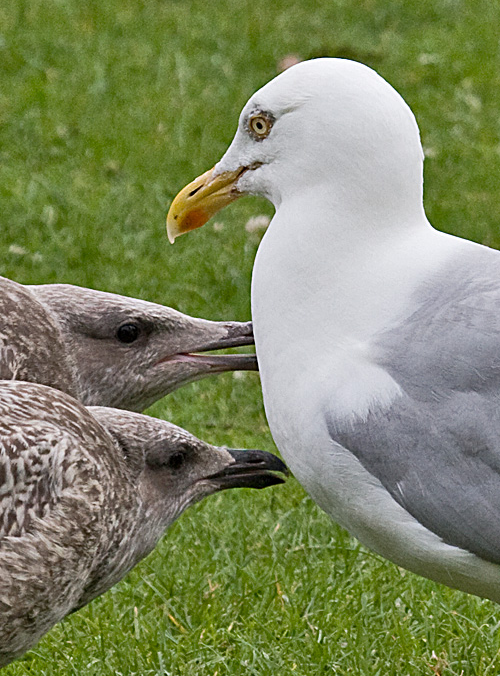
CURWOOD: You’ll find photographs of gulls – and their red spots - at our website, LOE.org.
BEGGING CALLS OF YOUNG GULLS
