
Science Note: Rats Against Poachers
Air Date: July 21, 2017
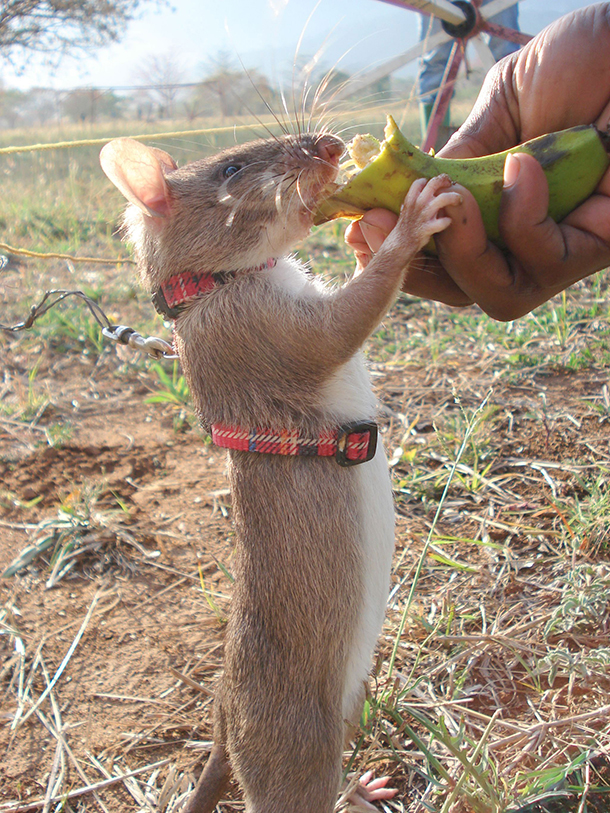
African pouched rats can grow to a yard long, and have a very acute sense of smell. So the US Fish and Wildlife Service is devoting research funds to study whether they can sniff out trafficked animal products and timber.
Transcript
CURWOOD: Coming up -- how rhino DNA could help save the species and fight poachers, but first this note on emerging science from Aidan Connelly.
SCIENCE NOTE THEME
CONNELLY: The African pouched rat isn’t quite like the rodents you see scurrying along subway tracks, or hanging around your local dumpster. These rats are nearly three feet long– including their 18-inch tails. And their size, along with their acute sense of smell, makes them almost more like dogs.
It’s because of that sense of smell that the US Fish and Wildlife Service has pledged one hundred thousand dollars into studying these rats, in hopes of using them to sniff out timber and wildlife trafficking in Tanzania.
Tanzania already has a history of using African pouched rats – specifically their noses – for a number of purposes. They’ve been used to diagnose tuberculosis, as well as to detect landmines, where they’re suited up with harnesses, and fed bananas when they do a good job. Now, these oversized rats are on a new mission: Searching out wildlife crime, specifically trafficked Pangolins, the most widely poached animals in the world.
The Research funds from US Fish and Wildlife will help test the rat’s effectiveness, and, if experiments work, will help set up a program to deploy them directly to the front line, at Tanzania’s ports. If they prove effective, the African pouched rats could become invaluable to anti-trafficking groups not just in Tanzania, but around the world.
And that could be promising news for everybody: Humans, pangolins, and the three-pound, banana-munching rats themselves.
That’s this week’s note on emerging science. I’m Aidan Connelly.