
Science Note: Self-Healing Concrete
Air Date: February 02, 2018
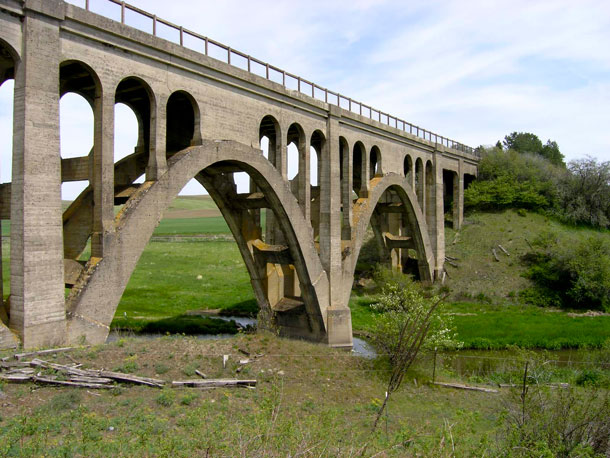
Maintaining concrete structures can be expensive and time consuming. Living on Earth’s Hannah Loss reports on new research that suggests using fungi that can grow to repair cracks could provide an effective and sustainable solution to crumbling infrastructure.
Transcript
CURWOOD: It’s Living on Earth, I’m Steve Curwood. In a minute – pulling the plug on big hydropower in Brazil – but first this note on emerging science from Hannah Loss.
SCIENCE NOTE THEME
LOSS: Every day, millions of Americans drive over bridges and speed through train tunnels. At the core of much of this infrastructure is concrete, the grayish mix of cement paste and rocks that has been used in construction since the Romans. Over time and with exposure to the elements, concrete can develop cracks that put structures at risk.
The disintegrating concrete on dams, and spillways, and shielding nuclear power plants is a particular threat to Americans’ health and safety. Now, researchers at Binghamton University are trying to mitigate the effects of cracked and crumbling concrete by bringing this vital building material to life. They created a concoction of concrete with some special ingredients: spores of the fungi Trichoderma reesei and the nutrients it needs to grow.
The spores lie dormant in the concrete until cracks appear. Water and oxygen can then infiltrate the cracks and wake up the Trichoderma spores. As the fungus grows, it creates calcium carbonate, the hard substance that composes oyster shells. The calcium carbonate deposits eventually fill in the original crack. Once the crack is filled, there’s no more space for oxygen or water, so the fungus becomes dormant and forms spores again.
This sort of bioconcrete is still in the early stages of development. Engineers say the biggest challenge is getting the fungus to survive the harsh conditions inside concrete. But once they bridge that gap, self-healing materials could be a smart solution to a global infrastructure problem.
That’s this week’s note on emerging science. I’m Hannah Loss.