
Science Note: A Moonshot To Save Rhinos
Air Date: July 27, 2018
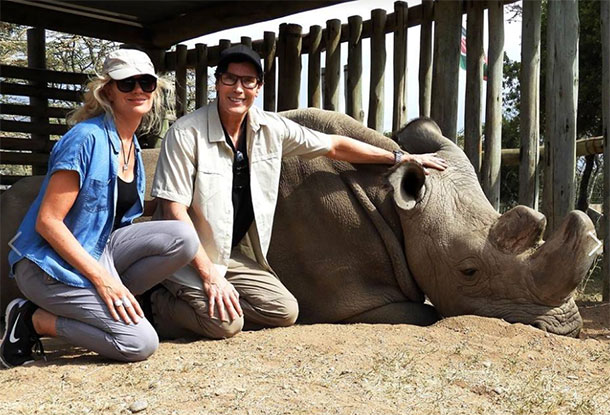
The last male Northern White Rhino recently died, leaving the species on the verge of extinction. But researchers have decided to try and preserve the species by injecting preserved sperm of the Northern White Rhino into the eggs of a close subspecies: the Southern White Rhino. Living on Earth’s Don Lyman reports.
Transcript
BASCOMB: Up next – Using genetics to keep track of the highly endangered rhino, but first, this note on emerging science from Don Lyman.
LYMAN: The northern white rhinoceros is teetering on the verge of extinction. The last male died in March, and only two females remain, both in captivity in Kenya.
But there are 20,000 southern white rhinos, a closely related subspecies of the northern white rhino. And for the first time, scientists have injected preserved sperm from a northern white rhino into the eggs of female southern white rhinos – to create rhinoceros embryos in a lab.
Researchers from the Safari Park Dvůr Králové in the Czech Republic incubated embryos until the cells began to differentiate, which is the stage at which they could be implanted into a surrogate mother rhino. The researchers hope to eventually implant similar embryos into female southern white rhinos.
The researchers say even though any baby rhinos born using this technique would be a cross between northern and southern subspecies, it would be a way to preserve northern white rhino genes. Those genes could at some point allow scientists to recreate pure northern white rhinos through selective breeding. It’s an expensive process, and critics say that money could be better spent on conservation for endangered rhinos left in the wild.
Selective breeding for the northern white rhino would take several generations of rhinos and many decades.
However, the scientists are also planning to harvest eggs from the two remaining female northern white rhinos and fertilize those eggs with preserved northern white rhino sperm, a process which could produce a pure bred northern white rhino calf within the next three years.
That’s this week’s note on emerging science. I’m Don Lyman.