
Beyond The Headlines
Air Date: November 02, 2018

Peter Dykstra and Host Steve Curwood discuss the UPS company’s new electric bike delivery system before they examine China’s decision to reverse a ban on the trade of rhinoceros horn and tiger bone. Later, they venture back in time to 1995, when a mass migration of waterfowl closed airports in some prairie states of the US.
Transcript
CURWOOD: It’s Living on Earth. I’m Steve Curwood. Time now for a look beyond the headlines with our intrepid scout Peter Dykstra. Peter is an editor with Environmental Health News, that’s EHN.org and DailyClimate.org. He’s on the line from Atlanta – hey Peter, what do you have for us today?
DYKSTRA: Hi, Steve. You know, there’s no more competitive business out there than the package delivery racket. You’ve got the Postal Service, and FedEx, and UPS all trying to outdo each other, all trying to out-deliver each other, and in at least one case, they’re trying to out-green each other.
CURWOOD: Really? I mean, I think all these boxes that I’m getting, I don’t know how green they are. How are they trying to out-green each other?
DYKSTRA: Well, UPS is trying out a new method of delivery – heavy-duty electric bikes that can carry trailers with up to 400 pounds of your stuff. They say this will reduce pollution and help them navigate more efficiently in urban areas.
CURWOOD: 400 pounds, that’s a lot of pedaling!
DYKSTRA: That’s a lot of pedaling, except these are e-bikes, so there won’t be any pedaling involved. And the irony of all this, is that the city of Seattle, where this will be tested out, is where UPS started out in 1907, I’m sure we both remember it well. And UPS started as a bike-service, and now they’re a 21st Century bike service.
CURWOOD: Hey Peter, I don’t want to pop your bubble, but, you know, I don’t remember 1907. What else do you have for us today?
DYKSTRA: More environmental news from China. As we hear over time, some of the news from China is promising, in terms of their addressing the huge environmental problems from a growing nation of over a billion people, some of it’s bad. This particular environmental news is, to me, particularly outrageous. China is reversing a 25-year ban on the use of tiger and rhino products in traditional medicines.
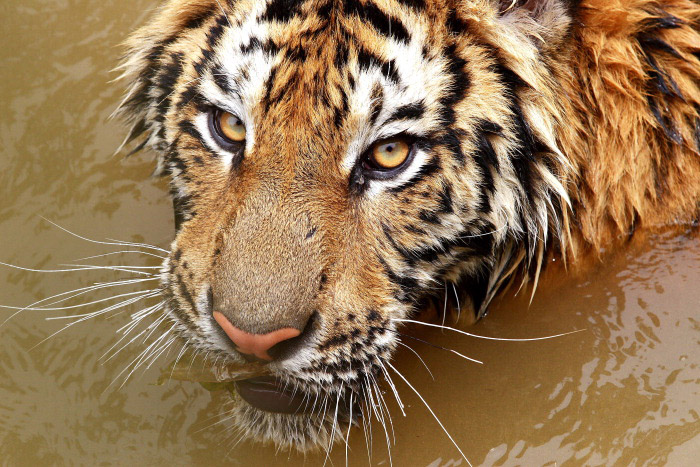
CURWOOD: Wait a second, but those are endangered animals. What’s going on?
DYKSTRA: Well, yeah, and there’s no mention in the official announcement of the status of tigers and rhinos. China says they can handle it. They say that this will be tightly regulated. They also say that they’re only going to take tiger and rhino parts from farmed animals.
CURWOOD: What sort of medical value do these things have anyway, for people?
DYKSTRA: The Western world, everybody outside the Chinese traditional medicine world, says they’re useless, they’re ornamental, they’re status symbols in a country with a rapidly growing middle and upper class. And no less than the World Federation of Chinese Medicine Societies agrees and says that tiger bone has no relevance to medicine and healing whatsoever.
CURWOOD: Let’s take a look back into the history vault now; what do you have for us today?
DYKSTRA: 1995, in Early November, the start of fall was a grand passage. Do you know what a grand passage is?
CURWOOD: Some kind of a dance?
DYKSTRA: A grand passage is when all of the waterfowl, ducks and geese by the millions take off on their southern migration all at the same time. There was one in 1940, there was one in 1955. The most recent was 1995, when a cold snap in Canada forced all of these ducks and geese up in the air, headed south in such numbers that they actually closed the airports in Kansas City and Omaha.
CURWOOD: So, I imagine this is what would happen back in the day of the passenger pigeon.
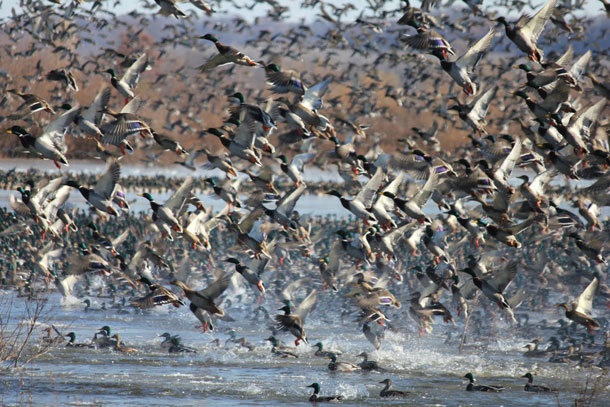
DYKSTRA: Happened with the passenger pigeon, except the passenger pigeon went extinct in 1912, so air traffic was a little bit less of a concern.
CURWOOD: I guess not, Peter. Hey, thanks so much for taking the time with us today. Peter Dykstra is with Environmental Health News, that’s EHN.org, and DailyClimate.org. And we’ll be talking about the elections real soon.
DYKSTRA: Looking forward to it. Thanks, Steve.
CURWOOD: And there’s more on these stories at our website, LOE.org.