
Emerging Science Note: Coral Reefs Wrecked By Rising Seas
Air Date: November 23, 2018
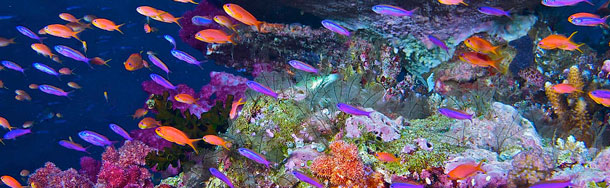
Research from the University of Exeter indicates warming waters and ocean acidification aren’t the only climate impacts coral reefs are facing: rising sea levels mean cloudier water that hinders coral reef growth. And as Sarah Rappaport reports in this week’s Note on Emerging Science, that’s bad news for fish that depend on coral reefs, and coastlines that benefit from their ability to protect the shore from waves.
Transcript
CURWOOD: It’s Living on Earth, I’m Steve Curwood.
Just ahead, how natural climate solutions can be cheaper and easier than technology-driven ones. But first, this note on emerging science from Sarah Rappaport.
SCIENCE NOTE THEME
RAPPAPORT: Coral reefs are known throughout the tropics for their vibrant colors, diverse formations, and the habitats they provide for a staggering 25 percent of all marine species. While they may look like colorful rocks, corals are actually made up of colonies of individual invertebrate animals, called polyps. Worldwide, coral polyps are threatened by warming waters, ocean acidification, and overfishing. New research indicates that sea level rise from climate change can also be added to the list. That’s according to a recent study published in the journal Nature.
Researchers from the University of Exeter found that coral reefs may not be able to grow fast enough to keep up with rising seas. That’s because sea level rise can lead to more erosion and sediment in the water.
Sediments cloud the water and make it difficult for symbiotic algae living on the coral to access enough sun to photosynthesize. Without algae producing food for the coral polyps the corals essentially starve and die. The team looked at about 200 coral reefs in the Caribbean and Indian Oceans. They used four different climate change prediction scenarios and they found that even under modest sea level rise, only three percent of Indian Ocean reefs would be able to grow enough to keep pace with rising seas.
That’s bad news for both marine species and coastal communities. Coral reefs protect coastal areas from storm damage by slowing down the impact of waves. They’re also a vital habitat for marine life and a nursery for thousands of species of juvenile fish.
Scientists say reducing greenhouse gas emissions is the best way to save the world’s corals and avoid permanent damage to one of the world’s most complex, and beloved, ecosystems.
That’s this week’s note on emerging science. I’m Sarah Rappaport.