
Fighting Climate Change, Naturally
Air Date: November 23, 2018
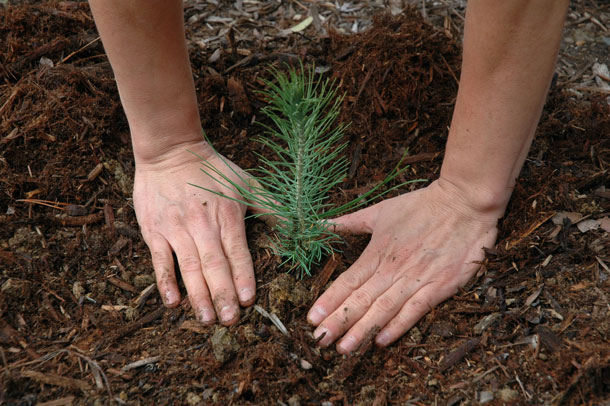
Climate mitigation often focuses on technical solutions. But experts say as much as one-fifth of the United States’ current carbon emissions could be offset through “natural climate solutions,” which manage and restore land. Living on Earth’s Aynsley O’Neill reports.
Transcript
CURWOOD: A lot of talk about tackling climate change focuses on technical solutions, like fuel-efficient cars and solar panels. But, there are also so-called “natural climate solutions,” which focus on better management of our ecosystems. A study from the Nature Conservancy suggests how things like letting trees and grasses grow could have a huge impact. Living on Earth’s Aynsley O’Neill has been looking into the study.
Hey there, Aynsley.
O’NEILL: Hi, Steve. So, in this report, The Nature Conservancy tried to quantify what improved management and restoration of the land could do to help stabilize the climate.
They looked at how much carbon could be sequestered by such things as leaving grasslands intact and not turning them into agricultural fields. They also looked at the impact of planting trees or restoring wetlands. In fact, there are some twenty-one different natural climate solutions that they investigated. Here’s Joe Fargione, lead author of the study.
FARGIONE: Our study shows natural climate solutions can help fight climate change with a potential benefit that's equivalent to one-fifth of our nation's current net emissions. And that's the same as if every car and truck in the country stopped polluting the climate.
O’NEILL: And Joe Fargione says that if we implement all twenty-one of these approaches, it could set us on the path to meeting our obligations for the Paris Climate Agreement.
FARGIONE: If you look at between now and 2030, if natural climate solutions were ramped up, that could address about 37% of the reduction in climate pollution needed to keep warming well below two degrees, which is, of course, the target that was agreed to at the Paris Agreement.
O’NEILL: One thing we could improve is the US Agriculture Department’s Conservation Reserve Program, where farmers get paid to take marginal land out of crop production, and replant it with native species. Joe Fargione says, since 2007, we’ve lost 13 million acres from that program.
FARGIONE: We estimate that if we put all of that land back into the Conservation Reserve Program, you would get about 9 million tons of carbon dioxide equivalent stored per year, the same as taking 2 million cars off the road.
CURWOOD: Wow, Aynsley, that’s huge. But how difficult would it be to actually put some of these into practice? It sounds kind of expensive.
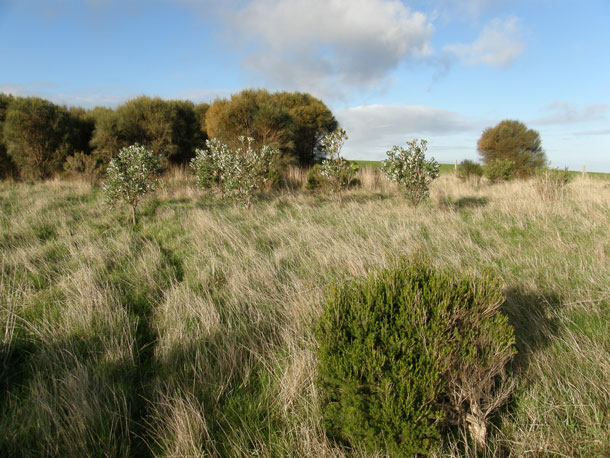
O’NEILL: Well, some of these ideas are expensive. But the Nature Conservancy report details some low-cost strategies, like planting cover crops and improving how we manage animal waste. I spoke to Benton Taylor, a postdoc at the Smithsonian Environmental Research Center. He told me one of the easiest, cheapest, and most effective natural climate solutions is passive – just letting trees reforest themselves, which is practically free!
TAYLOR: When we look at sites that that have been passively versus actively reforested, we don't really see much of a difference in how quickly they get to the sort of old growth forest standard that we're looking for. So, it turns out that nature does a very good job of reforestation on its own. It is much less expensive to passively reforest.
O’NEILL: So, Steve, if we take away the incentives to cut down forests and let them regrow, we could save a lot of effort and money, which we could use to mitigate climate change in other ways.
CURWOOD: And of course, there are lots of benefits to reforestation other than carbon capture.
O’NEILL: Yeah, and Benton Taylor made that point to me as well.
TAYLOR: Reforestation is good for, sort of, counting beans when we're thinking about carbon, but it's also good for a lot of other things biodiversity, soil stability, that sort of thing.
CURWOOD: Alright, thanks, Aynsley, for that report.
O’NEILL: Sure thing, Steve.
CURWOOD: Living on Earth’s Aynsley O’Neill.