
Beyond the Headlines
Air Date: January 18, 2019
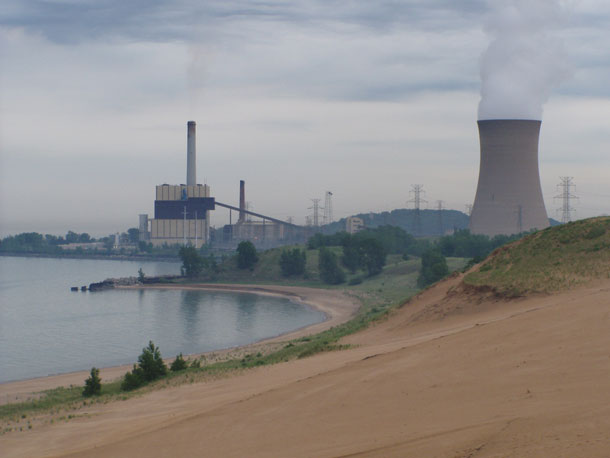
This week, Peter Dykstra and Living on Earth’s Bobby Bascomb take a trip beyond the headlines to investigate Northern Indiana Public Service Company's ambitious plan to go coal-free for electric generation within ten years. They also discuss Republican Governor Ron DeSantis’ signing of a bill to protect Florida’s waters. Then, the pair looks back at the 1994 publication of the Citizen's Right to Know list and what happened to it after 9/11.
Transcript
BASCOMB: It's time for a trip now beyond the headlines with Peter Dykstra. He's an editor with Environmental Health News. That's EHN.org and DailyClimate.org. Hey there, Peter, how you doing?
DYKSTRA: I'm doing all right, Bobby, hi. I'm going to start off with a groundbreaking announcement from an electric utility that has an ambitious goal to pull off something that seems almost unrealistic, but very promising, in a 10 year period. It's the Northern Indiana Public Service Company, and this delightful acronym of NIPSCO. And NIPSCO announced a commitment to convert from what they are now, which is predominantly coal-based electricity to coal-free electricity, and to do all that in 10 years.
BASCOMB: Wow, that is ambitious. How are they going to get there?
DYKSTRA: They want to leverage renewables, they want to completely end coal consumption, they'll still have some natural gas-generated electricity, and what that means is that they'll cut carbon emissions by 90% and a decade if they meet this ambitious goal.
BASCOMB: Of course, President Trump has famously said he was going to save the coal industry. But I've read recently that more coal-fired power plants have actually closed under Trump, then under Obama in their first term of office. I guess it doesn't bode too well for the coal industry.
DYKSTRA: Yeah, it's a further sign that the domestic market for coal is disappearing. That doesn't always apply to the international market. But going back to NIPSCO, there's a little bit of a catch. They've applied to the state of Indiana for a 12% rate increase. That’s about 100 bucks a year for the average ratepayer. That's what they say they are going to need to pull this off, but let's see if they can deliver on this really ambitious target.
BASCOMB: Um, what else do you have for us this week?
DYKSTRA: Here's something that may be positive news. The new Governor of Florida is a Republican named Ron DeSantis. You may remember he won a very, very tight race for Governor back in November. When he was a congressman, Ron DeSantis racked up a 3% lifetime score from the League of Conservation Voters, so any expectations that Floridians had for environmental goals were really, really low. But here's what he did in his first week in office. He signed an executive order that steered $2.5 billion toward protecting Florida's water resources, mainly the Everglades.
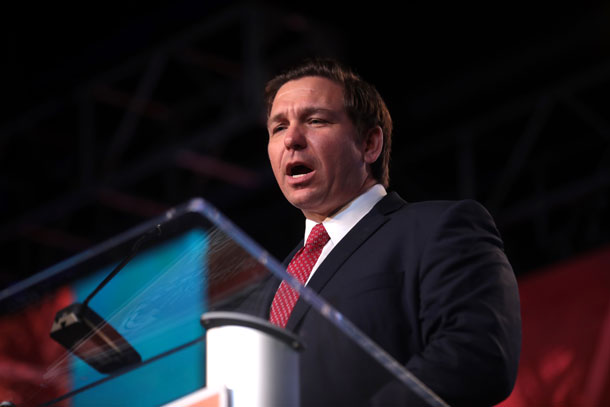
BASCOMB: Wow. Well, that's a great first step. I mean, doesn't exactly make him a tree hugger, but his predecessor Governor Rick Scott actually banned any discussion of climate change under his administration. So, I guess, baby steps?
DYKSTRA: He did. And Rick Scott is no longer Governor because he's now Senator Rick Scott. So he's got a whole new platform from which to talk climate denial.
BASCOMB: Right, right. Well, what do you have for us from the history vaults this week?
DYKSTRA: Here's a 25th anniversary. January 18, 1994, the EPA published something called the Citizen’s Right-to-Know list. There had been years of pressure not just from advocacy groups, neighbors of industrial facilities, fire departments, and other public safety people who wanted to know exactly what hazardous materials facilities were storing, or using, or emitting in their neighborhood. But then a few years later, along came 9/11, and there was a big push from industry to make all that information secret again. Their argument, or their fear was the chemical information could fall into the hands of terrorists. They didn't want it to fall into the wrong hands. But now such information has a much harder time falling into the right hands.
BASCOMB: Right, yeah, seems like first responders, at the very least, should know what they're up against when they get called to a situation. Well, thanks for those updates, Peter. Peter Dykstra is an editor with Environmental Health News, that’s EHN.org, and DailyClimate.org. We’ll talk you again real soon, Peter.
DYKSTRA: Okay, Bobby, thanks a lot. We'll talk to you soon.
BASCOMB: There’s more on these stories at our website, LOE.org.
Related Links
- North American Windpower | “Indiana’s NIPSCO Plots Coal Phaseout, Transition To Renewables”
- Orlando Weekly | “Ron DeSantis Signs Executive Order Calling for $2.5 Billion for Everglades Restoration, Toxic Algae Task Force”
- Environmental Protection Agency Archive | “EPA Administrator Carol M. Browner Issues Citizen Right-To-Know List of Toxic Chemicals”