
Note on Emerging Science: Matchmaking for a Frog Named "Romeo"
Air Date: March 08, 2019
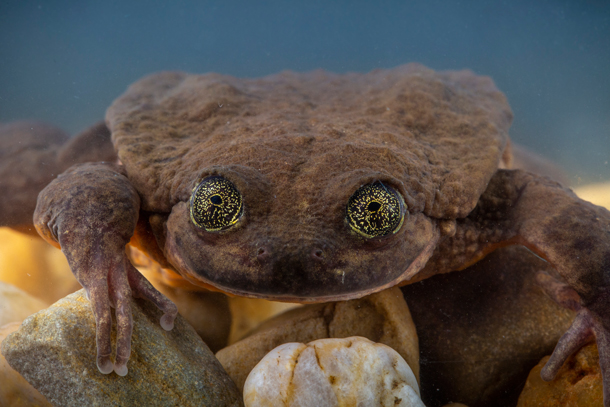
Sehuencas water frogs, like other amphibians, have been devastated by the chytrid fungus, and a frog that scientists named “Romeo” was the last known frog of his kind until scientists discovered a couple of potential mates for Romeo hiding in the Bolivian mountains. As Living on Earth’s Don Lyman reports with this note on emerging science, they hope that these frogs may be immune to the deadly chytrid fungus.
Transcript
CURWOOD: Just ahead, cloning ancient redwood trees that appear to be dead but first this note on emerging science from Don Lyman.
SCIENCE NOTE THEME
LYMAN: A group of scientists from the University of Maryland recently announced the discovery of a Bolivian frog species that was believed to be extinct in the wild. Although one Sehuencas water frog, named Romeo, survived in captivity, the species hadn't been seen in the wild for 10 years. Scientists blamed chytridiomycosis, a fungal disease that has wiped out frog populations around the world. But researchers found five of the frogs in a cloud forest in the Bolivian mountains. They speculate that the five surviving frogs may have immunity or genetic resistance to the deadly fungus.
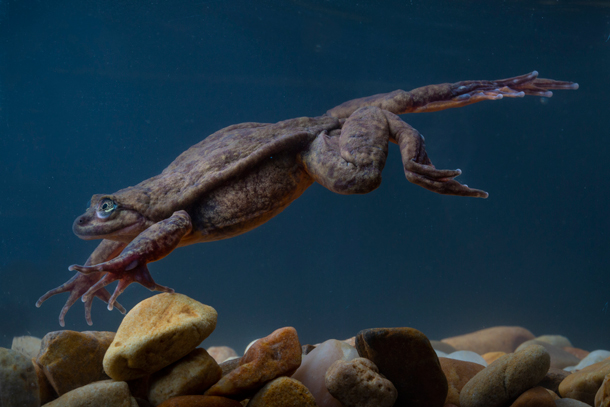
The frogs' survival could also be due to an environmental factor, like an unusually warm microclimate that was not conducive to the growth of the fungus. There's currently no way to eradicate the chytrid fungus in the wild, so scientists are eager to study the surviving frogs and to try to breed them as part of a captive conservation breeding program, possibly resulting in Sehuencas frogs that are resistant to the deadly fungus. The discovery gives researchers hope that more Sehuencas water frogs might be found in the wild. It also gives scientists a chance to help the species recover, and to introduce Romeo to one of the female frogs, who they've appropriately named Juliet. That's this week's note on emerging science. I'm Don Lyman.
