
BirdNote®: The Rainwater Basin of Nebraska
Air Date: March 29, 2019
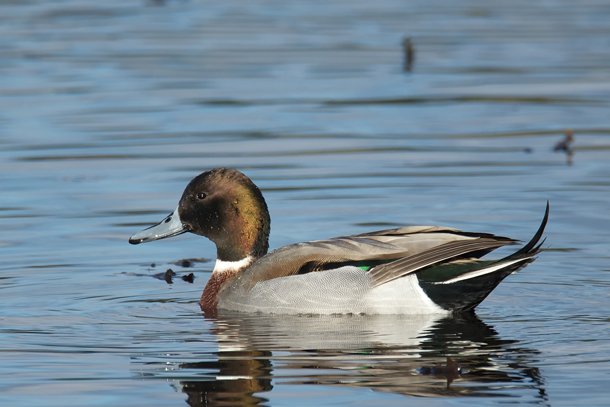
Spring rains bring out the green and help water crops. And in south-central Nebraska, they provide watering grounds for migrating birds including the Sandhill Cranes. BirdNote®’s Michael Stein has more.
Transcript
BASCOMB: About 200 miles west of the devastating flooding in Nebraska is the Rainwater Basin wetland. It’s 6200 square miles of depressions left by retreating glaciers that fill with rain and snowmelt each spring. As BirdNote’s Michael Stein explains it’s a crucial habitat for migratory waterfowl making their way north this time of year.
NORTHERN PINTAILS SPLASHING IN WATER
STEIN: For 20,000 years, spring rains and melting snow have filled the playas of the Rainwater Basin of south-central Nebraska. Carved by glacial winds at the end of the last Ice Age, the playas are shallow depressions the warmth of spring fills with abundant life.
RED-WINGED BLACKBIRDS
STEIN: As winter ends, ten million waterfowl rest and feed here before continuing north.
CALLS OF NORTHERN PINTAILS, BLUE-WINGED TEAL WITH MALLARDS AND MARSH SOUNDS
STEIN: The seasonal wetlands of the Rainwater Basin form a 150-mile-wide funnel for water birds migrating from the Gulf Coast and points south to northern breeding grounds. The basin is the narrowest neck of the great migratory route we call the Central Flyway.
CALLS OF SNOW GEESE
STEIN: In recent years, the number of Snow Geese stopping in the region during spring has risen dramatically to more than three million birds. A third of North America’s Northern Pintails rely on the food-rich habitat here.
CALLS OF NORTHERN PINTAILS
STEIN: Shorebirds of 27 species use the wetlands. So do half a million Sandhill Cranes.
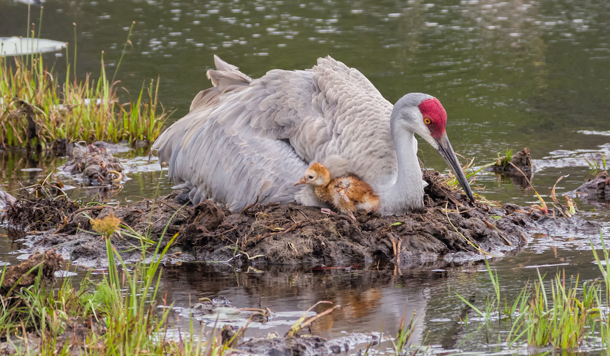
CALLS OF SANDHILL CRANES
STEIN: The importance of the region’s wetlands for waterfowl cannot be overstated. Fat reserves acquired during their stay here can mean the difference between success and failure in nesting. No other stopover between wintering and nesting grounds can replace the combination of wetlands and grain fields found in the Rainwater Basin.
CALLS OF SANDHILL CRANES
STEIN: I’m Michael Stein.
BASCOMB: For photos of the Rainwater Basin’s migrating birds splash on over to our website, LOE dot ORG.