
BirdNote®: Rivers of Birds
Air Date: April 05, 2019
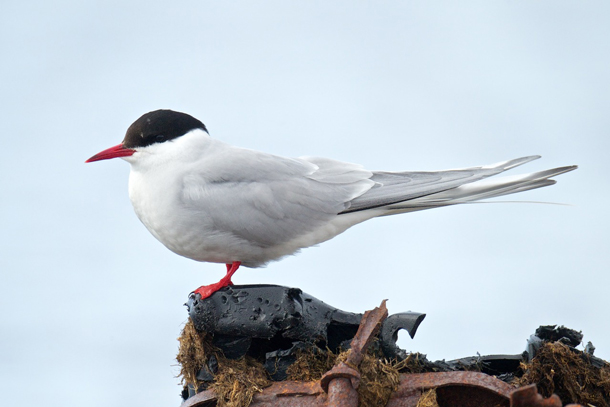
Along the four major North American flyways, huge “rivers” of Arctic Terns and other migrating birds are now making their way north again. BirdNote®’s Mary McCann describes their incredible journey.
Transcript
BIRDNOTE THEME
CURWOOD: From the River of Grass we take you now to a river of birds with BirdNote’s Mary McCann.
Sounds of migrating birds
MCCANN: Imagine yourself in the stratosphere, looking down on North America. In spring and fall, you’ll see what look like huge “rivers” of ducks, seabirds, shorebirds, raptors, and songbirds. Migrants are moving along the four major North American flyways. In the spring, these “rivers” of birds flow north. At the end of the breeding season, the “rivers” flow south.
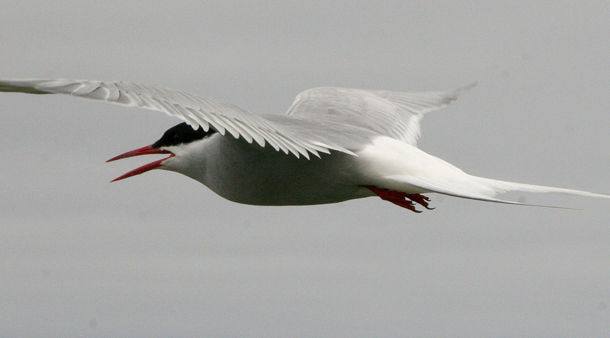
After spending the winter in the southern tier of states or Central America—or even as far away as South America—millions of birds return each spring to the northern latitudes. One of the world champions of long-distance migration is the Arctic Tern. [Calls of Arctic Terns]
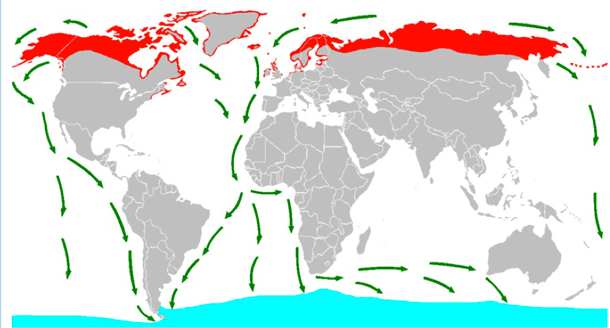
Arctic Terns nest across the far northern reaches of the continent during our summer, then fly south to Antarctica for the rest of the year. Some will circle the polar ice-pack before heading north again, completing a total round trip of up to 50,000 miles. Every year. [Calls of Arctic Terns over the sound of ocean waves]
CURWOOD: For pictures, swim on over to our website at loe.org.