
Monarch Migration
Air Date: July 26, 2019
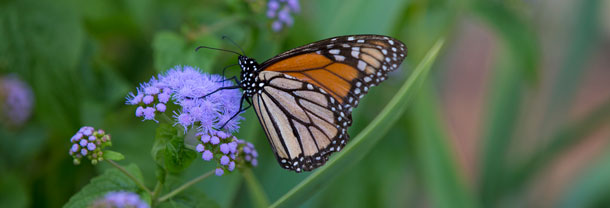
On the last standing mulberry tree at Mulberry Point in Connecticut, monarch butterflies gather for the night. Living on Earth's Explorer in Residence, Mark Seth Lender, reflects on the ephemeral lives of these migrating insects.
Transcript
BASCOMB: Well, tagging monarchs and calling in when you find a tagged butterfly is one way to help the iconic species. Another is to plant a pollinator garden and be sure to include native milkweed, the only plant monarchs will lay their eggs on. As Mark Seth Lender, our Explorer in Residence explains, a garden planted with the right intentions, even one no bigger than a couple of parking spaces, can make all the difference in the world.
Monarch Migration
Monarch Butterfly
Guilford, Connecticut
© 2019 Mark Seth Lender
All Rights Reserved
On a mulberry tree, the last one standing on Mulberry Point, Monarchs have gathered for the night. They rest, like a living coat flexing their magnificent arms sleeved in wings; their eyes cache the fading light the way a stamen might hold a drop of rain fallen on the flower. They face the sunrise side, waving their bedtime prayers in hope, and anticipation.
Praying for the sun to rise.
In a cloudless sky.
And the warmth of the morning light that will be their salvation!
They are in migration, a flight of many parts that will end, with the end, of their lives.
In the day, these very same butterflies were in the garden Valerie planted for us for our joy. They drank wild daisies and verbena, cone flower and sage and wild bergamot and in concession to the unfamiliar weathers come now to our latitude, from three small buddleia we planted just for them, the deep blue-violet flowers sweet with perfume, spreading out against the white painted wall of the shed, serving the purposes of necessity and a need that is dire.
For the Monarchs are fading; fading as the light fades on their translucent, outlined, pennant forms. I saw more than one lay her eggs, opal white, small as the smallest sand grain.
I watched.
I watched.
None, not a single one, became the black-yellow-white warning colors of the caterpillar; I found no chrysalides under the milkweed leaves.
I saw no gold and orange Monarch Butterflies emerge.
As the season collapsed into itself like a cat curling into a long sleep, we found the last Monarch of the year, her wings too cold to lift her off the roadway. We placed her in shelter in among the roses of a nearby garden. On the way, back from our walk down the shoreline, we found her where we left her, fast asleep. And in the morning, gone. We saved her. Though it was late.
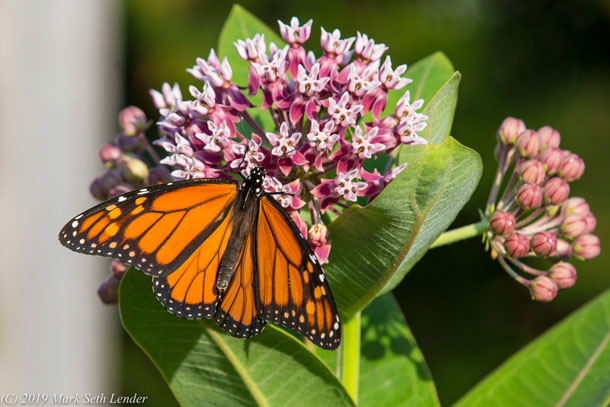
Too late for her to pass life on.
To the next generation.
To continue the journey.
Generation by generation to its conclusion an ending she was never intended, to see.
But I saw the tree! The mulberry and its Living Leaves! Perhaps, somewhere on the way, perhaps where some other Monarch Butterflies laid their eggs and died, perhaps their progeny, and their progeny, still live.
They give everything away, in gift to the Future, to those they will never know and who will never know their names.
It gives us hope.
BASCOMB: That’s Living on Earth’s Explorer in Residence, Mark Seth Lender. To see some of Mark’s monarch photos check out our website, loe.org.