
BirdNote®: Canada Jays Save Food For Later
Air Date: January 31, 2020
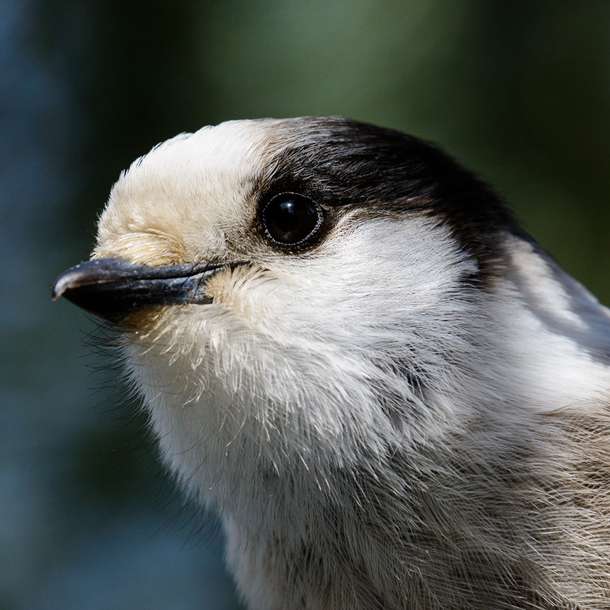
Canada Jays are food storage experts. As BirdNote®’s Mary McCann explains, these prudent birds are so good at caching food, they’re even able to start nesting before the winter ends.
Transcript
BASCOMB: The long cold winters of the far north may look rather inhospitable. But some birds have clever ways to find, and store, enough food to get by. BirdNote’s Mary McCann reports.
BirdNote®
Canada Jays Save Food for Later
Wind blowing through a forest of coniferous trees
MCCANN: Imagine you’re camping in the mountains, surrounded by pines, larch, and spruce. The very first bird you might see is a Canada Jay, as it boldly swoops down into your camp.
This handsome jay has a smoky gray back and wings, silvery gray underparts, a tiny black beak, and big, black eyes that seem to miss nothing — especially food.
But the one food Canada Jays don’t eat is conifer seeds. So why do they live in conifer forests?
It turns out the jays hide food in conifer needles and tuck it under the bark of trees with their sticky saliva. Like other jays that cache food, Canada Jays have terrific visual memories. They can find thousands of hidden tidbits months later.
Canada Jays are so good at storing up food, they even start nesting before the winter ends. The jays can feed their nestlings entirely from the food they’ve stored away. And unlike most other birds that nest in spring and summer, Canada Jays spend that time caching food for the next winter.
BASCOMB: For pictures, fly on over to the Living on Earth website, loe dot org.