
Sounds of Winter
Air Date: February 07, 2020
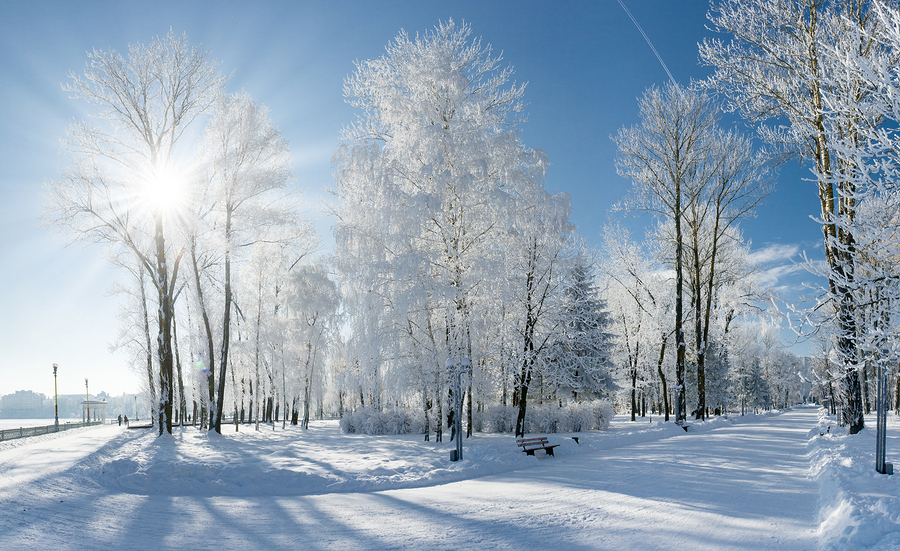
Listen closely. The frigid months of winter have a sound uniquely their own. As commentator Sy Montgomery points out, the austere quality of winter helps it sound vibrant.
Transcript
BASCOMB: It’s Living on Earth, I’m Bobby Bascomb.
Well, Punxsutawney Phil did not see his shadow this year, which foretells an early spring. But before the season slips away Living on Earth commentator Sy Montgomery suggests we should stop and take a moment to appreciate the sights and sounds of winter.
CHICKADEE CHIRPING AND WINGS FLAPPING
MONTGOMERY: At no other time of the year are sounds so sharp. The scolding winter call of the chickadee. Wind howling through oaks, or whispering through pines. The clarion call of wind chimes, piercing as the cold itself.
XYLOPHONE-LIKE SCALE OF WIND CHIMES SOUNDING
MONTGOMERY: Hearing may be the richest sense. Helen Keller wrote she felt its absence a handicap far worse than blindness. As if to make up for winter’s void – of colors muted, touch numbed, and scents sealed – winter’s sounds are the most vibrant.
WHIZZ OF RUBBER SNOW TUBE SLOWING TO A STOP, CHILDREN LAUGHING
MONTGOMERY: Sound travels further over frozen ground. Frozen surfaces are rock-hard, so they don't absorb sound – they reflect it. And when the atmosphere above is warmer than the ground, sound bounces back toward the ground. Winter’s freeze is like having a sound reflector in the sky.
SCRAPING, RHYTHMIC GLIDE OF SKATES ON ICE
MONTGOMERY: Winter’s bareness amplifies and clarifies its voices. Spring and summer are crowded with ambient noise: the sounds of birds and insects, the rustle of animals in the woods, the whisper of grasses and leaves – not to mention the hubbub of so many people and their machines.
CREAK OF SWAYING TREE
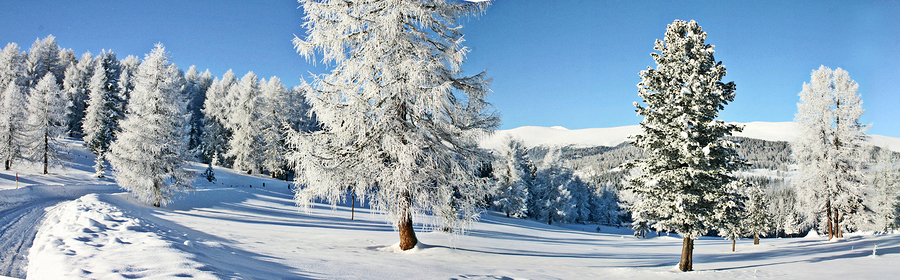
MONTGOMERY: In summer, leaves absorb sound, especially the higher frequencies. But now, the trees are bare, summertime’s murmurs are hushed, and snow is covered with hard ice crust. Sound slices through the air—stark, clear, pure.
CRUNCH OF FOOTSTEPS IN SNOW
MONTGOMERY: So this is the best time of year, I think, to go somewhere secluded – just to listen. Listen for the voice of the wind. The ancients said that Boreas, the north wind, loved a nymph who was changed into a pine tree. Boreas still rages and howls through oaks and maples and beech, but his voice is quite different when he speaks to his love.
Listen to the voices of the trees. They creak like rusty hinges as they sway in the wind. Sometimes trees will even pop loudly – it can sound like fireworks – their wood expanding and contracting during sudden changes in temperature.
Listen to the voice of the ice. On a lake, sometimes, you can hear the ice squeak, or crack, or even boom. Even safe, solid ice will make a cracking sound as it expands. Scary to an ice skater – but if you’re walking in the woods, the booming of a lake is like music.
And remember, in winter, that one of the greatest rewards of listening can be silence. Orchestras know this. At the end of a performance of Mozart’s Fantasy in C Minor, a thousand ears strain for the last note.
PIANO MUSIC RUNNING UNDER
MONTGOMERY: Silences are different in winter, too. This is not the soft, glowing stillness of pre-spring, or the absorbing quiet of swimming underwater. No, winter’s silence, like its sounds, is piercing, clear and cleansing, like a shooting star, well worth seeking and savoring.
PIANO MUSIC CONTINUES AND FADES AWAY
BASCOMB: Sy Montgomery is the author of more than a dozen books including How to Be a Good Creature, Tamed and Untamed, Soul of an Octopus, and the Good Good Pig. For links to her work and our conversations with her, go to the Living on Earth website, LOE.org.