
Beyond the Headlines
Air Date: April 03, 2020
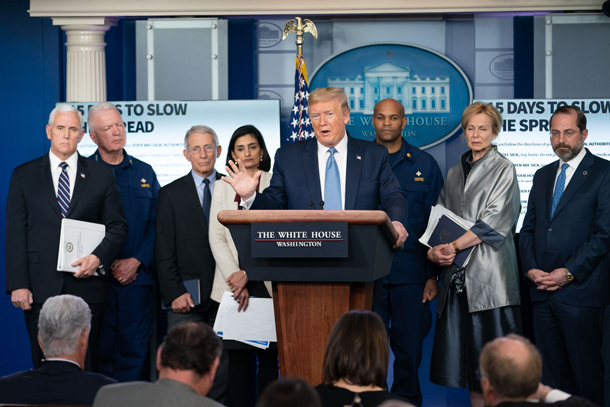
In this week's trip beyond the headlines, Environmental Health News Editor Peter Dykstra tells Host Steve Curwood about some environmental regulations the Trump administration is rolling back during the coronavirus pandemic. The pair also discuss Brazil's similar use of the pandemic to turn a blind eye to illegal logging in the Amazon. Finally, the two look back to perhaps the first Senate hearing on climate change, 40 years ago in 1980.
Transcript
CURWOOD: It’s Living on Earth, I’m Steve Curwood.
So, it's the time of the broadcast that we turn to Peter Dykstra for a look beyond the headlines. Peter's an editor with Environmental Health News, that's EHN..org and DailyClimate org. And of course, Peter, now in this time of coronavirus crisis, we have to have an appropriate social distance for these sessions.
DYKSTRA: That's right Steve, and just to be safe, I got out the calculator. And this is only an estimate, but I'm just outside Atlanta, and you're in New England, right?
CURWOOD: Yeah.
DYKSTRA: So, we are roughly 5.2 million feet apart. We're well within compliance for the CDC guidelines.
CURWOOD: Indeed. Just don't cough, okay? What do you have for us today?
DYKSTRA: We're gonna talk a little bit about the Trump administration, coronavirus, and how under the guise of the crisis, they're sneaking in some more destruction of environmental enforcement. There's a gift to the oil industry, based on an American Petroleum Institute letter to EPA, sent a few weeks ago. They complained that oil companies were being hurt by COVID-19.
CURWOOD: Peter, you sound a little cynical today about what the EPA is doing for the oil folks.
DYKSTRA: Yeah, there's a little room for cynicism here. Because five days after that memo from the oil industry's lobby group to EPA, the oil industry's wish was granted and then some. The industry sought suspension of its obligations under consent decrees over air and water pollution, over violations at their oil refineries. Some waving of requirements on the handling of wastewater from fracking, and they also wanted to be able to stop for an undetermined amount of time reporting greenhouse gas emissions and other kinds of pollution. EPA also let big oil off the hook for producing the so-called "summer blend" gasolines that we use each year. They're intended to reduce the risk of summer smog. But wait, there's more. Three states: West Virginia, South Dakota and Kentucky very quietly moved state legislation, effectively barring on-site protests against oil and gas pipeline construction. They said that such pipelines are critical infrastructure.
CURWOOD: Well, at least these moves aren't bailing out the oil industry.
DYKSTRA: Well, the stimulus package didn't bail out the oil industry. So, the EPA has bailed out the oil industry. There were efforts by some on the Republican side of the aisle to include in that $2 trillion package, some help for oil, gas, coal miners. And there were some efforts on the Democratic side for subsidies for clean energy. In the end none of them were included in the bill. So, the Trump administration, while the entire country is somewhat justifiably distracted by news coverage of the coronavirus, is quietly slipping in some more gifts to fossil fuels.
CURWOOD: Alright, Peter, what else do you see out there beyond those headlines?
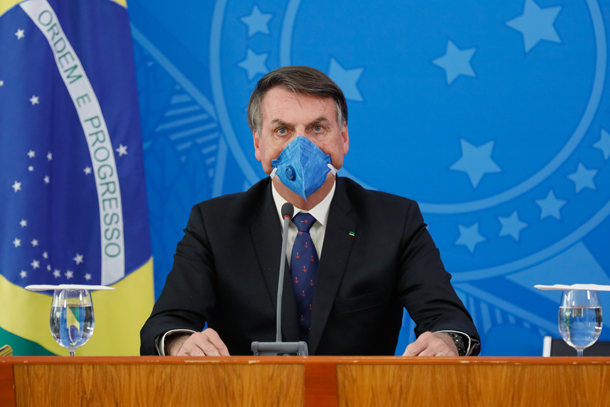
DYKSTRA: Not to be outdone, Brazil's President Jair Bolsonaro invited a surge in illegal logging by scaling back environmental enforcement. And again, he blamed the coronavirus crisis as a reason to not protect the Amazon.
CURWOOD: And how's this gonna work?
DYKSTRA: He said that he was worried that field agents were going to get the coronavirus since they're not in the field, even though Brazil has been criticized for its failure to stop illegal logging. Whatever enforcement is going on is apparently going to stop. That means more loggers will go in. And ironically and tragically, that increases the risk that Amazon natives are going to be contacted with coronavirus, extending the tragedy to the deepest parts of the Amazon.
CURWOOD: Let's take a look back in history, Peter, at this moment.
DYKSTRA: April 3, 1980. 40 years ago, what's believed to be the first Senate hearing on the issue of climate change and global warming. It was chaired by the late Senator Paul Tsongas and reported on by the most trusted man in America, Walter Cronkite on the CBS Evening News.
CRONKITE: The Senate Energy and Natural Resources Committee heard warnings today that a coal burning society may be making things hot for itself.
BENTON: Researchers say increasingly large amounts of CO2 are accumulating in the atmosphere. They fear the earth will gradually become warmer, causing as yet uncertain, but possibly disruptive changes in the Earth's climate 50 to 70 years from now.
TSONGAS: Possible, probable, we really don't know. But if it happens, it means goodbye, Miami. Goodbye, Corpus Christi. Goodbye, Sacramento. Goodbye, Boston, which obviously is much more of a concern. Goodbye, New Orleans. Goodbye, Charleston, Savannah, and Norfolk. On the positive side, it means that we could enjoy boating at the foot of the Capitol and fishing on the South Lawn.
CURWOOD: And who are we listening to, here?
DYKSTRA: That was Uncle Walter, of course, the late reporter Nelson Benton, and the late Senator Tsongas being very, very prescient and talking about things that we talk about today 40 years ago. That's how much warning we've had on climate change. But apparently, whether it's climate change or coronavirus, we don't always listen to warnings from the experts. One other note on that, young Congressman Al Gore also held the first House of Representatives hearings the following year in 1981.
CURWOOD: Thank you, Peter. Peter Dykstra's an editor with Environmental Health News. That's EHN.org and DailyClimate.org. We'll talk to you again real soon, and stay safe!
DYKSTRA: Okay, you stay safe and healthy, too, Steve. Thanks a lot.
CURWOOD: And there's more on these stories at the Living on Earth website, LOE.org.