Beyond the Headlines
Air Date: April 24, 2020
In Beyond the Headlines this week, Environmental Health News Editor Peter Dykstra and Host Steve Curwood look at the negative price of oil and the drop in greenhouse gas emissions related to the COVID-19 pandemic. Next, they discuss an innovative use of fungus: to grow a watertight, seaworthy, sustainable boat. Finally, the duo looks way back in the history calendar to the founding of the Hudson’s Bay Company and its longtime fur business.
Transcript
CURWOOD: It's living on Earth. I'm Steve Curwood. Let's take a look now Beyond the Headlines with Peter Dykstra Peters, an editor with environmental health news as ehn.org and daily climate.org. He's on the line from Atlanta, Georgia. Hey there, Peter. Happy Earth Day.
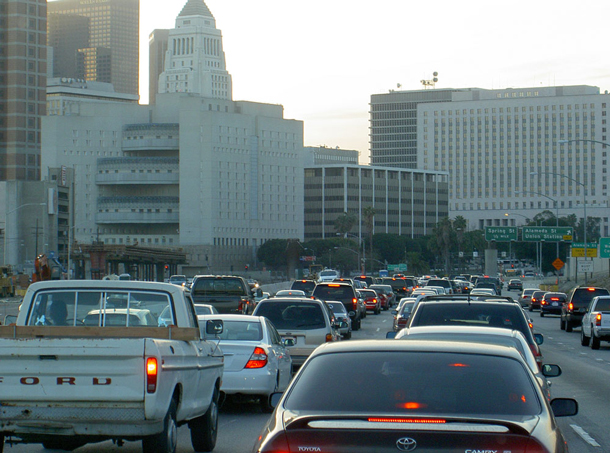
DYKSTRA: Happy Earth Day, Steve. And you know, while we're all obsessed with COVID, with very good reason, there are a whole lot of things happening related to COVID-19 that are happening to fossil fuels. The oil industry was in the news because the bottom fell out of the oil market to the point where oil futures were a negative number, meaning that an empty barrel of oil had a higher price than a full barrel of oil.
CURWOOD: Yeah, that low price though, Peter, I don't think I'm gonna see folks at the gas station telling me that they'll pay me to take the gasoline away somehow. I don't think that's gonna happen.
DYKSTRA: No, it's not gonna work that way. Even though gasoline prices are way down. That usually has the negative impact of seeing more SUV sells seeing people driving more and more, but with literally billions of people, and some degree of confinement and shutdown around the world, the error is correspondingly cleaner or driving a lot fewer greenhouse emissions have taken an unexpected drop. All of this of course, for the wrong reasons, and it doesn't make up for this immense tragedy, multifaceted tragedy of the coronavirus.
CURWOOD: What else do you have for us today, Peter?
DYKSTRA: I have fungus Steve.
CURWOOD: Oh, wait for a second, Peter, are you okay?
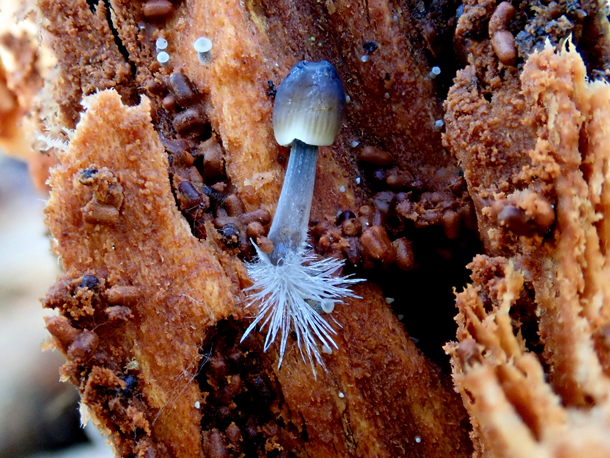
DYKSTRA: No, I don't personally have fungus. I'm going to talk about fungus. And a small answer to climate change was found by a Nebraska college student named Katie Ayres. She got fascinated with mushrooms as part of a classroom assignment to find something that would address climate change. She ended up building a canoe out of mushrooms.
CURWOOD: Haha, well, how exactly did she do that though?
DYKSTRA: This is an eight-foot boat and it's actually made mostly from mycelium, which is very dense, fibrous roots that grow beneath mushrooms. They're tough. They're waterproof. What Katie did is build a wooden frame of a canoe and then just let nature take its course she let mushrooms and then mycelium fibers grow over the frame. And lo and behold, what came out of it is a waterproof, see where the eight-foot boat with a couple of paddles and paddles are made of wood, but the boat is made of mushrooms and fungus. She spent about 500 bucks on the whole project. It's not gonna solve climate change, but its little innovations like that'll help at least a little bit.
CURWOOD: That's amazing. All right, Peter. Well, let's take a look back in history now. You'll always have a good item for us. What do you have today?
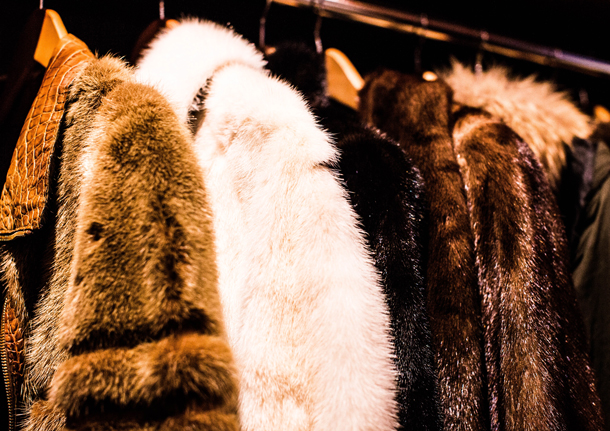
DYKSTRA: We're gonna go way back in history this time, may 2 1670, England England's King Charles otherwise known as the Merrie Monarch chart, The Hudson's Bay Company in Canada. The Kingdom granted Hudson's Bay, a virtual monopoly over much of the business, and actually the politics in central Canada, making Hudson's Bay a de facto government for a huge part of North America. It's now the oldest Corporation in America, having grown from its fur trading and trapping roots.
CURWOOD: And what are they called now?
DYKSTRA: They're colloquially known as the Bay. The Bay is the largest chain of department stores in Canada. They also own Saks Fifth Avenue. And until recently, they own the Lord and Taylor stores.
CURWOOD: Well, I guess they're still in the fashion business, Peter.
DYKSTRA: They are actually they got out of selling furniture in the department stores entirely in the 1990s due to pressure from animal rights groups, but pressure from the marketplace, and several years later, they went right back into selling furs.
CURWOOD: I guess that's part of their DNA. Thanks, Peter. Peter Dykstra is the editor of environmental health news. That's ehn.org and daily climate.org. We'll talk to you again real soon.
DYKSTRA: Okay, Steve, thanks a lot. Talk to you soon.
CURWOOD: And there's more of these stories at the living on earth website, loe.org.
Related Links
- TIME | “Will Low Oil Prices Help or Hurt the Fight Against Climate Change? That Depends on Us”
- Kearney Hub | “A Boat Made of Mushrooms: CCC Student to Present Her Fungal Creation at State Fair, Test the Waters on the Platte River”
- History on This Day | “Charles II Grants a Royal Charter to the Hudson’s Bay Company”