
Beyond the Headlines
Air Date: July 17, 2020
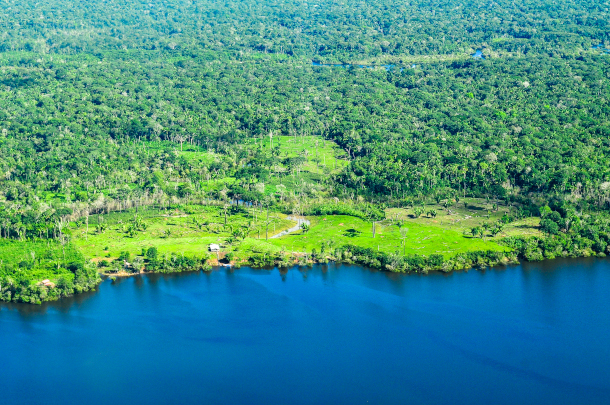
This week, Environmental Health News editor Peter Dykstra and Bobby Bascomb go Beyond the Headlines to talk about how resource extraction is impacting Indigenous communities from the Amazon rainforest to the Sámi in Finland. And in the history calendar, Peter and Bobby remember two Brazilian environmental activists who were murdered in retaliation for their efforts to protect the Amazon rainforest.
Transcript
BASCOMB: It's time for a trip now beyond the headlines with Peter Dykstra. Peter is an editor with Environmental Health News that's EHN.org and dailyclimate.org. Hey there, Peter, what do you have for us this week?
DYKSTRA: Hi, Bobby. There's great concern that as loggers make inroads into the Amazon as it's converted into ranches and farms, and even as religious missionaries make their way deeper and deeper into the Amazon, that one of the things that's going to hit you right along is COVID-19. And these tribes have little defense against the incursion, let alone little defense against the disease. And it could be that President Bolsanaro, has looked for any opportunity to make further inroads into the Amazon, even at the expense of its native inhabitants.
BASCOMB: I imagine that's very, very frustrating for the environmental groups that work with the native people there. I mean, Brazil has a wonderful constitution that really strongly protects their rights to the land and their rights to live their life as they want, but that's not being respected these days.
DYKSTRA: You and your constitution, Bobby. You know, it's so within authoritarian government and the threats on a number of different fronts, including disease are making a bad situation even worse for the Indigenous residents of the Amazon.
BASCOMB: Mmm Indeed. Well, what else do you have for us this week?
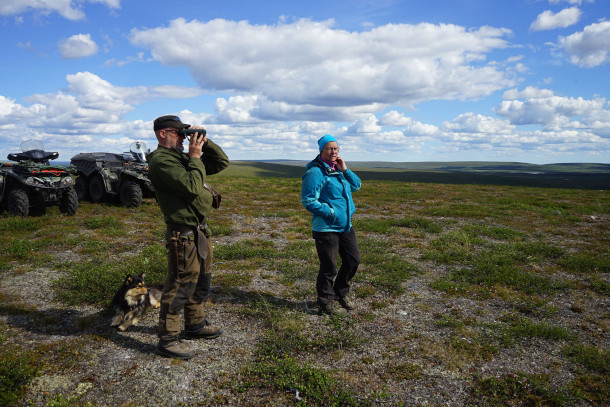
DYKSTRA: In a very different part of the world there's an Indigenous population in Europe in Northern Finland also in Sweden and Norway. The Sami people are as dependent on herding reindeer as the Plains Indians were in North America on the bison. They're the center of their culture, their food and reindeer herding for the Sami is under threat because their land includes precious metals needed for get this electric vehicle batteries.
BASCOMB: Oh, the irony. What are they finding there that's so attractive?
DYKSTRA: Metals like nickel, copper, vanadium, cobalt, all used in large supply in car batteries, particularly the larger ones that are going to be needed to drive EVs are found there. Europe wants its own supply of these metals. Finland wants to ride this potential economic wave to become the equivalent of an oil state only in precious metals. The Sami people have very, very little recourse to protect their land and culture.
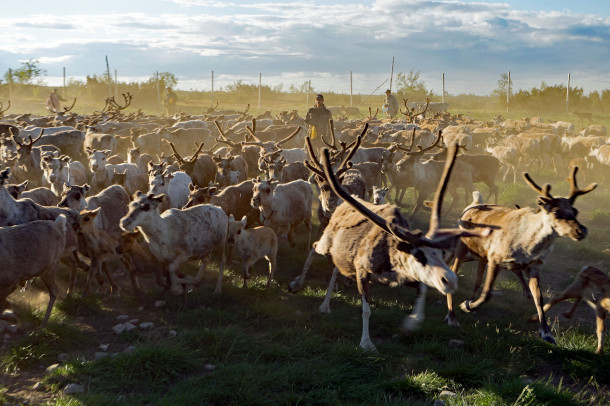
BASCOMB: You compare the reindeer to the bison of the North American plains and the native people here were also pushed off their land when something valuable was found beneath it, you know, be a gold oil, minerals. Seems, it seems like a familiar story.
DYKSTRA: It is although I would like to think that we would have progressed at least a little in the past 150 years.
BASCOMB: That would be nice.
BASCOMB: Well, what do you have for us from the history books this week?
DYKSTRA: July 21, 1980 40 years ago. The head of the Brazilian rubber tappers union, Wilson Pinheiro was murdered in his home Pinheiro had become an adversary to the ranchers, loggers, farmers, who are making inroads in the Amazon. His murder proceeded that of Chico Mendez. Both of their lives particularly Mendez, were featured in a book called The Burning Season, a TV movie by the same name starring the late Raul Julia. And that book and movie the book by journalist, Andy Revkin helped for the first time show the plight of rubber tappers and native Amazonians up against the deforestation of the world's greatest forest.
BASCOMB: Well, thank you, Peter. Peter Dykstra is an editor with Environmental Health News that's EHN.org and dailyclimate.org. And we'll talk to you again real soon.
DYKSTRA: Okay, Bobby, thanks a lot. Talk to you soon.
BASCOMB: And there's more on these stories on the living on earth website. That's LOE dot ORG.
Related Links
- The Barents Observer | “Miners Hunting for Metals to Battery Cars Threaten Sami Reindeer Herders' Homeland”
- The National Observer | “Already Fighting for Their Lands and Lives, Indigenous Communities in Brazil Slammed by COVID-19”
- Learn More About Environmental Activists Wilson Pinheiro and Chico Mendes