
BirdNote®: October Migrants
Air Date: October 16, 2020
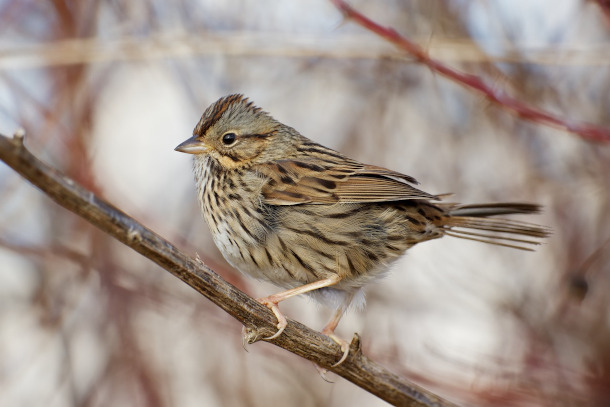
For many birds, October is a month of migration and movement, as birds of all kinds in the Northern Hemisphere make their way south. BirdNote®'s Michael Stein shares some notable species to keep an eye, and ear, out for this month.
Transcript
CURWOOD: Look up in the sky this time of year -- or better yet, listen up! -- and you’ll surely see and hear great flocks of birds on their long journeys south here in the Northern Hemisphere. BirdNote’s Michael Stein has more.
BirdNote®
October Migrants – Look Who’s Back!
Lincoln’s Sparrow song
The birds’ voices declare, in no uncertain terms, that autumn is once again upon us. In the golden sunlight of an October morning, a Lincoln’s Sparrow sings energetically from a hedgerow [Lincoln’s Sparrow song], and soon a Fox Sparrow chimes in [Fox Sparrow song].
Both nested at higher latitudes or well up in the mountains last summer, but will spend September to May at lower latitudes or elevation.
In October, massive movements of birds take place across the continent. The exodus of summer visitors to the tropics has given way to a surge from the north. The brambles twitch with sparrows [Call of Song Sparrow], blackbirds flock by the thousands. Bays and lakes sparkle with waterbirds — loons, grebes, dabbling and diving ducks. [Chatter of Mallards] Many of them nested well to the north, on tundra ponds.
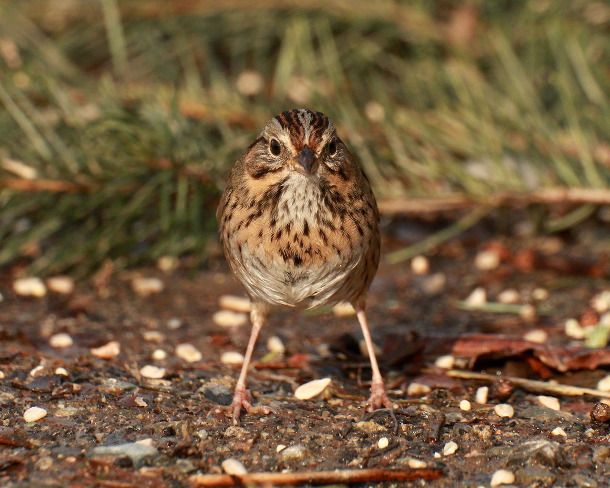
The sandpipers called Dunlins now swarm south, to winter along both coasts, by the many thousands. [Dunlin flock calls]
Close behind are the predators—northern-nesting Merlins, Peregrines, and Sharp-shinned Hawks, following south their winged prey. [Loud Dunlin flock calls]
CURWOOD: For pictures, fly on over to the Living on Earth website, loe dot org.