
Microfiber Pollution: Note on Emerging Science: Denim
Air Date: December 18, 2020
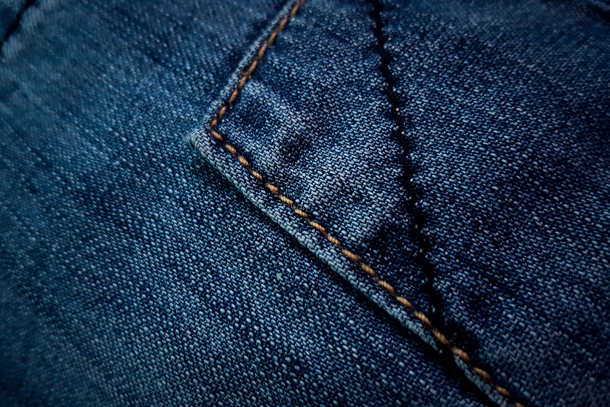
New research shows that washing a pair of jeans releases up to 56,000 microfibers per wash. Microfibers are synthetic threads of fabric dyed with pigment and make their way through wastewater effluent to aquatic ecosystems. Researchers found denim microfibers in sediments along Canadian waterways as well as the digestive systems of fish. Aaron Mok reports on the study and how water pollution from denim microfibers can be prevented.
Transcript
SCIENCE NOTE THEME
MOK: Denim is one of the most widely worn fabrics in the world. But it can have a huge environmental cost.
A recent study published in the journal Environmental Science & Technology Letters shows that each washing of a single pair of jeans can release up to 56,000 denim microfibers, those are tiny cotton threads encased with chemical additives, including indigo dye. From washing machines, those microfibers make their way through the sewage system. And then they are frequently discharged into aquatic ecosystems where they can wreak havoc on the environment.
To learn more, researchers sampled sediments from the Canadian Arctic Archipelago, the American Great Lakes, and shallow suburban lakes in southern Ontario.
The findings were striking. More than 90 percent of anthropogenic particles lodged in sediments in Canadian waters contained microfibers. And more than half of those microfiber particles came from denim dyed with indigo.
Researchers also found that roughly 13 percent of the effluent from a wastewater treatment plant in Southern Ontario contained denim microfibers which actually dyed the discharge blue. Denim microfibers were also discovered in the digestive tracts of rainbow smelt fish where they have the potential to cause cell damage, inflammation, and even death by starvation.
Researchers washed jeans in controlled trials to measure the amount of microfibers released into the environment. They found that a new pair of blue jeans releases significantly more microfibers than used jeans, and that the initial wash of a fresh pair releases the most.
So, to reduce the amount of denim microfibers entering waterways, scientists encourage consumers to check thrift stores for previously owned jeans, wash their jeans only when necessary and use washing machine filters that can trap microfibers before they enter the environment.
That’s this week’s note on Emerging Science. I’m Aaron Mok.