
Beyond the Headlines
Air Date: February 12, 2021
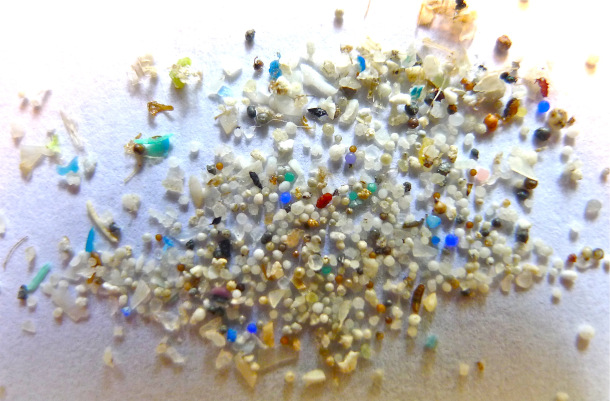
In this week's Beyond the Headlines segment, Environmental Health News Editor Peter Dykstra and Host Steve Curwood discuss the pervasiveness of microplastics in farmed seafood. Next, they cover an update to the "secret science" rule, the Trump-era rule which would have made it harder for the EPA to use studies that keep confidential health data of participants. Finally, they look back at a moment in the environmental justice movement, and Bill Clinton's formal recognition of environmental justice on February 11, 1994.
Transcript
BASCOMB: It’s Living on Earth, I’m Bobby Bascomb
CURWOOD: And I’m Steve Curwood.
Let's take a look beyond the headlines now with Peter Dykstra. Peter is an editor with Environmental Health News, that's ehn.org and dailyclimate.org. He is on the line now from Atlanta, Georgia. Hey there, Peter, what do you have for us today?
DYKSTRA: Hello, Steve. We're going to start with a study that was reported by Hannah Seo about fish farming and its plastic problem.
CURWOOD: There's a lot of plastic in the ocean, what's going on with fish farming?
DYKSTRA: There have been a couple studies out recently, notably one in the journal "Aquaculture," where scientists sampled twenty-six fishmeal products from eleven countries on four continents, plus Antarctica. And the only sample that didn't have plastic in it, in these fish and fish meal, was the one from Antarctica.
CURWOOD: And fish meal is what?
DYKSTRA: Fish meal is ground up fish and fish trimmings, sometimes mixed with some grain products that are fed to fish. If there are microplastics in the fish food, there will be microplastics in our seafood.
CURWOOD: So we're eating microplastics?
DYKSTRA: We're eating microplastics. The sort of good news is that the whole fish tends to have more microplastic in it. The muscle part, the part we call fillets has little evidence of serious contamination, although there are microplastics in every part of the fish that we consume. Most of the contamination is in other organs that are generally not eaten in our part of the world.
CURWOOD: Yeah, but there are many societies where people eat the whole fish, especially if it's a little one. All right, what else do you have for us today?
DYKSTRA: A decision from a federal judge in Montana turns out to be good news for the Biden administration. A federal judge vacated the Trump administration rule limiting which scientific studies the EPA can use in issuing health-related regulations. What the Trump era EPA called "secret science," a really sinister sounding name, the long held practice that raw data can be used in some studies and be kept confidential, would end.
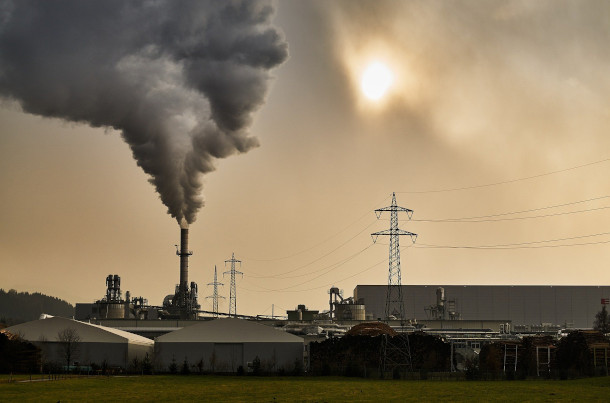
CURWOOD: And how would you be able to do studies? I mean, a lot of studies have used health data, personal health data, I'm thinking of the one that showed how dangerous particulates from coal-fired power plants and diesel engines are, and also in pesticide evaluation, but people aren't going to agree to be part of a health study if their entire health record could become public.
DYKSTRA: That's absolutely right. And the other side of it is that if scientists insist on keeping that data secret under this Trump rule, they automatically would have invalidated use of the studies in making new rules to protect human health in the environment.
CURWOOD: But thanks to this judge in Montana, you say that so called "secret science" rule is now in the history books. Hey, let's go on to history. Now, at this point in our little chat, we typically will take a dip back into the volumes of history, and have you tell us what you see. And today it is?
DYKSTRA: I want to give you a little history of the environmental justice movement here in the US. It was considered to be born in 1982. There were protests in a rural, mostly African American county, Warren County, North Carolina, which was set to be the site of a PCB dump. The protests were so effective that the governor canceled the dump. The environmental justice movement was born. But February 11, 1994, environmental justice was finally recognized by the federal government, when President Bill Clinton signed an executive order calling for environmental justice to be a factor in any federally funded project. Now, President Biden has promised a renewed focus on environmental justice, but we'll see how that goes because it has been a long time since February 11, 1994, when the federal government first recognized the problem.
CURWOOD: Well, we've been at the racial problem in America since 1619, some folks would say. Thanks Peter! Peter Dykstra is an editor with Environmental Health News that's ehn.org and dailyclimate.org. We'll talk to you again real soon.
DYKSTRA: All right, Steve, thanks a lot. Talk to you soon.
CURWOOD: And there's more on these stories on the Living on Earth website. That's loe.org.