
Note on Emerging Science: Wild Bees a Boost to Crops
Air Date: February 26, 2021
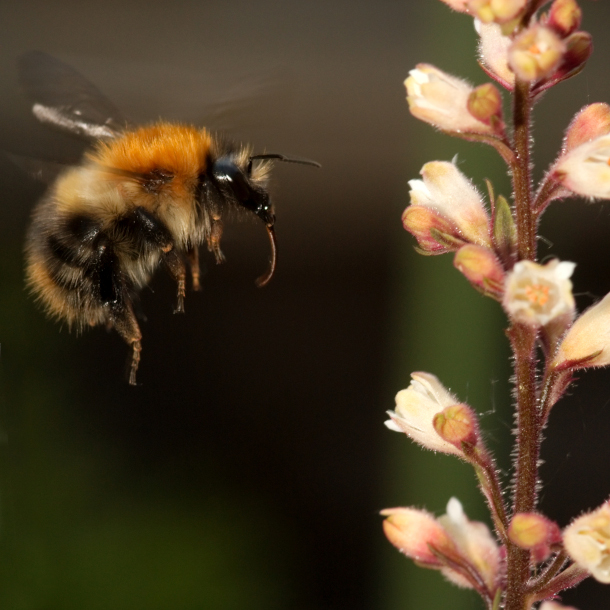
For this week’s note on emerging science, Living on Earth’s Don Lyman discusses a recent study on the importance of native wild bees in agriculture. Native pollinators boosted yields for every crop studied, even on farms that use managed honeybees.
Transcript
LYMAN: Although many farms in the United States use managed non-native honeybees to pollinate crops an analysis of seven crops in North America shows wild bees, such as bumblebees, contribute to crop pollination too, even on farms that utilize managed honeybees. A new study estimates that wild bees add at least 1.5 billion dollars in total yields of six fruit crops including watermelons cherries, and apples. To measure the contribution of wild native bees on pollination, researchers monitored bee visits to flowers at 131 commercial farms across the United States and Canada. They found farms often didn’t have enough honeybees to get the maximum crop yield, and native wild bees were supplementing pollination. Native pollinators boosted yields for every crop studied and added more than a billion dollars’ worth of apples, 145 million dollars’ worth of sweet cherries, and 146 million dollars’ worth of watermelons. All bees, both native and non-native can be sickened and killed things like pesticides and diseases. that means threats to wild bees could decrease farm profits even if the farmers are using stocked honeybees to pollinate their crops. That’s this week’s note on emerging science. I’m Don Lyman.