
Note on Emerging Science: Oldest DNA Ever Sequenced
Air Date: March 19, 2021
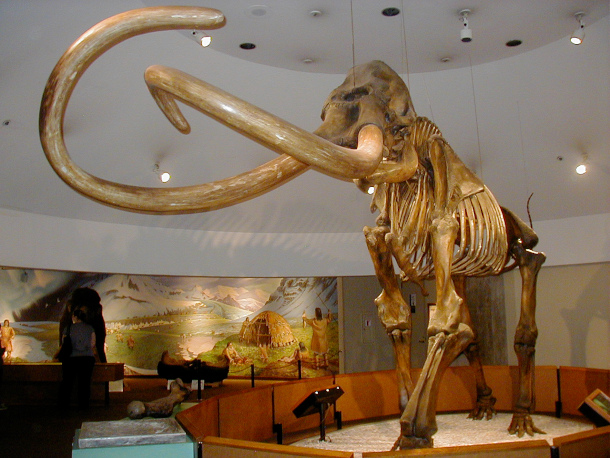
An international team of scientists has set a new record for the oldest DNA ever sequenced. This DNA, extracted from a mammoth tooth over a million years old, holds surprising clues to the evolutionary history of mammoths and represents an exciting technological breakthrough in the field of paleogenetics. Living on Earth’s Grace Callahan reports.
Transcript
BASCOMB: It’s Living on Earth, I’m Bobby Bascomb
CURWOOD: And I’m Steve Curwood.
Just ahead the serious health problems facing people when fracking facilities move in next door but first this note on emerging science from Grace Callahan.
SCIENCE NOTE THEME
CALLAHAN: Scientists have set a new record: they’ve sequenced the oldest DNA to date!
An international team of scientists led by researchers at the Centre for Paleogenetics in Sweden has pieced together the genome of a mammoth fossil, more than a million years old. They published their findings in the journal Nature. This shatters the previous record set by a horse bone some 700 thousand years old.
Every living thing contains DNA, the blueprint for life. But when something dies, that DNA starts breaking down into smaller and smaller pieces, eventually becoming illegible to scientists.
Extreme cold slows this breakdown, just like your freezer stops last week’s leftovers from rotting. So, in theory, if a sample of tissue was preserved perfectly in a state of constant cold, say, in permafrost, the genome could be preserved enough to be used for genetic sequencing.
That perfect sample came in the form of three mammoth teeth buried long ago in the frozen earth of present-day Russia. Each tooth came from a different mammoth, separated in time by hundreds of thousands of years. The researchers managed to piece together the DNA from these teeth, the oldest of which is between 1.2 and 1.6 million years old. It belongs to a new lineage of mammoths previously unknown to science. Scientists called their discovery the Krestovka mammoth, named after the village near which the tooth was discovered.
This new lineage is providing surprising insights into the evolution of later mammoth species. Columbian mammoths, named for Christopher Columbus, lived in North America until the end of the last ice age, about 11,500 years ago. This new genetic evidence suggests that Columbian mammoths were actually hybrids between this new Krestovka mammoth and Eurasian Steppe mammoths. This is the first evidence of hybrid speciation ever observed in ancient DNA.
The sequencing of DNA over a million years old is a thrilling development in the world of paleontology. Now that we’ve proved sequencing these ancient teeth is possible, paleogeneticists are setting their sights on future discoveries still waiting beneath the ice. DNA from other species could hold surprising clues to the history of life on our planet. Scientists hope that someday we may even find million-year-old hominid DNA and unravel the mysteries of our own ancient genetic history.
That’s this week’s note on emerging science. I’m Grace Callahan.