Beyond the Headlines
Air Date: May 14, 2021
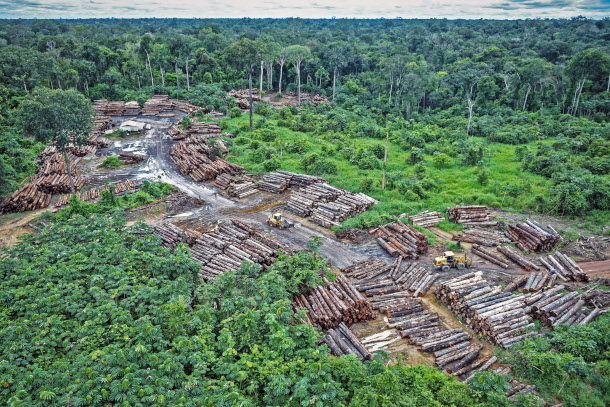
This week, Host Steve Curwood and Environmental Health News editor Peter Dykstra go beyond the headlines to discuss the record-breaking rates of deforestation in the Amazon rainforest and the battle over the future of offshore wind development in Maine. They also revisit the anniversary of solar cell manufacturing company Solyndra’s public collapse in 2011.
Transcript
CURWOOD: It's Living on Earth, I'm Steve Curwood.
And it's time for us to take a look beyond the headlines with Peter Dykstra. Peter is an editor with Environmental Health News, that's EHN.org and dailyclimate.org. And when he's not looking behind those headlines for us, he's relaxing at his place there in Atlanta, Georgia, and he's on the line now I think. Hey there, Peter, how you doing? What you got for us?
DYKSTRA: I am here, I'm doing well, Steve. And we're going to go to a meeting held last month on Earth Day April 22, where President Biden brought together world leaders in a cyber summit to talk about the environment and climate change. One of those leaders was Brazil's President Jair Bolsonaro. He's been heavily criticized for allowing huge growth in the deforestation of the Amazon. And he pledged in that April 22 meeting to knock it off, to increase enforcement, and to make sure that the Amazon is better protected than it is.
CURWOOD: I have a feeling that there's a "but" to this, and that but is...
DYKSTRA: There's an awfully big but here, Steve. And that is that the April numbers from Brazil's own satellite monitoring show that April 2021 showed a 43% increase in deforestation over the month of April a year ago, 2020.
CURWOOD: Well, that's a lot of trees. Hey, what else do you have for us today, Peter?
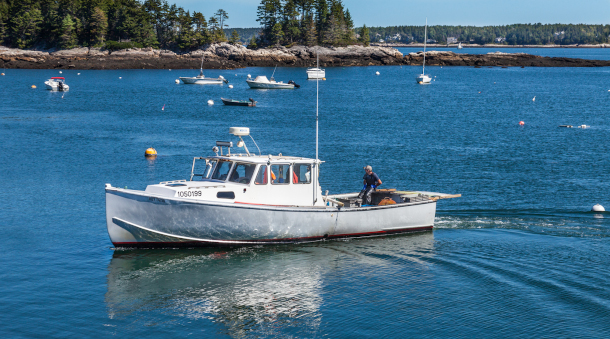
DYKSTRA: Well, we shall see if the deforestation decreases in the Amazon, but in this country, President Biden has pledged to greatly increase clean energy, including offshore wind. But in the state of Maine, there's a Republican Representative named Billy Bob Faulkingham, who has filed a bill that would effectively ban offshore wind power in Maine state waters.
CURWOOD: Well, Maine has done a lot of research though on offshore wind because it's kind of deep there and I believe the University of Maine has spent maybe the better part of a decade trying to figure out how you could put wind turbines out there that wouldn't get washed away in storms.
DYKSTRA: It can be done despite the deep waters in much of the Gulf of Maine. But representative Faulkingham, citing some exotic stats on the cost of wind development that I have a little trouble believing, he favours nuclear power and importing hydro power from Quebec. And obviously there are environmental concerns there. He says this is to protect lobstermen already under threat by warming waters. The representative told the Portland Maine Press Herald, quote, it is time to put a permanent halt to offshore wind development. He called it a "science project".
CURWOOD: Okay, Peter. Well, let's take a look now back in history. I'm staring, you're staring, what do you see?
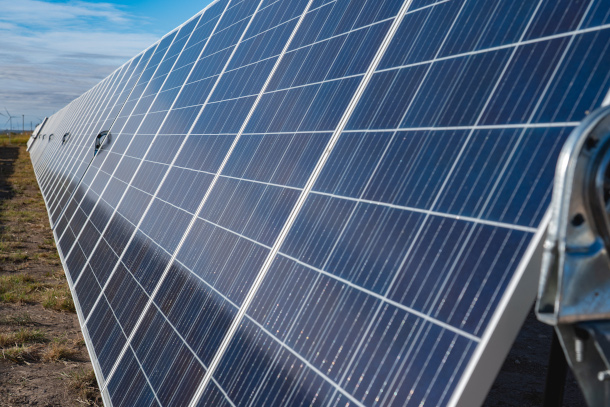
DYKSTRA: Well, we have a happy 10th anniversary for Solyndra, a name many of us knew and a name many of us have forgotten. But in May 2011, this quiet failure in Obama's energy program became public. The Center for Public Integrity, a nonprofit journalism center, reported that a half billion dollar Department of Energy loan guarantee to the solar panel manufacturer Solyndra had gone bad. Solyndra declared bankruptcy months later in September 2011, stranding over 1,000 employees and launching an absolute Republican field day for attacking not just Solyndra, not just Obama, but the entire notion of solar energy.
CURWOOD: Of course, that Department of Energy loan guarantee fund also gave about a half a billion dollars in loan guarantees to one Elon Musk to get Tesla going up to scale. So for a fund that was designed to fund long shots, how would you say the balance is?
DYKSTRA: Well, certainly because Elon Musk hosted Saturday Night Live last week, he's certainly alive and well and still kicking. Certainly so is Tesla. But the other thing that gets me is imagine, just 10 years ago, when a half billion dollar scandal was a lot of money. But a half billion dollar scandal is not much in today's trillion dollar economy.
CURWOOD: Indeed not. Thanks, Peter. Peter Dykstra is an editor with Environmental Health News thats ehn.org and dailyclimate.org. We'll talk to you again real soon.
DYKSTRA: Alright Steve, thanks a lot. Talk to you soon!
CURWOOD: And there's more on these stories on the Living on Earth web page, that's loe.org.