Note on Emerging Science: Deep-Sea Vehicle Alvin Reaches New Depths
Air Date: July 09, 2021
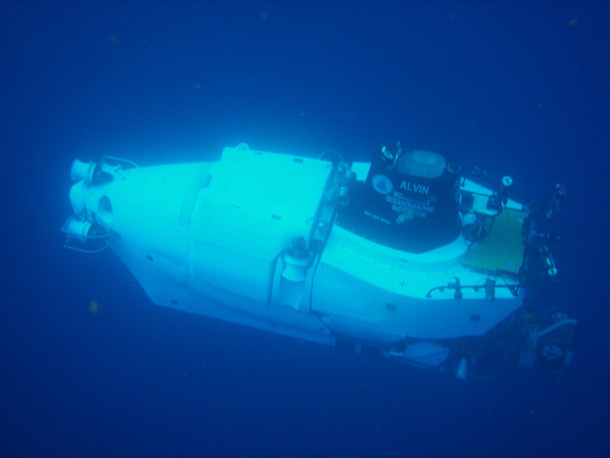
Oceanographers have gathered a lot of evidence on how pollution and climate change impact the world’s oceans. But knowledge of the way these factors come into play in the deep ocean has been limited. Now, upgrades to the deep-sea research submersible Alvin will put 99% of the ocean floor within reach of its crew. Living on Earth’s Casey Troost reports.
Transcript
BASCOMB: It's Living on Earth, I’m Bobby Bascomb. Just ahead we’ll take a deep dive into the culture of whales but first this note on emerging science from Casey Troost.
TROOST: Oceanographers have gathered a lot of evidence on how pollution and climate change impact the world’s oceans. But a newly upgraded research submersible will deepen their understanding even more.
This September, engineers from the Woods Hole Oceanographic Institution in Falmouth will finish seven years of upgrading and testing the deep-sea research submersible Alvin. First created in 1968, Alvin has been completely stripped down and upgraded many times over.
The newest round of upgrades outfit the vessel with a third sampling arm, better cameras, a reinforced cabin, ballast spheres for stabilizing, and many other improvements. The upgrades will improve the quality of Alvin’s research and enable it to descend more than a mile deeper than it was previously able. Alvin’s reach will extend from less than 70% of the seabed to 98%, bringing the submersible into a group of less than ten others in the world that can carry scientists that far. But one of the most intriguing possibilities with the new and improved Alvin is that it will able able to enter the Hadal Zone, where undiscovered wildlife is coming into contact with human pollution.
The Hadal Zone extends from nearly four miles below the surface to the very bottom, roughly. While this region is unique for its isolation and hostility to most life, it plays a crucial role in carbon cycling for the ocean above.
You see, carbon in the form of waste, like whale carcasses and dead plankton, descends through the ocean to feed scavengers, bacteria, and fungi living below. But the same gravity that feeds the Hadal zone also exposes it to trash and chemicals. Already scientists have found toxic microplastics and PCB chemicals in the bodies of important scavengers.
Venturing four miles down, Alvin will just scratch the surface of the Hadal Zone. But this extra distance will help scientists keep better track of pollution, and its impacts. Not to mention new forms of life that wait in the depths.
That’s this week’s note on emerging science. I’m Casey Troost.