
Science Note: Can Plants Hear?
Air Date: August 06, 2021
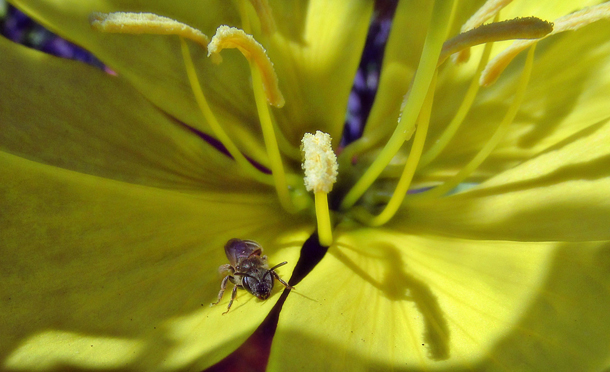
Flowers don’t have ears like ours, but research has found that some flowers, like evening primrose, can “hear” the buzzing of bees’ wings. Living on Earth’s Don Lyman reports on how these flowers sometimes quickly respond to nearby pollinators by sweetening their nectar.
Transcript
CURWOOD: Coming up after the break, protecting human health by protecting planetary health but first this Note on Emerging Science from Don Lyman.
SCIENCE NOTE THEME
SFX BUZZING OF A BEE
LYMAN: Humans can hear the gentle buzzing of a honey bee with our ears of course, but it turns out that some flowers can also hear the sound of their favorite pollinators. Well, kind of…researchers at Tel Aviv University recently found that the concentration of sugar in the nectar of evening primrose temporarily increased within minutes of sensing vibrations from pollinators’ wings. The researchers suspect the flowers act like ears, and can pick up the specific frequencies of bees’ wings, but are able to tune out background noise, like wind.
To test their hypothesis, scientists exposed plants in the lab to five sound treatments: silence, recordings of a honeybee from four inches away, and computer generated sounds in low, intermediate and high frequencies.
Plants under sound proof glass jars – the silence group – as well as plants in the intermediate and high frequency groups,
SFX
had no significant increase in sugar concentration in their nectar.
But plants exposed to recordings of bee sounds
BUZZING
and similar low-frequency sounds
LOW FREQUENCY SOUND
produced as much as 65 percent more sugar in their nectar within three minutes of exposure to the recordings.
The researchers believe that sweeter nectar may attract more pollinators and increase the chance that bee detecting evening primrose will cross-pollinate with other plants and pass on their bee hearing genes.
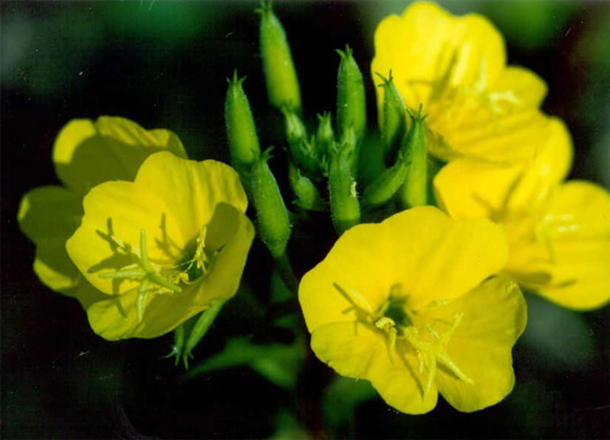
The researchers also conducted experiments that showed that the bowl-shaped flowers of the primrose picked up and amplified sound vibrations.
This single study has opened up a new field of scientific research, which the researchers call phytoacoustics.
That’s this week’s note on emerging science. I’m Don Lyman.
SCIENCE NOTE THEME