
Note on Emerging Science: The Beetle That Can Survive Being Eaten
Air Date: August 20, 2021
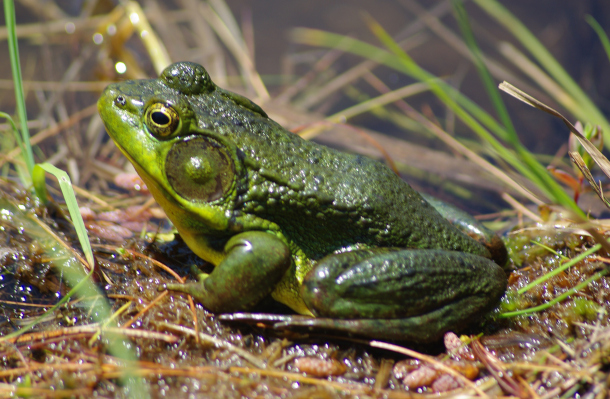
For most insects, getting eaten by a frog is the end of the road. But a unique water beetle species can survive the perils of stomach acids and a lack of oxygen and pop out of the frog’s rear end unscathed. Living on Earth's Don Lyman reports on how an ecologist at Kobe University in Japan studied this beetle’s ability to defy death by digestion.
Transcript
LYMAN: Most insects are doomed when they get eaten by a frog. But scientists recently discovered that a species of water beetle, Regimbartia attenuate, can actively travel through a frog’s digestive tract, survive stomach acids and lack of oxygen, and pop out of the frog’s rear end unscathed. Although rare, some animals do survive after being ingested by another animal. Some snails, for example, can seal their shells shut after being eaten by a fish or a bird, and wait to be excreted from the predator’s digestive tract. But the case of the water beetle is the first documentation of prey actively escaping through the digestive tract of a predator. Shinji Sugiura, an ecologist at Kobe University in Japan, put the water beetles in cages with frogs in his laboratory. The frogs readily ate the beetles, but Sugiura was quite surprised to see the beetles exit from the frogs’ behinds and continue on their way apparently unharmed. Sugiura conducted some 30 beetle-frog tests, and found that over 90 percent of the beetles survived being eaten. The average time it took for the beetles to escape was about six hours, but one beetle made it through a frog’s digestive tract in only six minutes. Sugiura immobilized some of the beetles using wax to stick their legs together to determine that the insects were actively escaping from the frogs’ digestive tracts. None of the immobilized beetles survived, and their remains took a day or more to pass through the frogs’ bodies.
Sugiura plans to test the beetles’ survival abilities by pairing the insects with bigger frogs, toads and fish. That’s this week’s note on emerging science. I’m Don Lyman.