
Note on Emerging Science: Oh, What a Tangled Web They Weave
Air Date: August 27, 2021
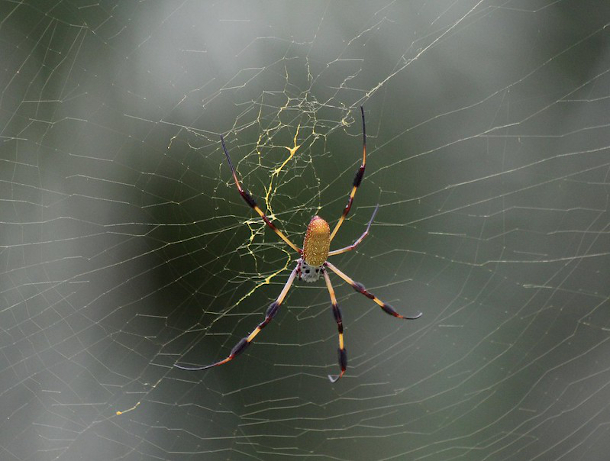
New research suggests that some sticky spider webs contain paralytic neurotoxins that help catch prey. Living on Earth’s Don Lyman reports.
Transcript
DOERING: It’s Living on Earth, I’m Jenni Doering
O’NEILL: And I’m Aynsley O’Neill.
Just ahead, a scientific breakthrough that may help reduce mosquito borne illnesses but first this note on emerging science from Don Lyman.
SCIENCE NOTE THEME
LYMAN: It’s long been assumed that spider’s webs were merely sticky traps that captured prey. But new research suggests that the webs of some species of spiders may actually contain neurotoxins that paralyze prey. Researchers in Brazil, first suspected some 25 years ago that the webs of the orb weaver spider, contain neurotoxins, when they observed freshly entangled prey like bees and flies convulsing, a possible symptom of neurotoxin poisoning. Scientists recently analyzed the genes and proteins in the silk glands of banana spiders, a species of orb weaver and found proteins that resemble known neurotoxins which may turn the spiders’ webs into “paralytic traps.” In fact, scientist were able to isolate the proteins and and injected them into bees, which caused the insects to become paralyzed in under a minute, confirming their suspicions about the neurotoxic quality the webs. And researchers believe the webs of other spider species probably have similar neurotoxins. Next on the scientists’ research agenda is looking into the possibility that smaller unidentified proteins the researchers found in webs may help keep the spiders’ prey alive until the spiders are ready to feed. Oh, what a tangled web they weave. That’s this week’s note on emerging science. I’m Don Lyman.