
BirdNote®: Migration – Long, Short, And In-Between
Air Date: October 01, 2021
The fall harvest season is upon us and for birds that means it’s time to migrate. BirdNote®’s Mary McCann has more.
Transcript
BASCOMB: It’s Living on Earth, I’m Bobby Bascomb.
CURWOOD: And I’m Steve Curwood
The fall harvest season is upon us and for birds that means it’s time to migrate. Birdnote’s Mary McCann has more.
BirdNote®
Migration - Long, Short, and In-Between
Written by Bob Sundstrom
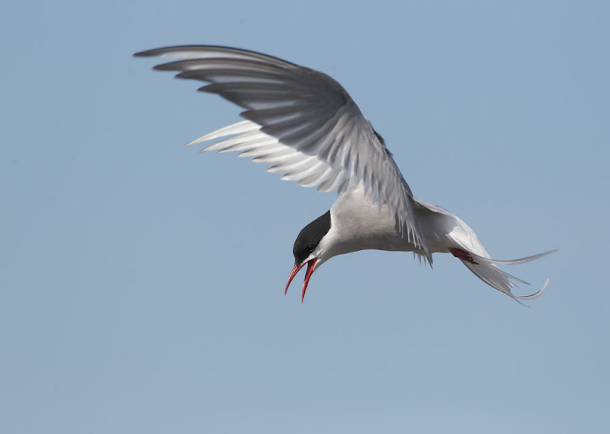
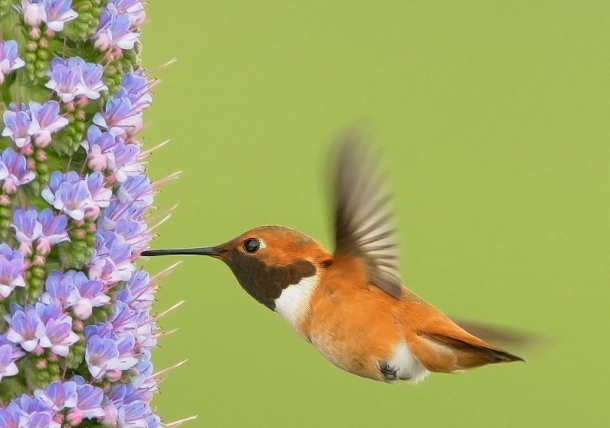
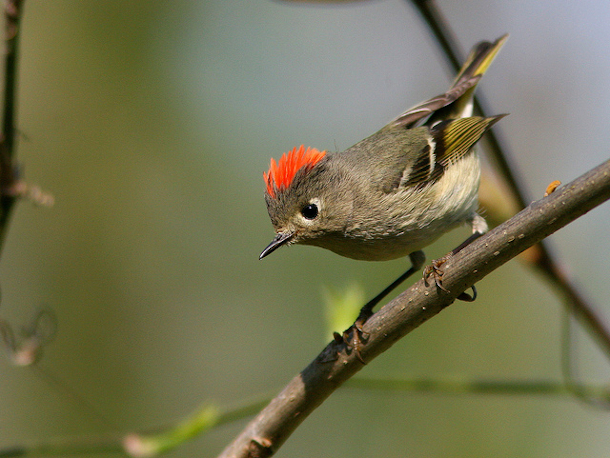
MCCANN: In September, Arctic Terns fly south over the ocean, from Alaska all the way to Antarctica. [Arctic Terns’ gruff calls] Also in September, the last Rufous Hummingbirds depart their breeding range in the West, following “floral highways” of mountain wildflowers south to Mexico. [Male Rufous Hummingbird wing-whistle] Ruby-crowned Kinglets are leaving the northern evergreen forests where they nest, on their way to milder climates. [Ruby-crowned Kinglet song] Each of these birds is migrating, but on a very different course. All have the same adaptive goal — making the most of food and breeding opportunities that change with the seasons. Arctic terns follow one of the longest annual migrations, traveling as much as 44,000 miles each year. Arctic tundra provides their ideal nesting site in summer, the Antarctic, the ideal feeding grounds in our winter.
Arctic Terns’ gruff calls
Rufous Hummingbirds are medium-range migrants, traversing about 5,000 miles a year between temperate and tropical nectar sources.
Male Rufous Hummingbird wing-whistle
Some Ruby-crowned Kinglets are altitudinal migrants, especially in the West. They may remain close to the same latitude all year but spend the cold months in the relative earth of the lowlands dining on insects and eggs. In summer, you’ll need to ascend thousands of feet into the western mountain ranges to hear the kinglet’s exuberant song.
Ruby-crowned Kinglet song
###
Bird audio provided by The Macaulay Library at the Cornell Lab of Ornithology, Ithaca, New York. Arctic Tern calls, Ruby-crowned Kinglet song and Rufous Hummingbird call recorded by G.A. Keller.
Ambient songbird track recorded by C Peterson.
BirdNote’s theme music was composed and played by Nancy Rumbel and John Kessler.
Producer: John Kessler
Executive Producer: Chris Peterson
© 2013 Tune In to Nature.org September 2013 / 2017 / 2020 Narrator: Mary McCann
ID# 091307migr3KPLU migration-07b
Arctic Tern statistics from: Berthold, Peter. Bird Migration: A General Survey. New York: Oxford University Press, 1993.
https://www.birdnote.org/listen/shows/migration-long-short-and-between
CURWOOD: For photos migrate on over to the Living on Earth website, loe.org
