Beyond the Headlines
Air Date: January 21, 2022
This week, Environmental Health News Editor Peter Dykstra and Host Steve Curwood discuss how an apparent rise in smoking during the pandemic could mean more plastic pollution from cigarette butts. Also, some good news about more protections for marine life around the Galápagos Islands. In the history calendar, 32 years ago a group of civil rights leaders wrote to the heads of green groups to point out their glaring lack of diversity, a problem that persists today.
Transcript
CURWOOD: Joining me for a look beyond the headlines is Peter Dykstra. Peter is an editor with Environmental Health News, that's ehn.org, and DailyClimate.org, on the line there from Atlanta, Georgia. Hi there, Peter, how you doing in this pandemic that just seems to go on and on?
DYKSTRA: Well, hi, Steve, and in one sense, I might be doing better than millions of other people in the world, who are stressed out and shut in because of the COVID pandemic. That has led, according to a National Institutes of Health Study, and many other anecdotal stories, that we're smoking more.
CURWOOD: Indeed, and by the way, I hear from someone on our staff that more young women are smoking in part because they feel that, you know, with the climate emergency, how long are their lives going to be? So sad.
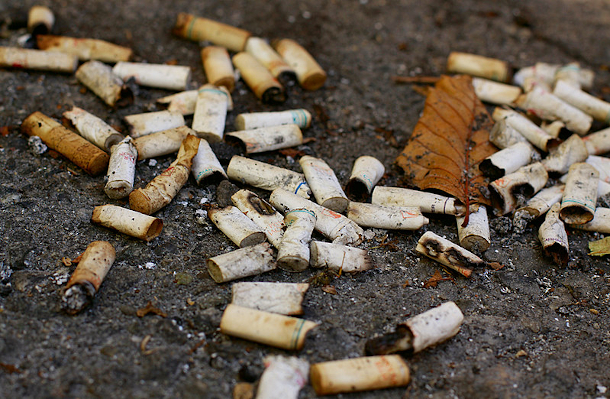
DYKSTRA: It is sad, and we're sending it straight to our lungs. One more thing to worry about, and one more thing on top of the thing to worry about are cigarette butts. We already know that there are billions of them that are literally littering the ground—sidewalks, beaches, into the ocean. And those cigarette butts are not only the butt end of a polluting product, but they are also a source of plastic pollution. Every filtered cigarette butt has a lot of plastic in it.
CURWOOD: Yeah, boy, I've noticed it seems to take forever for them to degrade; maybe they don't biodegrade, for that matter.
DYKSTRA: In terms of the plastic, for all intents and purposes, they don't. They're everywhere. And we're just coming to terms about one more tragically easy way for people to pollute, and pollute with an addicting substance.
CURWOOD: Hmm. Hey, what else do you have for us today?
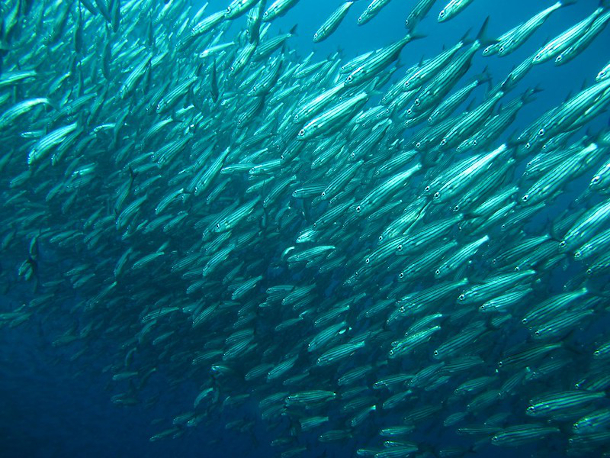
DYKSTRA: We go to a beautiful place, the Galapagos, treasured back to the 1800s as a source of wonder, a source of biodiversity, a source of great scientific knowledge, going back to Charles Darwin's work on The Origin of Species. But there has been an influx of fishing in the waters conserved around the Galapagos, that's brought in Chinese fleets and other nations' fleets. The Galapagos are protected to the tune of tens of thousands of square miles. And Ecuador, of whom the Galapagos are property, has decided to increase the conservation area around those treasured fabled islands.
CURWOOD: Yeah, I think that's gonna be a big help, I think, Peter, because the Galapagos attract fish from all over the ocean to come there for feeding and breeding. And that's why the fishing boats like to set up nearby, but hopefully this will help conserve more species. Alright, Peter, what else do we have for today? Oh, I guess it's that time that we look back in the history books, and tell me what you see now?
DYKSTRA: We surely do. And we're going to go back 32 years to January of 1990, when a coalition of American black and brown political groups sent a letter, rather sharply worded letter, to green political groups, that they're too white, you follow me?
CURWOOD: Indeed, I, in fact, I remember back then there was a first National Summit of People of Color on the Environment about that issue.
DYKSTRA: There was. The terms "environmental racism" and "environmental justice" had begun to come to the fore in the 1980s. They had worked their way into the vocabulary of the environmental movement, but not necessarily into the leadership of big national environmental groups like National Audubon, the Natural Resources Defense Council, the Environmental Defense Fund, the Sierra Club and others.
CURWOOD: That's right. Well, I know this is an item from history, but Peter, kind of feels like it's still going on.
DYKSTRA: Yeah, 32 years ago seems like a long time, particularly since so little has happened in the interim.
CURWOOD: Well, thank you, Peter. Peter Dykstra is an editor of Environmental Health News, that's ehn.org and DailyClimate.org. We'll talk to you again real soon.
DYKSTRA: All right, Steve, thanks a lot. Talk to you soon.