
Beyond the Headlines
Air Date: March 25, 2022
In this week’s segment, Environmental Health News Editor Peter Dykstra and Host Bobby Bascomb discuss how the Deni people of the Amazon rainforest have managed to protect an important fish. Next they examine how a wastewater treatment plant in Oregon is converting the methane from raw sewage into a renewable source of electricity. And they commemorate the Exxon Valdez oil spill of 1989 and two other major events that all happened in the same week of March across different years in the town of Valdez, Alaska.
Transcript
BASCOMB: Well, it's that time in the show for our trip beyond the headlines with Peter Dykstra. Peters an editor with environmental health news. That's ehn.org and daily climate.org. Hey there, Peter, what do you have for us this week?It’s Living on Earth, I’m Bobby Bascomb
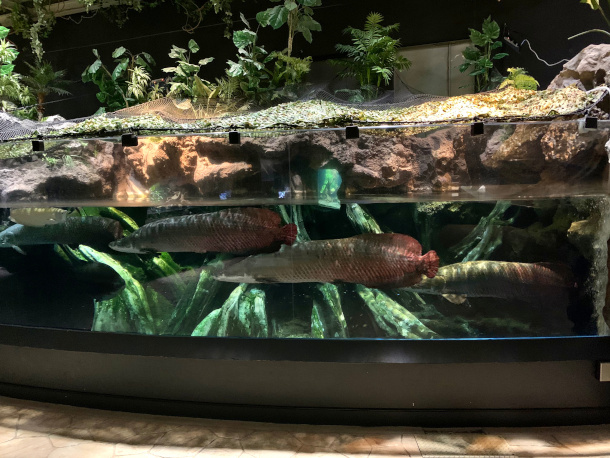
DYKSTRA: Hi, Bobby. We're gonna start out with not one but two pieces of positive news, tough to find on the environment beat but we've got'em this week. The first ones from the Amazon rainforest. There's an indigenous community of about 2000 people the Deni people who live in a so far, unspoiled part of the Amazon, no mining operations, no logging operations, turning forests into poorly performing farmland, they have lived traditionally, on a very large fish called pirarucu. They've managed to not only save, but boost their numbers over the last decade or so by taking old fashioned tradition with newfangled management techniques.
BASCOMB: Wow, that's amazing. So what are they doing?
DYKSTRA: They have outlawed, so to speak the taking of smaller fish letting the juveniles grow up and reproduce. They've protected the waters in which the pirarucu grow and thrive and are eventually fished and eaten. And they've taken a lot of steps based on some coaching from rainforest scientists to preserve the pirarucu. And perhaps most importantly, it's a protection and a culture that's being allowed to continue.
BASCOMB: But you know, of course, the problem in Brazil for a lot of indigenous people is having access to their land and the rights to use their land in their traditional way. But it sounds like these people have figured that out. That's right. All right. Well, what else do you have for us this week?
DYKSTRA: A little bit more good news from the state of Oregon, they found a way to turn some of their sewage into a potentially endless supply of renewable clean energy in Clackamas County. The sewage treatment plant operators, over the last few years, have looked up in the sky, and seen the smoke from nearby wildfires. They were concerned that if wildfires knocked out power to the sewage treatment plant, that their plant would turn into a pollution disaster for waterways in Oregon. So what they've done is they've taken techniques that are also being researched and deployed in farming operations to turn poop, partly into methane and use that as renewable energy. Methane, of course, is a major climate change gas when released into the air.
BASCOMB: Wow. Yeah, that seems like a real win win. I mean, it's renewable. As you said, we're not going to run out of sewage anytime soon. And I would think it's going to lower the electricity bills, you know, reduce methane emissions and build resilience into these systems, you know, in the face of climate change and wildfires.
DYKSTRA: I will mark your words on that, Bobby, we will not run out of poop anytime soon.
BASCOMB: No, no, indeed. All right. Well, what do you have for us from the history books this week?
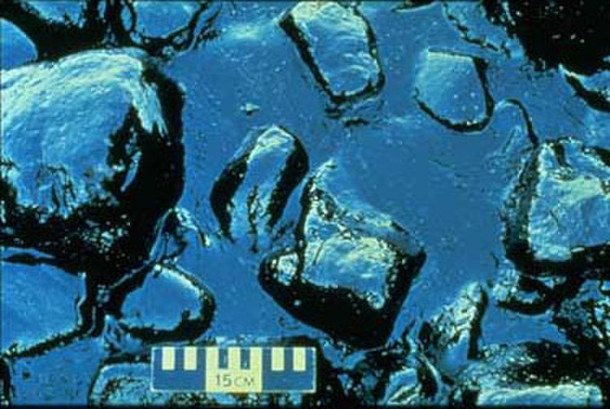
DYKSTRA: Here's a little Trifecta from Valdez, Alaska. Three of its most momentous events, all happened in different years. But in the same week, the last week in March, go back to 1964. There was a massive earthquake that resulted in the tsunami, the tsunami wiped out what was then a sleepy little fishing port of Valdez, Valdez had to be rebuilt, they built the town six miles away and uphill, so it wouldn't ever be wiped out again, and the sleepy little port turned into a major bustling money making port. March 27 1975 construction began on the trans Alaska Pipeline, which ended in Valdez when completed in 1977. Valdez was that oil boomtown and shipping oil out of Valdez resulted in a calamity on March 24 1989, when the Exxon Valdez ran aground spilling up to 12 million gallons of crude oil in Prince William Sound. The spill prompted the US Congress to pass the Oil Pollution Act of 1990, which requires the use of double hull tankers in US waters. But the lawsuits over the spill took 20 years to resolve. Some fishermen and others who were supposed to receive money from Exxon over the spill, about 20% of them died before the first checks were cut.
BASCOMB: Wow, that's a lot of history for one little area in the same week of March. That's that's kind of amazing that all of these things happened around the same time. All right, well, Thanks, Peter. Peter Dykstra is an editor with Environmental Health News. That's ehn.org and daily climate.org. We'll talk to you again real soon.
DYKSTRA: All right, Bobby, thanks a lot talk to you soon.
BASCOMB: And there's more on these stories on the Living on Earth website that's loe.org
Related Links
- Climate Home News | “Amazon Indigenous Community Restores Giant Freshwater Fish And Thrives”
- Reasons to be Cheerful | “Oregon Is Turning Sewage into an Endless Supply of Green Energy”
- Read more on the Exxon Valdez Oil Spill
- Learn More about Alaska’s 1964 Good Friday Earthquake
- PBS | “Alaska Pipeline Chronology”