Living on Earth: November 11th, 2022
Air Date: November 11, 2022

Host Steve Curwood and Environmental Health News’ Weekend Editor Peter Dykstra take a look at the 2022 midterms to analyze incoming Governors, outgoing Senators, and the only two ballot initiatives on climate.

- 1Climate Action Winner in the Golden State
- 2Climate at the Ballot Box
- 3Extreme Wildlife Loss
- 4Ozone-Killing Chemicals Declining
Climate Action Winner in the Golden State
13 min read · 17 min listen

California Democratic Governor Gavin Newsom handily won re-election and now has 4 more years to work towards his goal of achieving carbon neutrality in the state by 2045. Mr. Newsom and other Governors have billions of dollars in climate funding at their disposal that was allocated by the U.S. Congress this summer. These state governments will play a crucial role in helping cities, universities, and the private sector make the most of it. Lauren Sanchez, Senior Climate Advisor to Governor Newsom, joins Host Steve Curwood for a look at California’s top climate priorities and how the Golden State intends to lead on climate amid an uncertain national political landscape.
Climate at the Ballot Box
8 min read · 11 min listen

Host Steve Curwood and Environmental Health News’ Weekend Editor Peter Dykstra take a look at the 2022 midterms to analyze incoming Governors, outgoing Senators, and the only two ballot initiatives on climate.
Extreme Wildlife Loss
13 min read · 17 min listen

This year’s Living Planet Report from the World Wildlife Fund and Zoological Society of London shows a nearly 70% decline in wildlife populations since 1970 due to habitat loss, over harvest, pollution, climate stress and more. The climate crisis will keep putting even more pressure on wildlife but there are also signs of improvement and hope. Host Steve Curwood discusses the report and how we can restore the loss with WWF Global Freshwater Lead Scientist Jeff Opperman.
Ozone-Killing Chemicals Declining
7 min read · 9 min listen
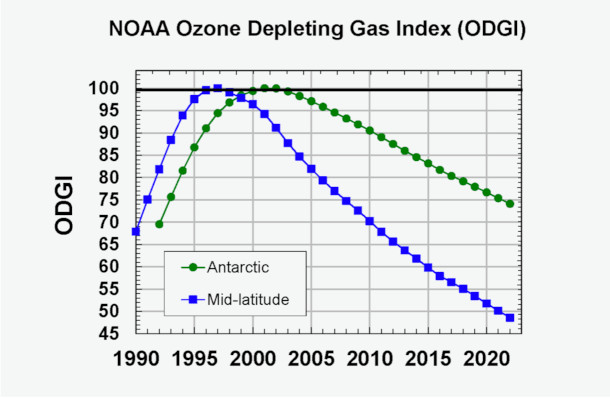
Emissions of chemicals that tear holes in the protective atmospheric ozone layer have been drastically reduced, thanks to the Vienna Convention launched in 1985 and its related Montreal and Kigali protocols. NOAA recently reported that midlatitude atmospheric concentrations of ozone depleting chemicals have declined about 50% compared to peak historic levels. Steve Montzka, senior scientist at the NOAA Global Monitoring Laboratory, joins Host Steve Curwood to explain how the global community reached this milestone.