Beyond the Headlines
Air Date: December 16, 2022
In this week’s trip beyond the headlines, Environmental Health News editor Peter Dykstra and Host Steve Curwood unpack the recent Keystone oil spill in Kansas. They then discuss a new study that shows Americans are moving to areas with high wildfire risks. This week’s trip to the past takes them to Holland in 1593 when Cornelis Corneliszoon van Uitgeest received a patent for his wind powered sawmill.
- 1Beyond the Headlines
Transcript
CURWOOD: On the line now from Atlanta, Georgia is Peter Dykstra. He's an editor with Environmental Health News. That's ehn.org and dailyclimate.org. Hi there, Peter, how you doing? All set for the holidays?
DYKSTRA: I'm getting set for the holidays and the holidays will be past us soon enough. There's a little unwanted gift in the state of Kansas: there was an oil spill in Mill Creek, which is a tributary that eventually runs to the Missouri River. That spill comes from the Keystone pipeline, the main part of it, which runs from Canada's tar sands fields down to refineries along the Gulf Coast in Texas and Louisiana. That spill is believed by some to already be the biggest land based spill that we've had in years. Keystone, of course, was in the news a few years ago when an addition, a shortcut, called Keystone XL was eventually shot down by the Obama administration after years of protests from farmers, environmentalists, Native American communities throughout the path of Keystone XL. That main pipeline is still running, but in this case, it's still leaking.
CURWOOD: Yeah, and the stuff that leaks, which is called diluted bitumen is some of the most difficult petroleum things to ever get into a pollution situation.
DYKSTRA: It's hard stuff to clean up. It's easy for that dilbit as they call it, to pollute and to keep areas polluted for a long time. The warnings have come out for years. And those warnings, unfortunately, like so many things, are now in the I told you so phase.
CURWOOD: That's right. Hey, what else do you have for us today?
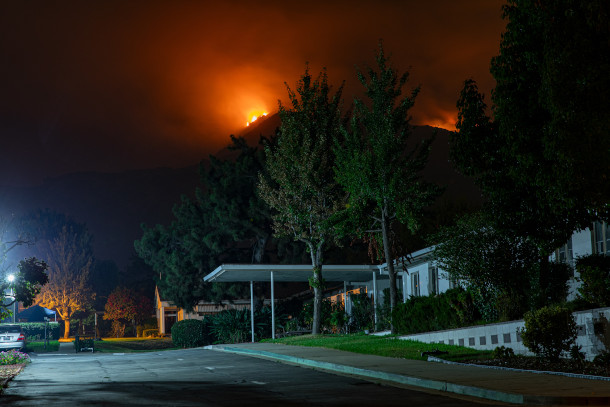
DYKSTRA: There's a report out that has been published in the journal Frontiers in Human Dynamics, talking about the incongruity of Americans moving into danger zones, zones that are suffering more and more due to climate change from wildfires and extreme heat. And so you're seeing cities, and particularly urban areas, in some of the worst places to put a city to begin with, like Los Angeles, and when those areas expand, the suburbs and the exurbs, the potential for wildfires expands as well.
CURWOOD: That's right. The so called wildland-urban interface doesn't seem to matter to developers who are putting up these houses, huh?
DYKSTRA: No, and there's a lot playing into that in a very negative and dangerous way. As these cities grow, real estate prices go up. What happens when real estate prices go higher is that the suburbs tend to sprawl. We're taking forested land and turning it into cultivated suburban land that has so many more fire risks to it that we're going to see increased risks in a lot of different ways.
CURWOOD: In forested areas, wildfires are relatively infrequent in a natural state. It might only be once in 100 years. But of course, no one has been around for the last 100 years to warn people, if you build there, the fire is going to come through.
DYKSTRA: If you build it, those wildfires will come. And the other aspect of this that's very concerning, is not just in western cities where water is very scarce, but even in places like here in the Atlanta area, as you build out and population increases, you're putting more and more stress on the ability of water to be provided everywhere for agriculture as well as drinking water for humans.
CURWOOD: Okay, time now for us to take a look back at the annals of history with you.
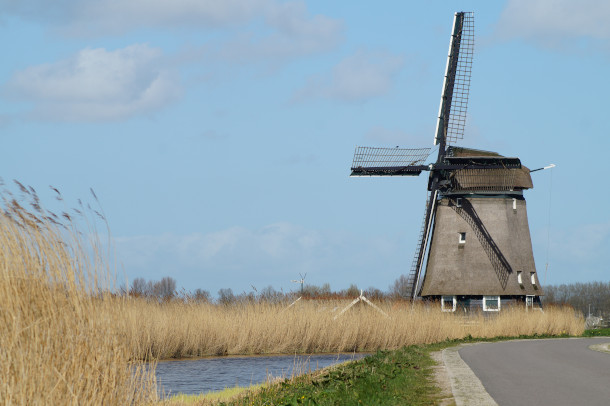
DYKSTRA: December 15th, 1593. There's a man named Cornelis Corneliszoon–that's the closest Dutch pronunciation I can give–received a patent from the state of Holland for a windmill operated sawmill. And so back in the 16th century, you had one of the first steps toward using windmills for industrial purposes.
CURWOOD: Well thanks, Peter. Peter Dykstra is an editor with Environmental Health News, that's ehn.org and dailyclimate.org. And we will talk to you again real soon. Happy holidays!
DYKSTRA: Happy holidays, Steve. Talk to you soon.
CURWOOD: And there's more on these stories Living on Earth webpage. That's loe.org.