Beyond the Headlines
Air Date: March 17, 2023

PFAS “forever” chemicals are everywhere, including in toilet paper, Peter Dykstra reveals in this week’s chat with Living on Earth’s Bobby Bascomb. Also, everything’s big in Texas, including renewable energy, and the state is by far the biggest producer of wind and solar in the U.S. And 55 years ago, prospectors struck black gold on Alaska’s north slope, forever changing the state’s economy and environment.
- 1Beyond the Headlines
Transcript
CURWOOD: It’s Living on Earth, I’m Steve Curwood.
And it’s that time in the program when we peek beyond the headlines with Living on Earth contributor Peter Dykstra. He spoke with our Bobby Bascomb.
BASCOMB: Hey there, Peter, what do you have for us this week?
DYKSTRA: Well, hi, Bobby, though in recent years, there's been a lot of reporting about forever chemicals, the PFAS chemicals, 14,000 different chemicals, many of which come into contact with humans all the time. But there's new research from the University of Florida that says one source of PFAS forever chemicals isn't something we touch. It's something that touches us nearly everyday.
BASCOMB: Oh, what's that?
DYKSTRA: Toilet paper?
BASCOMB: Oh, no.
DYKSTRA: There's a new research finding. Not only that human skin in the most delicate places, comes into contact with paper that has some level of PFAS chemicals in it. But once that toilet paper is used and flushed, goes to sewage plants that aren't designed to treat chemicals like PFAS. They're only designed to treat biologicals, like we find in our own excretions those chemicals and many others go through the sewage plants and end up in our waterways, giving forever chemicals another way to harm people and to harm the ecosystem.
BASCOMB: Sure, plenty of it could end up in the waterways. And some of that sludge is actually used for fertilizer might wind up on our gardens and farmer's fields.
DYKSTRA: And we're just beginning to learn what the level of harm and level of risk is. But the more we hear about forever chemicals, the worse the prospects seem to be.
BASCOMB: Well, what else do you have for us this week?

DYKSTRA: There's one state that generates more renewable energy than any other, not California, not an environmentally super conscious state like Vermont, it's Texas, the oil land, it's been true for a long time, renewables are big in Texas, just like everything else, mostly in the realm of wind energy, and utility scale solar, they are second to California. But they're catching up quickly.
BASCOMB: Well, you know, we do, of course, associate Texas with oil, but it's a very sunny state and more than half again, bigger than California. So I suppose we shouldn't be too surprised.
DYKSTRA: Oklahoma is also a traditional oil and gas state that's making a huge mark, particularly on wind power. And when states like that can begin to see an alternative to oil and gas. It's one source where maybe we can be a little bit more hopeful on dealing with climate change.
BASCOMB: Well, what do you see for us from the history books this week?
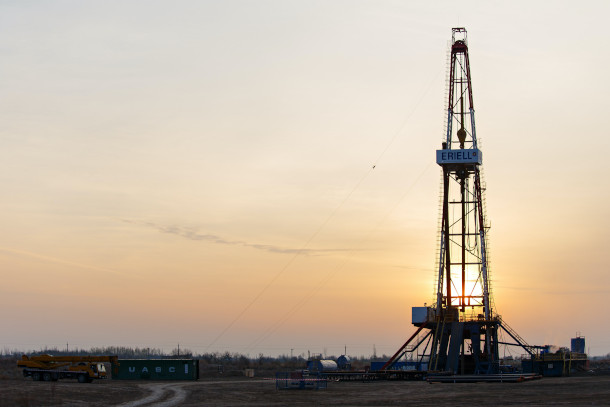
DYKSTRA: March 13th 1968, oil is discovered on Alaska's north slope, forever change not only the state's economy, but of course, the state's environment as well. It was less than a decade later, in the 70s, that the Alaska pipeline was passed by Congress funded, built and put underway bringing oil from Native communities in the North Slope all the way down to the port of Valdez, where it was put into tankers and shipped to refineries, mostly in the West Coast of the US.
BASCOMB: Right. And of course, you know, it's been decades, but the controversy about drilling in Alaska persists. And President Biden recently gave the green light for a new oil project, the Willow Project that we heard about earlier in the show.
DYKSTRA: Yeah. And it angers environmentalists largely because Biden had said at one point, that there would be no new oil and gas drilling on American public lands. That's something that appears to have gone by the boards, and we'll see what happens from here.
BASCOMB: All right, Peter. Peter Dykstra is a contributor to Living on Earth. Thanks so much. We'll talk to you again real soon.
DYKSTRA: Okay, Bobby, thanks a lot. Talk to you soon.
BASCOMB: And there's more on the stories on the living on Earth website. That's LOE dot ORG.