Note on Emerging Science: How Lizards Can Breathe Underwater
Air Date: May 26, 2023
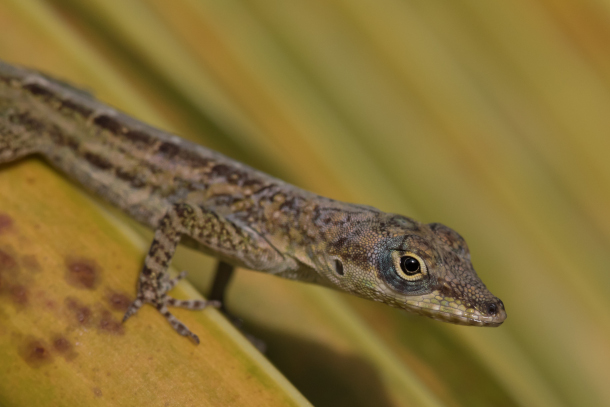
Some anole lizards can stay underwater for up to 20 minutes to evade predators, and now researchers have discovered their secret. Living on Earth’s Don Lyman reports that these lizards use a bubble of air around their snouts and rebreathe the bubble in and out.

- 1Note on Emerging Science: How Lizards Can Breathe Underwater
Transcript
CURWOOD: In a moment, zombie worms and other unusual life forms that emerge when a whale dies, but first this note on emerging science from Don Lyman.
SCIENCE NOTE THEME
LYMAN: Anoles – small tropical lizards found mainly in Central and South America, and the Caribbean – will sometimes dive underwater when threatened. Some anoles can stay underwater for up to 20 minutes, but until recently it wasn’t known how they managed to stay submerged for so long. In an effort to find out, Chris Boccia, a doctoral student at Queen’s University in Kingston, Canada, and his colleagues, traveled to Costa Rica where they captured 300 anoles of various species. Some of the experimental anoles were found near streams, while others were found away from streams. Boccia and his fellow researchers then dunked each lizard into containers of river water. While they were underwater, all of the anoles had a bubble of air around their snouts, and they appeared to breathe the bubble in and out. The lizards that were found near streams rebreathed the bubble more often and stayed submerged longer than their land-based relatives, Boccia and his colleagues reported in the Journal of Current Biology. Boccia said that one lizard was underwater for 18 minutes.
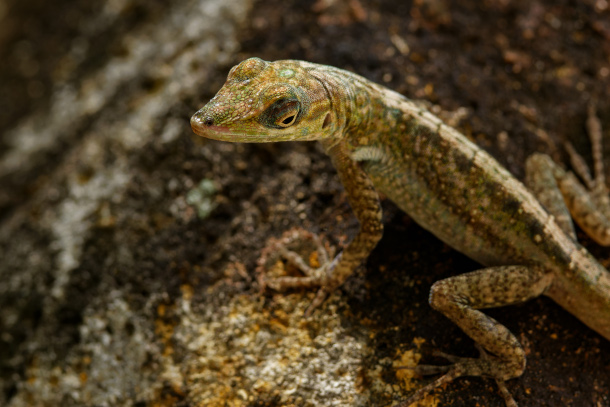
By inserting a small oxygen sensor into the bubbles around the submerged lizards’ snouts, the researchers confirmed that the oxygen levels in the bubbles slowly decreased as the lizards breathed. Boccia suspects the anoles may be able to stay submerged for several minutes by slowing down their metabolism, thus reducing the need for oxygen. He also speculates that as oxygen levels in the snout bubble drop and carbon dioxide levels rise, the bubble may obtain more oxygen by releasing CO2 and taking up dissolved oxygen from the water, but more research is needed to confirm that hypothesis. That’s this week’s note on emerging science. I’m Don Lyman.