Beyond the Headlines
Air Date: September 15, 2023

This week, Living on Earth contributor Peter Dykstra joins Host Jenni Doering to share how small island nations are making a case for planet-warming greenhouse gases to be considered ocean pollutants. Also, the EPA delays setting new standards for ozone, a major air pollutant. And in history, they look back to 1992 when the first African American woman went to space.

- 1Beyond the Headlines
Transcript
CURWOOD: It’s Living on Earth, I’m Steve Curwood
DOERING: And I’m Jenni Doering.
It's time now for a look beyond the headlines with Peter Dykstra. He's Living on Earth's contributor and he joins us from Atlanta, Georgia. Hey, Peter, what you got for us this week?
DYKSTRA: Hi, Jenni. We're looking at a group of small island nations, the people on the front lines of potential and current damage from climate change and sea level rise. They are pinning their hopes on an international court opinion in which they hope that greenhouse gases can be considered to be a form of marine pollution. That opinion would come from the International Tribunal for the Law of the Sea in Hamburg.
DOERING: Right, I guess it's, you know, not necessarily as obvious as plastic pollution, that kind of thing. But those climate changing greenhouse gases, like carbon dioxide and methane, are warming the oceans, making them expand, and sea levels rise, and they're even acidifying the ocean because of all the CO2 that's being taken up by it, Peter.
DYKSTRA: The oceans are beginning to be a mess, simply stated. This decision under the Law of the Sea could be a step forward for some form of protection for island nations that are too politically small to fend for themselves against the larger nations, which of course are by far the larger polluters in greenhouse gases.
DOERING: What else do you have for us this week, Peter?
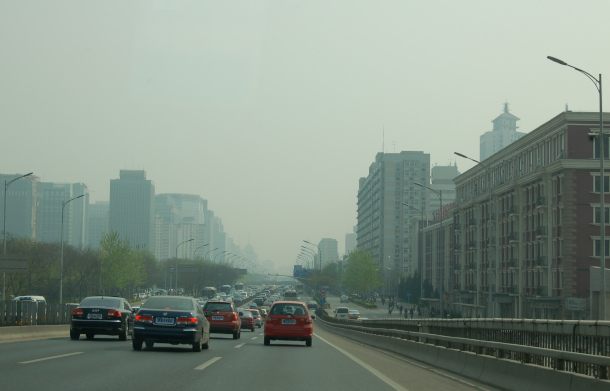
DYKSTRA: The US EPA is reportedly delaying its plans to tighten air quality standards for smog. The official name for smog, of course, is ground level ozone, it generally comes from tailpipes. Even though scientific advisory panels to EPA said it would be an important measure to protect human health.
DOERING: Okay, so what's with the delay, Peter?
DYKSTRA: Politics, perhaps? There's obviously a lot of politics that gets played with environmental decisions. This time, it's a Democratic administration. And the democratic appointee to EPA, Administrator Michael Regan, said that more study is needed. That more study may well carry any decision past the 2024 presidential election, and therefore, it's deemed to be a political hot potato.

DOERING: So what does this mean for public health? I mean, if improving these standards keeps getting delayed, Peter?
DYKSTRA: Well, the EPA's own science panels have said that this is essential for public health. Smog is a serious pollutant causing asthma and other respiratory woes. There are other studies, there was one done in the state of Michigan, back in March, that linked smog to depression in young people, and a slew of other studies that say that this is bad stuff. But it's still prevalent in cities. And it's a dangerous thing by any scientific measure that's been taken.
DOERING: Feels like we're kind of stuck in the past with some of these pollution standards. But speaking of the past, what do you have for us from the history books this week?

DYKSTRA: September 12th, 1992, the first African American woman is launched into space with her crew on the space shuttle. Mae Jemison became a pioneer and stayed a pioneer and an exemplar for other women and minorities to consider a career in space. She's done that to this very day. She's now in her 60s, and she was accompanied by another exemplar who won't travel into space for another 200 years on the Starship Enterprise. And that, of course, is the actress Nichelle Nichols, who played Lieutenant Uhura, one of my first boyhood crushes, on the original Star Trek show, and another evangelist for putting more women and more minorities in space. She passed away a little over a year ago. And Mae Jemison also appeared on a later edition of Star Trek, so they've almost reversed roles.
DOERING: Mmm. And both breaking huge glass ceilings in the process. Thank you so much, Peter. Peter Dykstra is Living on Earth's contributor and we'll talk to you again next week.
DYKSTRA: All right, Jenni, live long and prosper.
DOERING: You too. And there's more on these stories on the Living on Earth website. That's loe.org.