Beyond the Headlines
Air Date: November 10, 2023
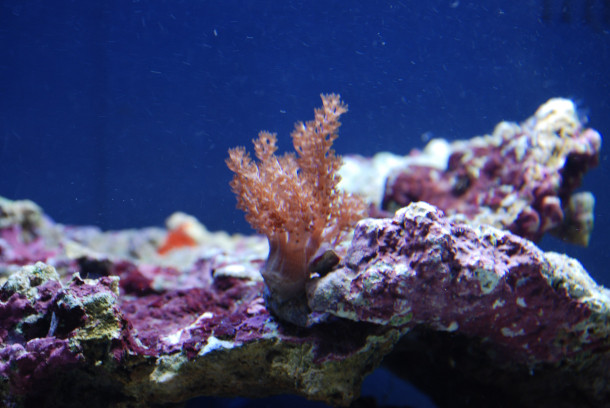
This week, Living on Earth Contributor Peter Dykstra briefs Host Aynsley O’Neill on some early research into coral cryopreservation as a tool to help restore bleached reefs. Also, a study in Finland has found signs that outdoor learning gives preschoolers an immune boost. And in history, they look back to President Bush Sr.’s signing into law of the Clean Air Act Amendments.
- 1Beyond the Headlines
Transcript
DOERING: It’s Living on Earth, I’m Jenni Doering.
O’NEILL: And I’m Aynsley O’Neill. On the line. Now from Atlanta, Georgia is Peter Dykstra, the living on Earth contributor who looks beyond the headlines for us. Hi, there, Peter, how are you doing today?
DYKSTRA: I'm doing well, Aynsley. And I hope you're doing well as well. And something else that may be doing well, if the science bears out: baby corals, we know that coral reefs are dying in just about all the world's oceans where they're present. But there's an experiment at a university in Taiwan, where they've taken baby coral and frozen it, then they thaw it out with a laser, and implant it in adult coral. And in this early experiment, it's seeming to grow, giving some hope that we can artificially replace dying coral with baby coral that will continue to grow and thrive.
O'NEILL: Cryopreservation that sounds like something right out of science fiction, Peter. But it sounds like the technology is still in pretty early stages.
DYKSTRA: Yeah, it is. And remember that science that sounds like science fiction sometimes turns out to be science fiction. But sometimes it turns out to be science. So we're rooting for this one. Because this is one bit of science that may possibly someday do the trick for coral.
O'NEILL: Yeah, fingers crossed for some future. Good news. Now, Peter, what else do you have for us this week?
DYKSTRA: Another preliminary study. This one from Finland. The study followed preschoolers who spent part of their school day out in nature in fields of Heather fields of blueberries among forest floor cover. And the greenery apparently helped their immune systems. They grew larger numbers of T cells important in our immune response. They've also developed more anti inflammatory molecules. And it could be a sign that if we educate our kids more in nature, that it could actually help their health.
O'NEILL: That's pretty incredible for Finland's preschoolers. I mean, I'm hoping that they finish (Finnish) that research for older children too.
DYKSTRA: Let's move on from that one.
O'NEILL: All right, Peter. What do you have for us from the history books this week,
DYKSTRA: November 15th, 1990. The president of the US at that time was Papa Bush, George HW Bush, and he signed new amendments to the Clean Air Act, among other things, it made the emissions that cause acid rain more scarce and took care of other toxic chemicals that our factories and automobiles belched out. It was a major upgrade for clean air in the United States.
O'NEILL: Well Peter, I don't know much about the first Bush presidency. It was before my time, I didn't realize that he had strengthened such an important environmental law.
DYKSTRA: Well, we should give credit where credit is due. And when he was first elected in 1988. The elder Bush promised that he would be and he actually said this, the environmental president. He didn't do a whole lot other than the Clean Air Act amendments to justify that title. But those amendments helped and acid rain as a major scourge, particularly in forests in the US east coast.
O'NEILL: Yeah Peter, I'm definitely glad. But that's one less thing to worry about on a daily basis.
DYKSTRA: Absolutely.
O'NEILL: Thank you for bringing us these stories. Peter. Peter Dykstra is our living on Earth contributor and we're going to talk to you again real soon. All right, Aynsley.
DYKSTRA: Thanks a lot. We'll talk to you soon.