Beyond the Headlines
Air Date: November 24, 2023
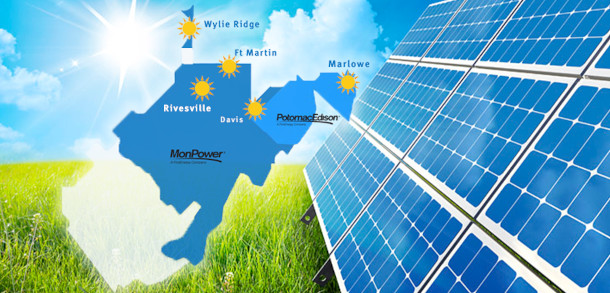
This week, Living on Earth contributor Peter Dykstra and Host Jenni Doering discuss the clean energy infrastructure popping up in former fossil fuel strongholds. Also, waste pickers who comb through trash to glean recyclable metals and plastics are asking for a seat at the table in the negotiations for a global plastic waste treaty. And in history, they look back to when scientists debunked the “Piltdown Man” hoax fossil.

- 1Beyond the Headlines
Transcript
CURWOOD: It’s Living on Earth, I’m Steve Curwood.
DOERING: And I’m Jenni Doering.
Living on Earth contributor Peter Dykstra is here with our look beyond the headlines, and he joins us from Atlanta, Georgia. Hey there Peter – whatcha got for us this week?
DYKSTRA: Well, hi, Jenni. There's a story that looks like something that was hoped by clean energy advocates may actually be happening according to plan. And that's some fossil fuel dependent areas and communities are beginning to turn over and become clean energy hubs instead. We're talking about places like the coal fields of Wyoming, West Virginia, also reliant on coal, that are switching over largely thanks to the landmark climate bill, what the Biden Administration called the Inflation Reduction Act. And that clean energy economy seems to be taking a step forward. 18.6% of the population of the US received about 36.8% of the clean energy investments that are included in the bill.
DOERING: Well, these communities certainly deserve it because of all the fossil fuel waste and pollution they've had to put up with over the years.
DYKSTRA: They do, and it looks according to the study like they're getting about twice their money's worth. It's important politically, to see that some of the communities that might be most reluctant and most resistant to clean energy, are being given a big financial economic incentive to embrace clean energy with open arms.
DOERING: Sounds like a good environmental justice story to me. What else have you got for us this week, Peter?
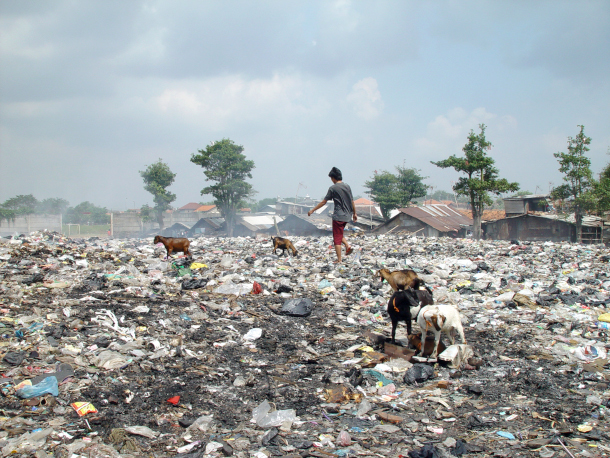
DYKSTRA: Well, waste pickers around the world. It's a grimy, sort of low-economic-rung job picking out plastics, and other recyclables from the waste stream. And those waste pickers want a seat at the table in the ongoing negotiations for a plastic waste treaty.
DOERING: So, what are they asking for Peter?
DYKSTRA: What they're asking for is that the 20 million estimated waste pickers from around the world, usually in cities, are involved directly in the talks that are ongoing for all the world's nations to come up with a first time treaty to limit the amount of plastic waste that's out there. Waste pickers can bring in, in some cases, twice the volume of recyclables that those established organized programs can bring in. There was a pilot program in the suburbs of Johannesburg, South Africa. They'd looked at recyclable materials collected by waste pickers, and they extrapolated that the 8,000 waste pickers in Johannesburg could gather as much recyclable material in 28 days, that all of the contractors and government programs could gather in a whole year.
DOERING: Wow, that's an incredible finding. And all that waste they're able to go through exposes them to some pretty hazardous materials. But these waste pickers are really a forgotten part of the economy for the most part. All right, Peter, I think it's time for history. So, what you got?

DYKSTRA: 70th anniversary of the final disposition of one of the most famous hoaxes in science history, the Piltdown Man in the 1910s, was a phenomenon, a skull that was discovered in England, and said to be so-called missing link between apes and men. Drew instant skepticism from around the world. But it took 40 years for an investigating body, in this case, the British Museum, to finally say, once and for all, that the Piltdown Man was not a missing link in the evolutionary chain, but instead was a bleached, ape-like skull that was intentionally made to look much, much older than it was. And it became a cautionary tale for us all, to not swallow our scientific claims whole, but to make sure they're checked out. Not to be gullible, but to be factual in the way that we present and receive and legislate on science.
DOERING: But that's the process of science. I guess, you know, with peer review and needing to replicate results eventually, the truth wins out.
DYKSTRA: Hopefully, the truth wins out.
DOERING: Yes, we hope so. Thank you Peter. Peter Dykstra is our Living on Earth contributor and we'll talk to you again next time.
DYKSTRA: All right, Jenni. Thanks a lot, and we'll talk to you soon.
DOERING: And there's more on these stories on the Living on Earth website. That's LoE.org.