Beyond the Headlines
Air Date: December 15, 2023
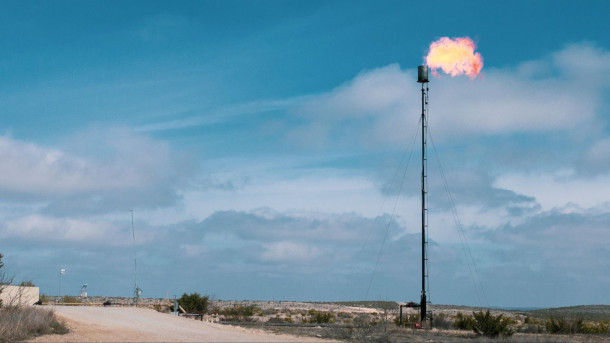
This week, Living on Earth Contributor Peter Dykstra joins Host Aynsley O’Neill bringing news of a step towards phasing out natural gas in Massachusetts, and a lost-then-found tomato in space. In history, they mark an anniversary for the U.S. Marine Mammal Protection Act that’s helped conserve seals, whales, and more.

- 1Beyond the Headlines
Transcript
O'NEILL: It's time now for a look beyond the headlines with Peter Dykstra, the Living on Earth contributor who joins us from Atlanta, Georgia. Hey there, Peter, what do you have for us this week?
DYKSTRA: Well, hi, Aynsley, we'll start out with a potential good news story for clean energy from the home and birthplace of Living on Earth, the Commonwealth of Massachusetts. The state just took a big step toward moving away from natural gas as a heating and power source. The Massachusetts Department of Public Utilities has ruled in favor of hydrogen as a future source of heat and power, and also other clean energy modes like solar and wind power. The gas industry was quite upset about this. Natural gas, of course, is a fossil fuel and a climate change contributor. Massachusetts is the first of quite a few states that may take that path.
O'NEILL: Well, yeah, I think Massachusetts residents should feel pretty proud that they're, you know, leading the charge in that way. So Peter, what else do you have for us this week?
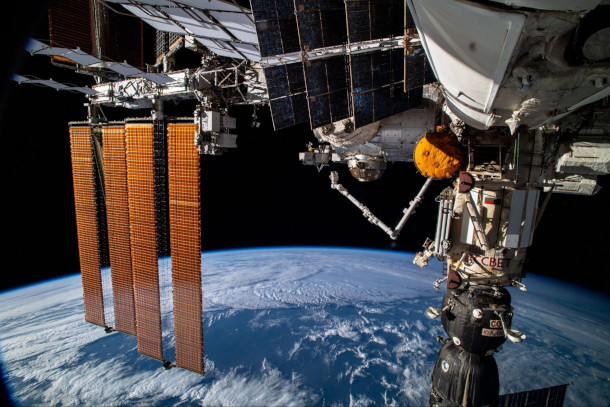
DYKSTRA: We've got a mystery from space that's possibly solved. The International Space Station grew some small tomatoes, as part of a first step experiment for how long missions in space, like a potential trip to Mars, could grow at least some of their own food, and one of the tomatoes went missing.
O'NEILL: It went missing, Peter? Are we sure it didn't just get eaten?
DYKSTRA: Well, that was one of the theories. One of the American space station astronauts, a man named Frank Rubio, set aside the tomato in a plastic bag so he could show it to school kids who had wired into the space station and wanted to see evidence of a tomato grown in space, and he thought he velcroed it to a place where he could easily find it. Then he said the tomato disappeared. So the mystery was partly solved months later, after Frank Rubio was back on Earth. NASA revealed that the tomato has been found. They didn't really give any details. But Frank Rubio is cleared of losing the tomato, hiding the tomato, or eating the tomato, thus closes the potential conspiracy.
O'NEILL: Well, good to know we've got one mystery solved and a potential conspiracy theory got nipped in the bud. And Peter, what do you have for us from the history books this week?
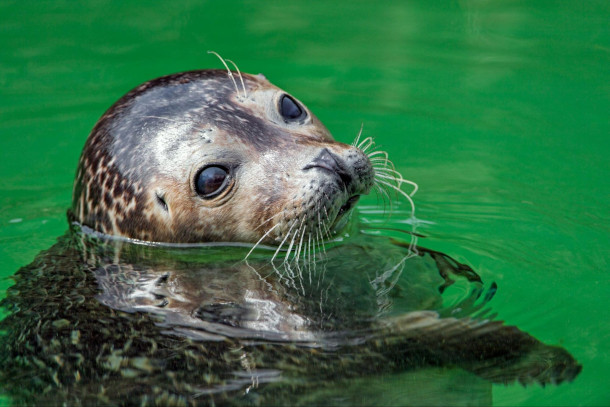
DYKSTRA: December 21, 1972, the US Marine Mammal Protection Act takes effect, one of several landmark laws that took effect during the administration of that old tree hugger Richard M. Nixon. It put strong limits on the taking of seals and sea lions, and it outlawed virtually any and all commercial whaling. The last whaling station in the US had closed that same year, 1972. And I'll bet you can't tell me where.
O'NEILL: I mean, my best guess would have to be Alaska?
DYKSTRA: Alaska is a decent guess, but it's not the right guess. The San Francisco Bay area specifically, the industrial city of Richmond, California, shut down its whaling station in 1972. Alaska Natives are still allowed to conduct a traditional hunt for bowhead whales that have been a part of their tradition and their reliance on food source since time immemorial.
O'NEILL: Thanks again for another look beyond the headlines, Peter. Peter Dykstra is our Living on Earth contributor, and we'll talk to you again in the New Year.
DYKSTRA: In the new year. This is my last one for 2023, and I want to thank everybody for listening and wish you Happy Holidays and a Happy New Year.
O'NEILL: You can find out more on these stories on the Living on Earth website. That's loe.org.