Beyond the Headlines
Air Date: February 09, 2024
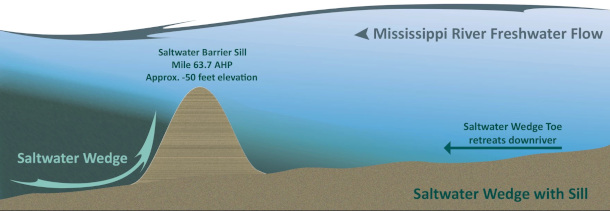
Living on Earth Contributor Peter Dykstra joins Host Steve Curwood with news of a reprieve -- for now -- for the drinking water supplies threatened by saltwater intrusion in coastal Louisiana. Also, a city in Germany is using the Rhine River as a giant source of heat and cooling potential on an industrial scale. And in history, they mark the birthday and exoneration of the Renaissance’s Galileo Galilei.
- 1Beyond the Headlines
Transcript
DOERING: It’s Living on Earth, I’m Jenni Doering.
CURWOOD: And I'm Steve Curwood.
On the line now from Atlanta, Georgia is Peter Dykstra, who takes a look beyond the headlines for us. Hey, Peter, how you been? What's going on down there in Georgia?
DYKSTRA: Well, I've been well, Steve. Topic number one is going to be over in Louisiana, there was a problem with saltwater intrusion threatening drinking water, even in the big cities like New Orleans. Saltwater intrusion happens when there are low levels of freshwater and the saltwater essentially gets into drinking water systems, but that threat is off for now. There was a very, very dry period upstream in the Ohio River, the Mississippi River, and that was threatening for saltwater to come into the drinking water intakes throughout Louisiana. But lately, there's been a very wet, rainy, snowy period and that's postponed the threat.
CURWOOD: So I imagine that Louisiana's guarantee for sweetwater is somewhat limited, and this is a big problem around the world.
DYKSTRA: It's a big problem and a little bit different than the situation in Louisiana, which was caused by temporary drought followed by temporary heavy rainfall. In places like Bangladesh, it's a more permanent and relentless thing. You've got not only higher demand for freshwater, in very marshy, low-lying areas, but the other problem is sea level rise. The oceans and the saltwater levels are getting higher. When those things collide, you could have a food crisis in areas where the freshwater supply is contaminated and you can no longer grow crops.
CURWOOD: Another reason to pay attention to the threat of climate disruption with the rising sea levels.
DYKSTRA: One more.
CURWOOD: One more. Hey, Peter, I understand you have some good news for us about heat pumps. We just talked about a pilot project in Boston in public housing. What's the story you have?
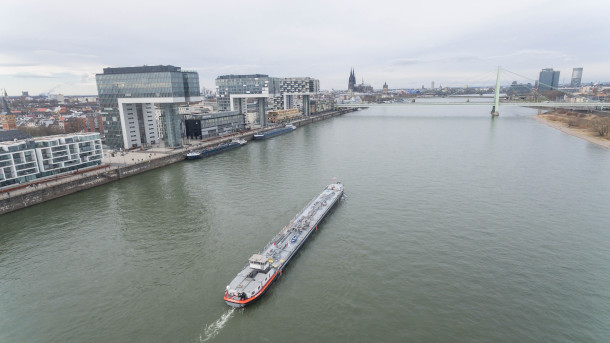
DYKSTRA: We're looking at Germany, particularly the city of Mannheim, along the Rhine River. Heat pumps have been in use throughout Europe in much greater extent than in the US. Germany has about 2 million heat pumps, some drawing heat energy from the air, some drawing heat energy from the ground. Mannheim and other cities are looking at repeating this on an industrial scale by drawing heat out of rivers like the Rhine and using it to heat not only homes but larger businesses, to take the heat, pardon the pun, off of other sources like coal and natural gas.
CURWOOD: And how big a deal is this? I mean, how much heat is there in the river going by there?
DYKSTRA: Well, a project manager named Felix Hack says that in the city of Mannheim, the thermal energy could help heat homes many times over. They are hoping that it can be a real weapon in the fight against climate change.
CURWOOD: Okay, Peter, this is the part of our discussions where you open the history books, you take a look. And I think this week, maybe you have a bit of a telescope to look back?
DYKSTRA: A long way back. February 15, 1564. Born in Pisa, Italy, is Galileo, who became a famous astronomer, physicist, and for a while in the Catholic Church, heretic, by moving forward the theory that the Earth revolves around the sun, and not the other way around. The official heresy label came in 1633.
CURWOOD: Eventually, though the Church recanted, if I can use that word.
DYKSTRA: They did. They apologized to Galileo, and it took only 359 more trips around the sun when Pope John Paul the second acknowledged the error and declared ‘my bad’ on behalf of the Church.
CURWOOD: Uh, Peter, wasn't that in Latin?
DYKSTRA: Oh, yeah, mea culpa.
CURWOOD: Thanks, Peter. Peter Dykstra is a contributor from Atlanta, Georgia, and we'll talk to you again real soon.
DYKSTRA: Well, thank you, Steve. Good to talk to you. We'll do it again soon.
CURWOOD: And there's more on these stories on the Living on Earth webpage. That's loe.org.