From the History Books
Air Date: April 05, 2024
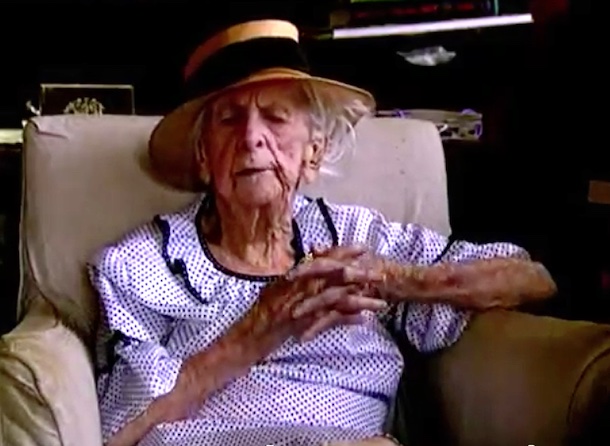
In their look back in history Living on Earth Contributor Peter Dykstra and Host Steve Curwood celebrate the birthday of Everglades protector Marjory Stoneman Douglas. They also mark the debut of prepared frozen meals marketed as TV dinners.

- 1From the History Books
Transcript
CURWOOD: On the line now from Atlanta, Georgia is Peter Dykstra, Living on Earth contributor who takes a look at history for us. Hey, Peter, what do you see now in the history books today?
DYKSTRA: Hi, Steve. We're going to go back to April 7, 1890, and the birth of a true environmental hero and journalism hero Marjory Stoneman Douglas born in Minneapolis, but she made her fame and her impact in Miami, Florida. A reporter for the Miami Herald, later a columnist, she wrote frequently about the Everglades and how they were becoming endangered. But in 1947, she gave up her first career and started her second as a full-time environmental advocate, writing the book River of Grass. Bear in mind 1947 Marjory was already 57 years old starting a new career.
CURWOOD: Fifty-seven years old, and how long did she live?
DYKSTRA: She lived until age 108. She died in 1998. Before then she became the most effective advocate for protecting the Everglades, seeing it become first partly a state park then later a national park. She was awarded the Presidential Medal of Freedom by President Clinton in 1993. And up until age 108, she was active almost till the very end of her life.
CURWOOD: What else do you have for us, Peter?
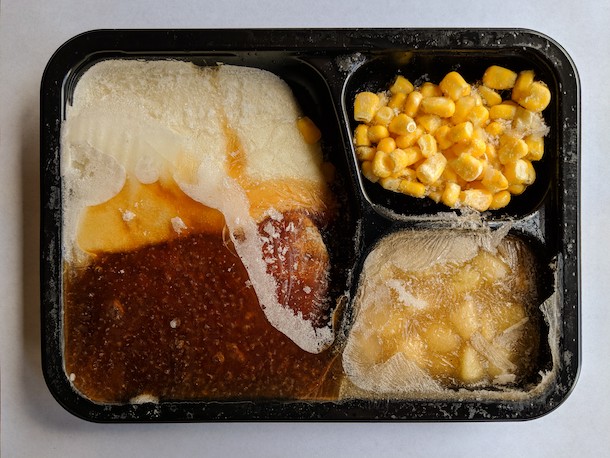
DYKSTRA: We can go back to April 6, 1954, what is generally noted as the first sale of the TV dinner. Swanson company offered four entrees, none of which made great service to the American diet, meatloaf, fried chicken, turkey, or Salsbury steak — those little hockey pucks of beef that were so common in college cafeterias. They were baked in a frozen tin foil tray that sold for 98 cents.
CURWOOD: And Swanson called this the TV dinner because?
DYKSTRA: Because people were tempted to eat those dinners while sitting in front of the TV, watching I Love Lucy or the Honeymooners or Gunsmoke. They sold 10 million TV dinners in the first year.
CURWOOD: And I wonder how many households stopped having dinner around the dinner table and instead just watched television.
DYKSTRA: It put a real dent in those family dinners at the dinner table. It has many descendants today, with microwave dinners becoming a staple for families eating on the run, working two jobs, and all sorts of other things.
CURWOOD: And Peter, I guess you can't exactly put a 1954 TV dinner in 2024 microwave these days.
DYKSTRA: Not with that tin foil tray unless you wanted to watch your microwave spark and burn.
CURWOOD: Peter Dykstra is a regular contributor Living on Earth. We'll talk to you again real soon.
DYKSTRA: Okay, Steve, thanks a lot. Talk to you soon.
CURWOOD: And there's more on these stories on the Living on Earth webpage. That's loe.org.