From the History Books
Air Date: May 31, 2024
Living on Earth Contributor Peter Dykstra and Host Aynsley O’Neill look back to the 1990 outbreak of 65 tornadoes that tore through Illinois, Indiana, Kentucky and Michigan. They also note an anniversary for the listing of leatherback turtles as an endangered species.

- 1From the History Books
Transcript
DOERING: It’s Living on Earth, I’m Jenni Doering.
O'NEILL: And I’m Aynsley O’Neill.
On the line now from Atlanta, Georgia is our friend Peter Dykstra. He's the Living on Earth contributor who's here to bring us a couple of stories from the history books. So hey, Peter, what do you have for me this week?
DYKSTRA: Hi, Aynsely, I want to talk about a couple of things that have happened in relatively recent years. On June 2, 1990, there was an outbreak of tornadoes. 65 of them that tore through Illinois, Indiana, Kentucky and Michigan. Several of those twisters reached EF-4 intensity. But the relatively low death toll of 18 is testimony to improved forecasting and forewarning systems that saved people's lives.
O'NEILL: 65, Peter, that is a lot. And climate change is linked to tornadoes becoming more clustered as time goes by. So we've been having a really busy spring so far right here in 2024.

DYKSTRA: And we'll see where it goes from here. Of course, the ongoing concern for weather disasters is universal as we look toward climate intensity, not just in the U.S., of course, but throughout the globe.
O'NEILL: Peter, what else do you have for me this week?
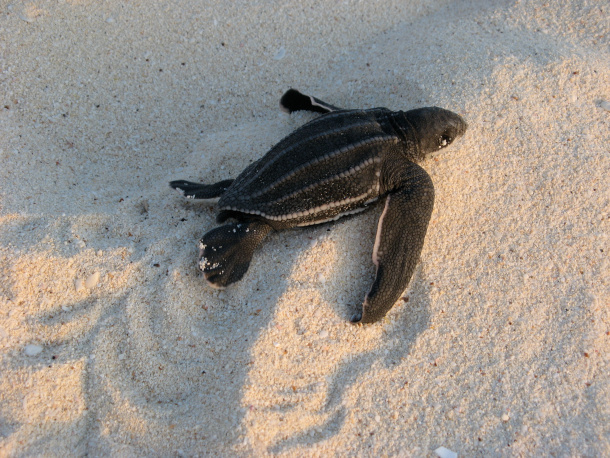
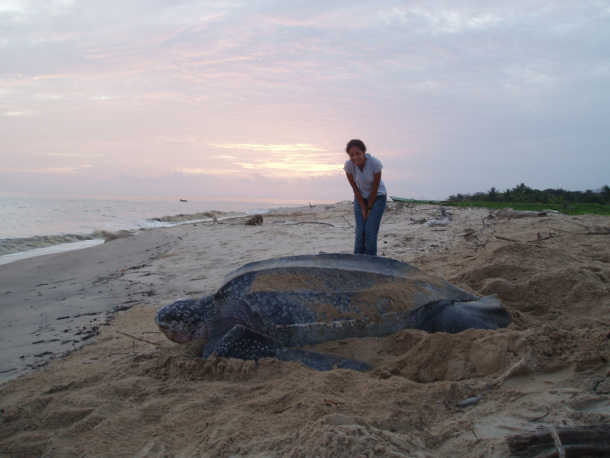
DYKSTRA: June 2, 1970. The leatherback, a massive sea turtle that’s been known to migrate for thousands of miles, is declared an endangered species in the United States. Leatherbacks can reach up to one ton and eight feet from head to tail, and they're imperiled by habitat destruction, and also their accidental capture in fishing gear.
O'NEILL: Now, Peter, they were listed as endangered so many years ago, but today, they're still not doing too hot, right?
DYKSTRA: They've got a long way to go. There are other species in that original wave of listings—the Bald Eagle, the American alligator, the Brown Pelican—that have recovered much more quickly than leatherback turtles. And I have to say that leatherbacks are just one of my favorite animals. They are sort of brownish, grayish color, with stripes almost the entire length of their body. That's one animal we've missed on our listing, not of most endangered, but certainly most adorable animals.
O'NEILL: Yeah, they're quite the charismatic species, but hopefully that can lend them a bit of attention and a bit of protection.
DYKSTRA: It's always nice to have both. And when you're eight feet long and you look kind of like a seagoing Volkswagen, maybe that'll help you out on the adorable side.
O'NEILL: Okay, thank you. Peter. Peter Dykstra is a regular contributor to Living on Earth, and we will talk to you again soon.
DYKSTRA: Aynsley, thanks a lot. We'll talk to you soon.
O'NEILL: And there's more on these stories on the Living on Earth website. That's L-O-E dot O-R-G.