Note on Emerging Science: Why Do Some Lizards and Snakes Have Horns?
Air Date: July 12, 2024

Snakes and lizards have independently evolved horns or spikes on their heads at least 69 times, and recent research finds evidence that horns may provide camouflage for predators that ambush their prey rather than actively chasing it. Living on Earth’s Don Lyman has this note on emerging science.

- 1Note on Emerging Science: Why Do Some Lizards and Snakes Have Horns?
Transcript
O’NEILL: It’s Living on Earth, I’m Aynsley O’Neill
DOERING: And I’m Jenni Doering.
In a moment, we’ll turn a page in the history books with Peter Dykstra, but first this note on emerging science from Don Lyman.
SCIENCE NOTE THEME
LYMAN: Some snakes and lizards have horns or spikes on their heads – but why?
In the past, studies have hypothesized that these horns might be for courtship, defense, or camouflage. A team led by herpetologist Federico Banfi from the University of Antwerp wondered if the presence or absence of horns might come down to hunting style.
The scientists determined that most horned snakes and lizards remain still and ambush their prey, rather than actively pursuing it. They hypothesized that horns and spikes might provide camouflage to sit and wait predators, but could make more active snakes and lizards easier for predators and prey to spot.
The researchers looked for evolutionary clues. If the horns didn’t provide a camouflage benefit in active hunters, they might not evolve as often as in sit and wait predators.
With the help of an evolutionary tree, the team found that lizards and snakes independently evolved horns on the top of their heads, eyebrows, or snouts at least 69 times.
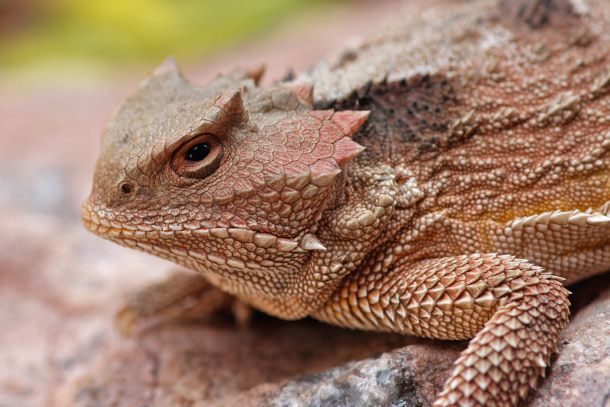
That said, horns or spikes on these reptiles aren’t the norm and only adorn less than 10% of the species the scientists analyzed. But among those horned lizards and snakes, the vast majority, or 94%, were the “sit and wait” kind of predator as opposed to those that actively move around while hunting.
It’s still possible that horns also serve some other benefit, like looking cool to a potential mate. We haven’t been able to reach any lizards to ask.
That’s this week’s note on emerging science. I’m Don Lyman.