BirdNote®: The Crows' Night Roost
Air Date: September 27, 2024
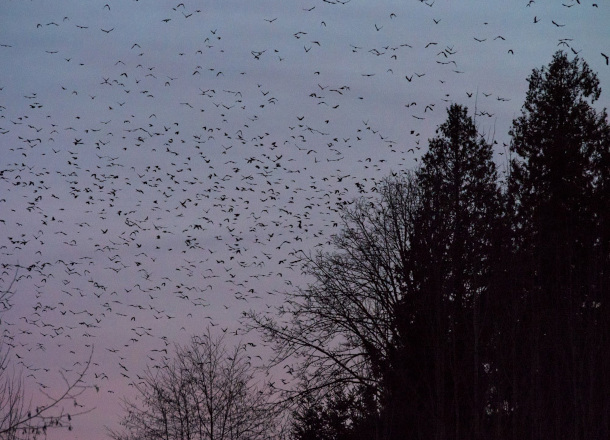
Crows are social creatures that can gather by the thousands in night roosts. BirdNote®’s Ashley Ahearn reports that these gatherings may provide benefits like warmth, protection from predators, and a chance to find a mate.

- 1BirdNote®: The Crows' Night Roost
Transcript
O’NEILL: Crows are among the smartest animals around, with the ability to use tools and solve problems. And this all-natural intelligence may have evolved in part to help them thrive in complex social structures. BirdNote’s Ashley Ahearn reports on their communal gatherings.
BirdNote®
The Crows' Night Roost
Cawing of American Crows
American Crows stream by overhead in the late afternoon, rivers of crows. These are crows on a mission. They’re headed to their night roost, a giant avian slumber party.
Gathering in a park or woodland, they land in a tree, then scuffle and shuffle and squawk, filtering down through the branches. Birds arriving late force the early birds lower into the trees. Crow experts think the roost may provide benefits like warmth, protection from predators, shared information about food sources, and a chance to find a mate. [Chortles and warbles of the American Crow]
Immature crows may spend the night in the roost year round, but adults of breeding age stay in their own nests while raising their young, then go back to the group after the fledglings leave. [Huge flock of crows builds]
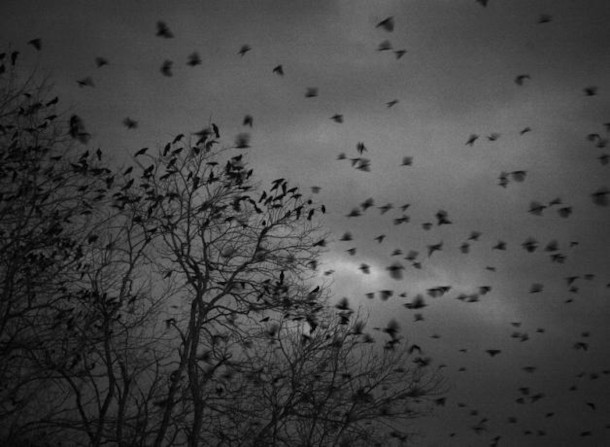
So, just how many crows are there in a roost? That varies, but at one long-time roost in Danville, Illinois, locals have counted more than 100,000 crows! Not that the folks of Danville are especially happy about that. Imagine the ruckus when the first few thousand crows leave in the morning, about an hour before sunrise. [Huge flock of crows]
Follow crows to their roost some autumn evening, if you can, and watch these avian acrobats wheel in for the night. But if you go, just a word of warning: you might want to take an umbrella.
Cawing of crows